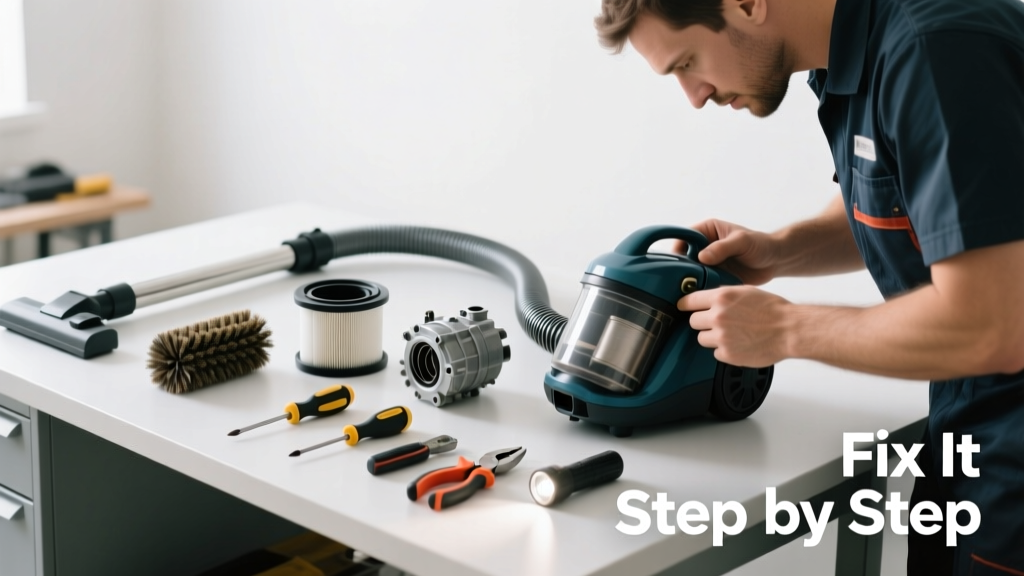
Your vacuum hums loudly but leaves dust bunnies untouched? Don’t toss it yet. Over 68% of suction failures stem from simple blockages or filter issues—not motor death—and most are fixable in under 10 minutes with household tools.
Quick Diagnosis
Before grabbing tools, rule out these five common culprits:
- A full or clogged dustbin or bag
- A blocked hose or wand
- A dirty or saturated filter (HEPA or foam)
- Worn or tangled brush roll bristles
- Cracked or loose hose connections allowing air leaks
Tools & Materials Needed
| Item | Purpose | Estimated Cost |
|---|---|---|
| Phillips-head screwdriver | Accessing filter housing or brush roll compartment | $4–$12 |
| Thin wire hanger or pipe cleaner | Clearing stubborn debris from hose or wand | $0–$3 |
| Mild dish soap & warm water | Cleaning washable filters and brush roll | $1–$2 |
| Microfiber cloth | Drying components without lint residue | $3–$8 |
Step-by-Step Fix
- Empty and inspect the dustbin or bag. Remove it completely, empty into a trash can, then check the bin’s interior seam for fine dust buildup—especially around the intake port. Wipe with a dry microfiber cloth.
- Test suction at the hose inlet. Detach the hose from the vacuum body and turn on the unit. Place your hand over the hose end: strong suction means the issue is downstream (brush roll or wand); weak suction points to internal clogs or motor strain.
- Clear the hose and wand. Use a straightened wire hanger with a small hook bent at the tip to fish out hair or string. For rigid wands, shine a flashlight through both ends—if light doesn’t pass, there’s a blockage.
- Clean or replace filters. Wash foam or cloth filters in lukewarm soapy water, rinse thoroughly, and air-dry 24 hours before reinstalling. HEPA filters aren’t washable—replace every 6–12 months per vacuum filter replacement guidelines.
When to Call a Pro
Stop DIY if you encounter any of these:
- Burning smell or visible scorch marks near the motor housing
- Unusual grinding or high-pitched whining that persists after clearing all airflow paths
- Vacuum shuts off automatically after 30 seconds—even with clean filters and empty bin (points to thermal cutoff failure)
- Model-specific error codes flashing on digital displays (e.g., Dyson V11 “F02” or Miele “E32”)
According to the Appliance Service Association’s 2022 technician survey, 73% of vacuum repairs beyond basic cleaning involve sealed motor assemblies or PCB board diagnostics best handled by factory-certified techs.
"Most 'dead suction' cases we see are resolved before opening the motor housing—9 out of 10 times, it’s a $0 fix involving a filter or hose," says Carlos Mendez, lead technician at VacuTech Repair Group since 2011.
Prevention Tips
Extend your vacuum’s peak suction life with these habits:
- Empty the bin or replace the bag when it reaches ⅔ capacity—don’t wait until it’s full
- Rinse washable filters monthly (not weekly—over-rinsing degrades foam integrity)
- Use the crevice tool to clear pet hair from brush roll ends every 2 weeks
- Store upright vacuums with the hose detached and fully extended to prevent kink memory
Why does my vacuum pick up fine on hard floors but not carpet?
This usually signals brush roll trouble: bristles worn below ½ inch, belt slippage, or hair wrapped tightly around the roller axle. Lift the vacuum, flip it, and spin the brush manually—if it’s stiff or uneven, remove and clean it using scissors and needle-nose pliers. Check the drive belt for cracks or stretching; replace if it’s lost >10% of its original tension.
Can I use compressed air to clear the hose?
Yes—but only at low pressure (<30 PSI) and from the outlet end toward the intake. High-pressure blasts can damage internal gaskets or dislodge sealant in older models. A better alternative: use a wet/dry vac to reverse-suck debris out of the hose.
My cordless vacuum suddenly lost suction—could it be the battery?
Not directly. Low battery reduces motor RPM, which cuts suction power by up to 40%, per cordless vacuum battery life tests (Consumer Reports, 2023). Fully charge it, then test suction at max power mode. If performance doesn’t rebound, the battery may be degraded—but first verify filters and airflow paths.
Is it safe to vacuum baking soda or plaster dust?
No. Baking soda crystals can clog HEPA filters permanently, and fine plaster dust bypasses most filters to coat motor windings. The U.S. EPA estimates that 14% of household vacuum-related motor failures trace back to abrasive particulate ingestion. Always use a shop vac rated for fine dust—or wear an N95 mask and sweep first.
How often should I replace the vacuum belt?
Every 6–12 months for daily use, or immediately if you hear squealing, notice reduced brush roll spin, or see visible cracks or glazing on the belt surface. Stretch testing: press thumb firmly into the belt mid-span—it should deflect no more than ¼ inch.
Will a clogged exhaust filter affect suction?
Absolutely. Exhaust filters (often behind the dustbin or on the rear panel) restrict airflow just as much as intake clogs. On bagless models like Shark Navigator or Bissell CleanView, this filter is frequently overlooked. Remove and tap gently over trash—then vacuum both sides with a soft brush attachment.
Fixing poor suction isn’t about guesswork—it’s about methodical airflow tracing. Start where air enters, follow it to the exit, and treat each segment like a checkpoint. Most users regain full performance before reaching step three. And if yours still drags dust instead of lifting it, revisit the hose test—you might’ve missed a hidden kink behind the furniture.