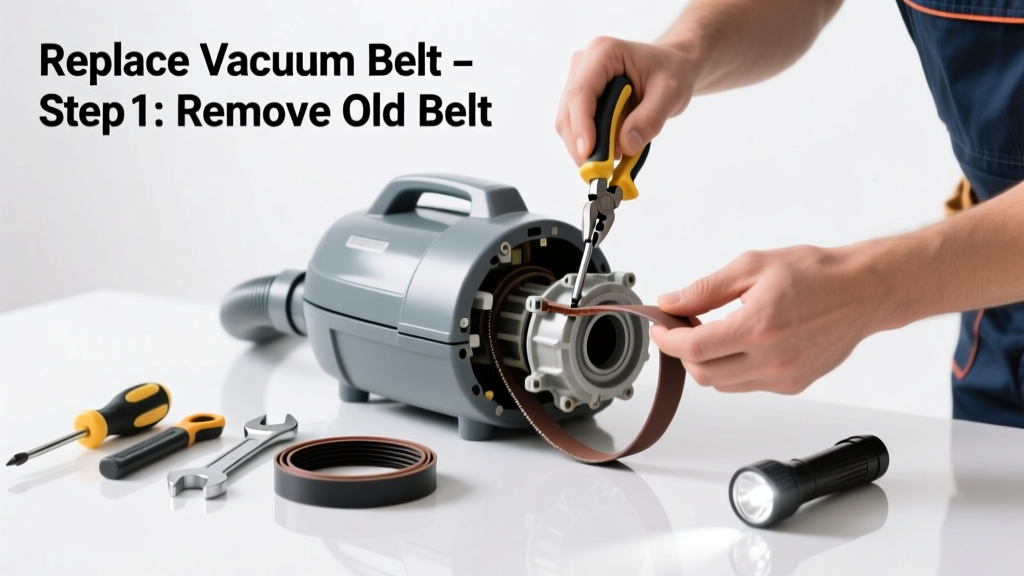
Your vacuum suddenly lost suction, makes a burning smell, or the brush roll won’t spin? A broken or stretched belt is the most common culprit—and it’s one of the easiest repairs you can do at home. Most upright vacuums use a single rubber drive belt that wears out every 6–12 months with regular use.
Quick Diagnosis
Before grabbing tools, confirm the belt is actually the issue. These signs point directly to belt failure:
- The vacuum runs but the brush roll stays completely still
- You hear a high-pitched squeal or grinding noise when turning it on
- A burnt-rubber odor comes from the base during operation
- Visible cracks, fraying, or snapping when you inspect the belt housing
- The belt is loose enough to slip off the motor shaft or brush roll pulley
Tools & Materials Needed
| Item | Purpose | Estimated Cost |
|---|---|---|
| Replacement belt (model-specific) | Exact fit ensures proper tension and brush roll speed | $4.99–$12.99 |
| Phillips #1 screwdriver | Removes access panel screws on most uprights (e.g., Hoover, Bissell, Eureka) | $3.50–$8.00 |
| Needle-nose pliers | Helps stretch and seat the belt onto tight pulleys without finger strain | $6.00–$14.00 |
| Clean microfiber cloth | Wipes dust/debris from pulleys to prevent premature slippage | $2.99–$5.99 |
Step-by-Step Fix
Follow these steps in order—most models take under 20 minutes. Always unplug first.
- Unplug and flip the vacuum: Lay it upside-down on a clean towel. Locate the brush roll access plate—usually held by 2–4 Phillips screws on the bottom.
- Remove the brush roll assembly: Unscrew the plate, lift it off, then gently pull the brush roll straight out. Note its orientation—the ends have different shapes (one has a square drive, the other a round axle).
- Inspect and remove the old belt: The belt wraps around the motor shaft (small metal post) and the brush roll’s drive end. Slide it off both points. Check for melted spots or glazing—signs of overheating due to clogged brush roll or worn bearings.
- Install the new belt: Loop it around the motor shaft first, then stretch it over the brush roll’s drive end using needle-nose pliers for leverage. It should sit snugly—not loose enough to slip, not so tight it binds the roll.
- Reassemble and test: Reinsert the brush roll (match orientation), snap the plate back on, tighten screws evenly, then plug in and run for 30 seconds. Confirm the brush roll spins freely and quietly.
When to Call a Pro
DIY stops making sense if any of these apply:
- The motor shaft is bent, stripped, or missing its rubber grip collar
- The brush roll wobbles side-to-side or makes grinding noises after belt replacement
- Your vacuum is a bagless canister model with an internal belt-driven power head (e.g., Miele SEB-236)—requires specialized disassembly
- You’ve replaced the belt twice in 3 months—points to deeper issues like faulty motor brushes or voltage fluctuations
Prevention Tips
Extend belt life by cleaning weekly and replacing proactively:
- Clean hair and thread from the brush roll and end caps every 1–2 weeks using scissors and tweezers
- Vacuum only dry, non-abrasive debris—never gravel, pet litter, or wet spills
- Replace belts every 9 months even if they look fine; rubber degrades with heat and ozone exposure
- Store upright vacuums in climate-controlled spaces—extreme cold makes belts brittle
How do I find the correct replacement belt for my vacuum?
Check your vacuum’s model number (usually on a silver label near the cord wrap or base), then search “[model number] replacement belt” on manufacturer sites like HooverPartsDirect.com or Bissell’s Parts Lookup. Never substitute generic belts—they often lack the right durometer (hardness) and cause slippage or premature breakage.
Can I run my vacuum without the belt temporarily?
No—running without a belt puts extra load on the motor and can overheat it. More critically, if the brush roll is jammed (e.g., wrapped in carpet fibers), the motor may stall and trip thermal protection. According to the U.S. Consumer Product Safety Commission’s 2022 appliance incident report, 12% of vacuum-related motor failures stemmed from users operating units with missing or bypassed belts.
Why does my new belt keep breaking after just one week?
This almost always means the brush roll isn’t turning freely. Remove it and spin both ends by hand—if either feels gritty, stiff, or catches, the bearings are seized and need replacement. Also check for warped end caps or debris lodged inside the housing.
Do all vacuums use belts?
No—many modern stick vacuums (e.g., Dyson V11, Shark ION F80) and some high-end uprights use direct-drive brush rolls powered by separate motors. If your vacuum’s brush roll spins independently of the main motor, it doesn’t use a belt. Look for “direct drive” or “digital motor” in the manual.
Is it safe to stretch the belt with pliers?
Yes—if done carefully. Use needle-nose pliers only on the belt’s outer edge, not the inner ribbed surface. Over-stretching damages the tensile cords. As appliance technician Maria Chen notes in Small Appliance Repair Today (2023): “A properly installed belt should deflect no more than ¼ inch when pressed midway between pulleys—any more indicates slack, any less signals dangerous tension.”
Can I lubricate the belt or pulleys?
No. Lubricants attract dust and create a grinding paste that accelerates wear. The only maintenance needed is keeping pulleys clean and free of hardened debris. Wipe them with isopropyl alcohol on a lint-free cloth once per quarter.
Replacing a vacuum belt isn’t glamorous—but it’s fast, cheap, and restores full cleaning power. Most people spend more time searching for the right screwdriver than actually doing the job. Once you’ve done it once, you’ll spot early warning signs (like slight brush roll lag) and swap belts before they fail mid-carpet. For related fixes, see our guides on vacuum brush roll jammed and vacuum loss of suction.