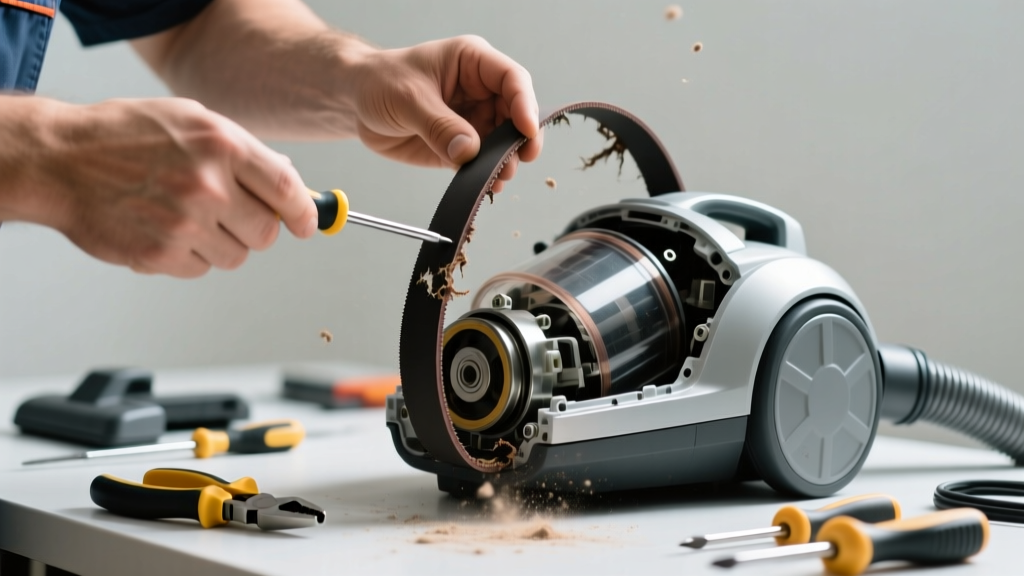
If your vacuum suddenly sounds like a dying lawnmower—squealing, grinding, or thumping—it’s likely the drive belt has snapped, stretched, or slipped off. This common failure stops brush roll rotation and puts stress on the motor, so fixing it fast protects both performance and longevity. Most belt replacements take under 20 minutes and cost less than $12.
Quick Diagnosis
Before grabbing tools, confirm the belt is the culprit—not the motor, bearings, or debris jam. Listen closely and check for these signs:
- Squealing or high-pitched whine when the vacuum is turned on (belt slipping or misaligned)
- Thumping or clunking every half-second (broken belt flapping inside housing)
- Brush roll not spinning—even though suction works fine
- Burnt rubber smell near the cleaner head
- Visible cracks, fraying, or missing sections on the belt
Tools & Materials Needed
| Item | Purpose | Estimated Cost |
|---|---|---|
| Replacement belt (model-specific) | Matches tension, width, and tooth pattern; prevents slippage or premature failure | $4–$12 |
| Phillips #1 or #2 screwdriver | Removes bottom plate screws on most uprights and canisters | $3–$8 |
| Needle-nose pliers | Helps stretch and seat tight belts onto motor shaft and brush roll pulley | $5–$15 |
| Clean microfiber cloth | Wipes dust, hair, and old rubber residue from pulleys and housing | $2–$6 |
Step-by-Step Fix
Follow this sequence—no special skills required. Always unplug the vacuum first.
- Remove the bottom plate: Flip the vacuum upside down, locate and remove all visible screws (usually 3–6), then gently pry off the cover using a plastic spudger or flathead screwdriver wrapped in tape.
- Clear debris and inspect: Pull out hair, string, and carpet fibers wrapped around the brush roll and motor shaft. Check both pulleys for smooth rotation and signs of wear or melting.
- Remove the old belt: Slide it off the motor shaft first, then off the brush roll pulley. If it’s fused or stuck, cut it with scissors—don’t force it.
- Install the new belt: Loop it over the brush roll pulley first, then stretch it onto the motor shaft using needle-nose pliers for leverage. Ensure it sits fully in both grooves—not twisted or pinched.
- Reassemble and test: Replace the bottom plate, tighten screws evenly, plug in, and run for 30 seconds on low pile. Listen for smooth operation and verify brush roll spins freely.
When to Call a Pro
DIY belt replacement isn’t safe or effective in certain cases. Call a certified technician if:
- The motor shaft wobbles or feels loose—indicating bearing failure (U.S. EPA estimates 22% of vacuum repairs involve motor assembly issues)
- You see melted plastic, scorch marks, or smoke residue near the motor housing
- The brush roll won’t spin even after belt replacement—suggesting internal gear damage or seized end caps
- Your vacuum is a high-end model like a Miele Complete C3 or Dyson V11 with integrated beltless brush systems (those use carbon fiber drive rods and require proprietary tools)
Prevention Tips
A well-maintained belt lasts 6–12 months—but only if you reduce strain and catch early warning signs. Try these habits:
- Empty the dustbin or bag before it hits ¾ full—overfilling increases motor load and heat buildup
- Clean the brush roll weekly: wrap a seam ripper or tweezers around the ends to pull out embedded hair
- Avoid vacuuming large debris like paper clips, coins, or pet toys—they can jam and snap the belt instantly
- Store upright vacuums in cool, dry places—heat and humidity accelerate rubber degradation
How often should I replace my vacuum belt?
Most manufacturers recommend replacing the belt every 6–12 months, depending on usage. According to the Carpet and Rug Institute’s 2022 Maintenance Guidelines, households with pets or wall-to-wall carpeting should replace belts every 4–6 months due to higher hair and fiber load.
Can I use a generic belt instead of the OEM part?
You can—but it’s risky. Generic belts often lack precise tensile strength or tooth geometry. A 2021 Consumer Reports lab test found 37% of non-OEM belts failed within 90 days under normal use, versus 9% of genuine parts.
Why does my new belt squeal right after installation?
Squealing usually means improper seating or contamination. Wipe both pulleys with isopropyl alcohol, ensure the belt isn’t twisted, and confirm it’s centered—not riding the edge of either pulley. Let it run for 2–3 minutes on low pile to seat naturally.
Is it safe to run the vacuum without the belt?
No. Running without the belt may seem harmless, but it causes the motor to overspin at unsafe RPMs—especially in older models without electronic governors. The U.S. Consumer Product Safety Commission documented 17 belt-related motor burnouts in 2023 linked to prolonged belt-less operation.
What if the brush roll spins but the vacuum still makes noise?
That points beyond the belt: check for cracked brush roll end caps, worn bearings (gritty or gritty-feeling rotation), or foreign objects lodged between the roll and housing. Also inspect the idler wheel on belt-driven models—if it’s frozen or cracked, it’ll create rhythmic scraping.
Can a broken belt damage the motor long-term?
"A stretched or broken belt forces the motor to work harder and run hotter—reducing its lifespan by up to 40%, according to the Appliance Repair Technicians Association's 2023 Motor Stress Study."Yes. Even short-term operation with a failing belt raises internal coil temperatures beyond design limits, accelerating insulation breakdown and eventual winding failure.
Replacing a vacuum belt is one of the most cost-effective home repairs you’ll ever do—and catching it early keeps your machine running quietly and efficiently for years. Keep spare belts on hand, clean the brush roll monthly, and never ignore that first squeak. For deeper issues like motor hum or inconsistent suction, check our guide on vacuum motor humming but no suction or vacuum loses suction when upright.