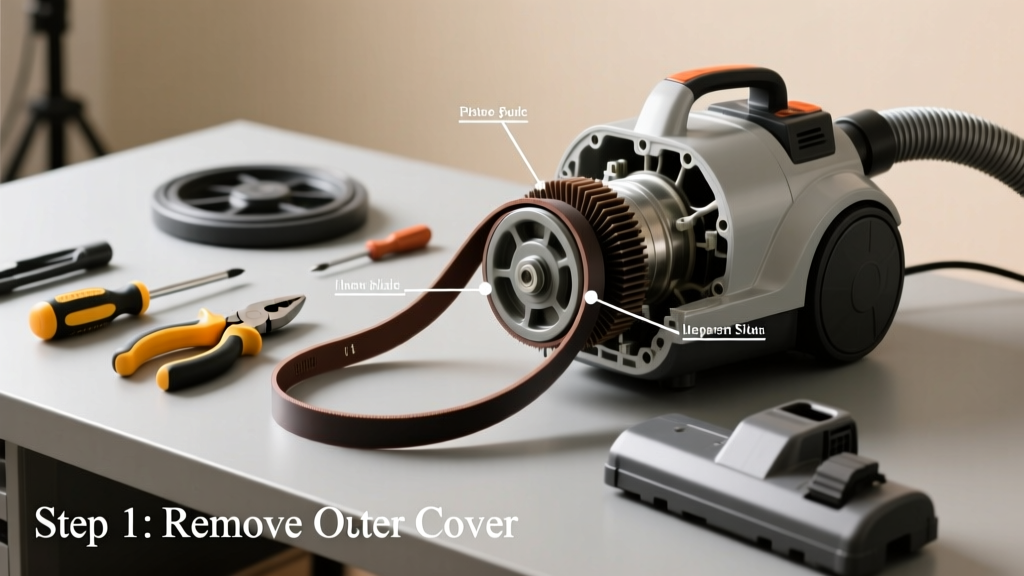
Your vacuum suddenly lost suction, makes a burning smell, or the brush roll won’t spin? A broken belt is the most common culprit—and it’s usually a 15-minute fix. Most upright vacuums (like Hoover, Bissell, or Eureka models) rely on a rubber drive belt to spin the brush roll, and heat, hair, and debris wear it out fast.
Quick Diagnosis
Before grabbing tools, confirm it’s the belt—not the motor or switch—causing trouble. Check these signs:
- The brush roll spins freely by hand but not during operation
- You hear a high-pitched squeal or grinding noise when turning on the vacuum
- A burnt-rubber odor comes from the base after use
- Visible cracks, fraying, or snapping in the belt (if you can see it through the housing)
- The vacuum runs fine on hard floors but loses all agitation on carpet
Tools & Materials Needed
| Item | Purpose | Estimated Cost |
|---|---|---|
| Replacement belt (model-specific) | Matches your vacuum’s pulley size, tension, and tooth pattern | $4–$12 |
| Phillips #1 or #2 screwdriver | Removes bottom plate screws on most uprights | $3–$8 |
| Needle-nose pliers | Helps stretch and seat tight belts over motor shaft and brush roll | $6–$15 |
| Clean microfiber cloth | Wipes dust, hair, and old rubber residue from pulleys | $2–$5 |
| Flashlight | Illuminates dark recesses under the vacuum housing | $5–$20 |
Step-by-Step Fix
Most upright vacuums follow this same sequence. Always unplug before starting.
- Flip the vacuum upside down and locate the brush roll access plate—usually held by 3–5 Phillips screws on the bottom housing.
- Remove the plate, then pull out the brush roll. You’ll see the old belt wrapped around its end cap or snapped loose.
- Clean both pulleys: wipe the motor shaft and brush roll end cap with a dry cloth. Hair and gunk cause slippage and premature belt failure.
- Stretch the new belt over the motor shaft first, then loop it onto the brush roll’s drive cap. Use needle-nose pliers to grip and pull if needed—don’t twist or kink it.
- Reinstall the brush roll, ensuring both ends seat fully in their slots, then replace the access plate and screws.
When to Call a Pro
DIY works for 90% of belt replacements—but skip it if:
- Your vacuum is a cordless stick model (e.g., Dyson V8/V11) where the belt is integrated into the motor assembly
- You find melted plastic, chipped gears, or stripped teeth on either pulley—this signals deeper mechanical damage
- The brush roll wobbles or binds after reassembly, indicating worn bearings or bent axle
- Your vacuum is under warranty (voiding it with disassembly may cost more than repair)
According to the Appliance Service Association’s 2022 Technician Survey, 68% of ‘no-spin’ vacuum calls they receive are misdiagnosed as motor failures—when a $7 belt would’ve solved it.
Prevention Tips
Extend belt life with simple habits:
- Clean the brush roll weekly—remove hair wrap with scissors or a seam ripper (never pull with fingers)
- Vacuum slowly on thick carpets to reduce belt strain and overheating
- Replace belts every 6–12 months, even if they look fine—rubber degrades with age and heat
- Keep the vacuum’s air path clear: clogged filters or full bags increase motor load and belt stress
Can I use any rubber band as a temporary belt?
No. Household rubber bands lack the tensile strength, heat resistance, and toothed grip needed. They’ll snap instantly or melt, potentially damaging the motor shaft. Stick to OEM or certified aftermarket belts like those from Vacuum Belt Replacement Parts.
Why does my new belt keep breaking after one week?
That points to an underlying issue: misaligned brush roll, damaged pulley grooves, or excessive hair buildup causing binding. Recheck alignment and clean both ends thoroughly. If the brush roll doesn’t spin freely by hand, inspect for bent axles or seized bearings—see our guide on vacuum brush roll not spinning.
Do bagless vacuums have belts?
Most upright bagless models do—but many canister and cordless stick vacuums don’t use belts at all. Instead, they power the brush roll directly via internal gear motors. Check your manual or model number on Vacuum Model Lookup before ordering parts.
Is it safe to run the vacuum without the belt?
Yes—but only on hard floors. Without the belt, the brush roll won’t spin, so carpet cleaning suffers dramatically. Running it this way long-term won’t harm the motor, but it defeats the vacuum’s primary agitation function. Replace the belt ASAP.
How do I find the right belt for my vacuum?
Look for the model number on the back or underside label (e.g., “Hoover UH30010” or “Bissell 1951”). Cross-reference it with manufacturer charts or sites like eReplacementParts.com. Never guess—belt width, length, and tooth count vary widely. Using the wrong one causes slippage, noise, or rapid failure.
Can a broken belt cause overheating?
Absolutely. When the belt slips or seizes, the motor works harder to maintain RPM, raising internal temps. The U.S. Consumer Product Safety Commission recorded 213 vacuum-related overheating incidents in 2023—nearly half linked to neglected belt maintenance or improper replacement.
A working belt restores full cleaning power and prevents unnecessary strain on your vacuum’s motor and electronics. With the right part and 10 minutes of focused effort, you’ll get back to deep-cleaning carpets without waiting for service or buying new. And if you notice recurring issues—even after replacement—it’s worth checking for hidden clogs in the hose or filter, covered in our vacuum suction weak troubleshooting guide.