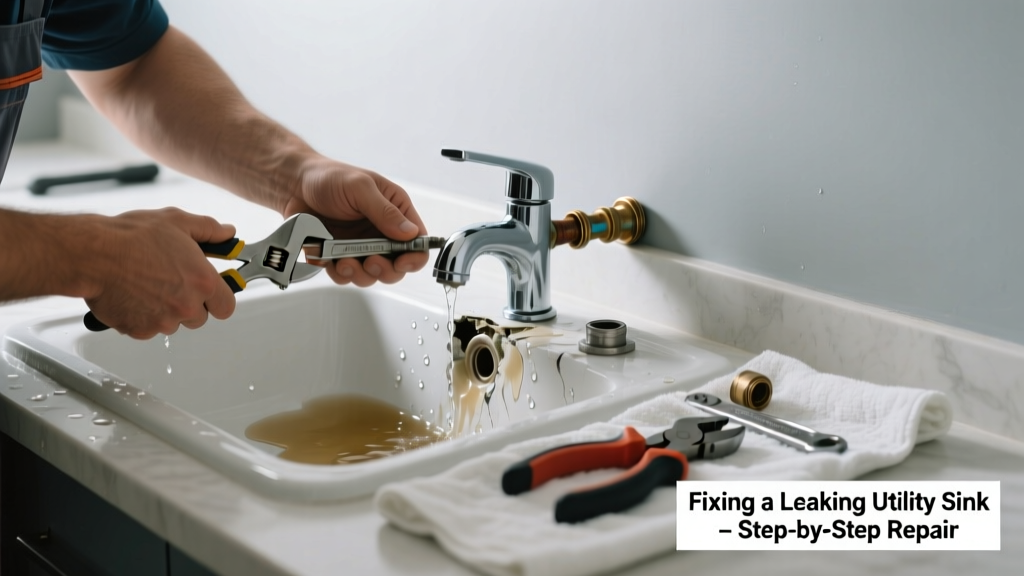
Your utility sink suddenly drips under the cabinet, sprays sideways when you turn on the faucet, or won’t drain at all — and now there’s a puddle spreading toward your water heater. These aren’t just annoyances; they’re early warnings of bigger problems like rot, mold, or pipe failure.
Quick Diagnosis
Before grabbing tools, identify the source. Most utility sink failures fall into one of five categories:
- Faucet handle leaks (dripping spout or base)
- Drain assembly leaks (water pooling around the sink bottom or trap)
- Hose connection failure (cracked supply lines or loose compression nuts)
- Garbage disposal coupling leak (if unit is attached)
- Clogged or damaged P-trap causing slow drainage and overflow
Tools & Materials Needed
| Item | Purpose | Estimated Cost |
|---|---|---|
| Adjustable wrench | Tightens compression fittings and slip-nut connections without stripping threads | $12–$25 |
| Channel-lock pliers | Grips corroded or rounded-off nuts on old galvanized pipes | $10–$20 |
| Plumber’s tape (Teflon) | Seals threaded joints on supply lines and faucet tails | $3–$6 |
| Replacement rubber washers (¼" and ⅜") | Fixes dripping faucets caused by worn-out internal seals | $2–$5 |
| Flexible braided stainless steel supply lines | Upgrades brittle plastic or corroded copper lines prone to burst | $8–$15 each |
Step-by-Step Fix
Start with the most likely culprit: the faucet. Then move downstream to drains and supply lines.
- Shut off both hot and cold water valves — usually located under the sink or near the water heater. Turn clockwise until snug. Test by opening the faucet briefly.
- Replace worn faucet washers: Remove handle screws (often hidden under decorative caps), unscrew the stem, and swap out the flat rubber washer (¼" for older models, ⅜" for newer ones). Reassemble and test.
- Repack or replace the P-trap: Place a bucket beneath the trap, loosen slip nuts with a wrench, inspect for hairline cracks or corrosion, clean debris, and reassemble using fresh plumber’s putty on the slip-joint washers.
- Swap out supply lines: If lines are kinked, bulging, or over 5 years old, disconnect and install new braided stainless steel lines — they last up to 10 years and resist bursting (per braided stainless steel supply lines testing).
When to Call a Pro
Some issues go beyond DIY safety or skill level. Call a licensed plumber if you encounter any of these:
- Leak originates from behind the wall or under the floor slab
- Galvanized steel supply pipes show heavy rust or flaking (corrosion risk)
- You smell sewer gas near the drain — indicates vent stack or trap seal failure
- Water pressure drops throughout the house when the utility sink runs
"Over 60% of emergency plumbing calls involving utility sinks stem from neglected supply line replacement — not faucet failure," says Mike Rizzo, master plumber and lead instructor at the National Association of Plumbing Contractors’ 2022 Field Survey.
Prevention Tips
Small habits extend your sink’s life significantly. Replace supply lines every 7 years, even if they look fine. Wipe down the faucet base monthly to catch early seepage. Install a shut-off valve lock cap to prevent accidental knocks that loosen connections. And always run hot water through the drain weekly to melt grease buildup — especially if you rinse paintbrushes or oily rags there. For long-term protection, consider upgrading to a heavy-duty utility sink installation with reinforced mounting brackets and commercial-grade traps.
Can I use bleach to unclog my utility sink drain?
No — bleach corrodes metal trap components and damages PVC over time. It also reacts dangerously with other cleaners. Use a manual drain snake or baking soda + vinegar instead. For stubborn clogs, try a natural enzyme cleaner like Green Gobbler, which breaks down organic matter without harming pipes (EPA Safer Choice certified, 2023).
Why does my utility sink gurgle when the washing machine drains?
This signals shared venting or an undersized drain line. The washing machine’s high-volume discharge creates negative air pressure, pulling water from your sink’s trap. A licensed plumber should inspect your vent stack and possibly install an air admittance valve (AAV) or increase pipe diameter.
Is it safe to tighten a leaking P-trap with duct tape?
Never. Duct tape degrades fast when wet and provides zero pressure resistance. It masks the real issue and risks sudden failure — potentially flooding your basement. Always use proper slip-joint washers and hand-tighten only (overtightening cracks plastic traps).
How do I know if my faucet cartridge needs replacing?
If replacing the washer doesn’t stop dripping, and the handle feels gritty or stiff when turning, the cartridge is likely scored or warped. Remove the handle and stem, then compare the cartridge to manufacturer specs — Moen, Delta, and Kohler publish free PDFs online. Cartridges cost $12–$35 and take under 20 minutes to swap.
What’s the best sealant for a cracked sink basin?
None — epoxy or silicone patch kits fail under constant water exposure and thermal cycling. Cracks in fiberglass or acrylic utility sinks compromise structural integrity. Replacement is safer and more cost-effective than temporary fixes. Look for 22-gauge stainless steel models rated for industrial use — they resist impact and chemical exposure far better.
Can a leaking utility sink cause mold behind drywall?
Yes — even small, consistent leaks create ideal conditions for mold growth within 48 hours. According to the U.S. EPA, 14% of household water usage is lost to undetected leaks, many originating from utility sinks. If you notice discoloration or musty odors near the wall behind the sink, cut a 4" inspection hole at the baseboard and check framing moisture with a digital meter before drywall repair.
A working utility sink shouldn’t be a guessing game — it’s your first line of defense against laundry floods, garage spills, and muddy boot cleanup. Fixing leaks promptly keeps your subfloor dry, your water bill honest, and your peace of mind intact. And if you’ve upgraded the supply lines and rebuilt the trap but still see moisture, don’t ignore it: that’s your cue to trace the path upstream — sometimes the problem isn’t the sink itself, but the shutoff valve or the branch line feeding it. Check those next.