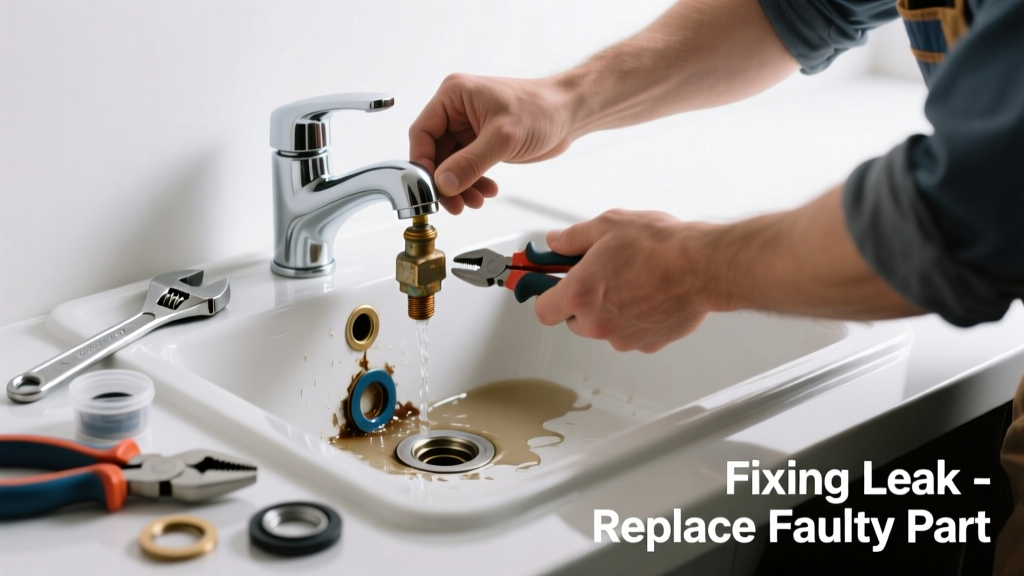
A utility sink leak isn’t just annoying—it can waste hundreds of gallons per month and risk water damage to floors, walls, or subflooring. Most leaks trace to one replaceable component, not the entire sink, so you likely don’t need a full replacement. Let’s get it fixed right, fast.
Quick Diagnosis
Before grabbing tools, identify where the drip originates:
- Under the handle → Worn cartridge or O-ring in the faucet stem
- At the spout base → Failed gasket or corroded valve seat
- Below the drain basket → Cracked pop-up assembly or deteriorated putty seal
- From the P-trap or tailpiece → Loose slip-nut or cracked plastic pipe (common in sinks over 10 years old)
- At the wall supply lines → Failed compression ring or worn braided hose
Tools & Materials Needed
| Item | Purpose | Estimated Cost |
|---|---|---|
| Adjustable wrench | Tightens/loosens supply line nuts and trap fittings without stripping threads | $12–$25 |
| Basin wrench | Reaches tight spaces behind sink to tighten mounting nuts on faucet or drain | $18–$35 |
| Replacement cartridge (Moen, Delta, or Kohler-specific) | Exact match prevents flow issues; verify model number stamped under handle or on escutcheon | $8–$22 |
| Plumber’s grease (silicone-based) | Lubricates O-rings and cartridges to prevent binding and premature wear | $4–$9 |
| Dielectric union (if replacing galvanized-to-copper supply lines) | Prevents galvanic corrosion that causes pinhole leaks in mixed-metal plumbing | $6–$14 |
Step-by-Step Fix
Follow these methods based on your leak location:
- Faucet handle drip: Shut off hot/cold valves under sink, remove handle screw (often hidden under decorative cap), pull handle, unscrew retaining nut, extract cartridge, compare to new one side-by-side before installing with fresh plumber’s grease.
- Drain body leak: Loosen locknut under sink with basin wrench, lift out drain assembly, scrape old plumber’s putty from flange, apply fresh putty (¼" thick rope), reseat drain, tighten locknut evenly—don’t overtighten.
- Supply line leak at shutoff valve: Turn off main water, disconnect line, inspect ferrule and compression ring for nicks or flattening; replace both, hand-tighten then add ½ turn with wrench—overtightening cracks brass bodies.
- P-trap drip: Place bucket underneath, loosen slip-nuts by hand first, inspect washers for cracking or deformation, replace with new nylon washers, reassemble finger-tight plus ¼ turn with wrench.
When to Call a Pro
DIY stops where safety or code compliance begins:
- You discover corroded galvanized steel pipes feeding the sink—replacement requires soldering or press-fit connections beyond most homeowners’ skill level
- The leak originates inside the wall behind the sink, especially if drywall is stained or soft (sign of long-term moisture exposure)
- Your utility sink connects to a floor drain or sump pump system, and the leak affects backup prevention integrity
- You’re unable to shut off water at the fixture—meaning shutoff valves are seized or missing—and must access the main house valve or meter
"Over 68% of utility sink leaks occur at the faucet cartridge or drain flange—both highly repairable with under $30 in parts and basic tools." — Plumbing Manufacturers Institute, 2022 Repair Trends Report
Prevention Tips
Extend your sink’s life with simple habits:
- Turn handles gently—never force them past resistance, which damages internal seats and cartridges
- Flush aerators every 6 months to prevent mineral buildup that stresses seals
- Inspect supply lines annually for bulging, cracking, or rust-colored streaks (early signs of failure)
- Use only non-abrasive cleaners—steel wool or harsh acids degrade chrome plating and accelerate corrosion
Can I reuse the old O-rings when replacing the cartridge?
No. Even if they look intact, O-rings lose elasticity after heat and chemical exposure. Reusing them guarantees a reoccurring leak within weeks. Always install the new ones included with the cartridge—or buy a universal O-ring kit ($5 at hardware stores) for future repairs.
What if the leak returns after tightening the P-trap?
If tightening doesn’t stop it, the trap itself may be cracked or warped—especially common with older PVC units exposed to freezing temps or heavy impacts. Replace the entire P-trap assembly ($7–$12) rather than chasing leaks with repeated adjustments.
Is Teflon tape needed on supply line threads?
No—compression fittings (the standard for braided supply lines) rely on metal-to-metal contact, not thread sealing. Teflon tape here can interfere with proper seating and cause leaks. Reserve tape for threaded pipe joints like angle stops or male adapters.
How do I know if my faucet uses a cartridge vs. ceramic disc?
Remove the handle and look inside: cartridges are cylindrical, often color-coded (red/blue), and slide straight out. Ceramic discs are flat, stacked plates visible beneath a central cap—common in newer Moen or Delta models. When in doubt, snap a photo and search the brand + "faucet model number + parts diagram" online.
Can I replace just the pop-up lever without removing the whole drain?
Yes—if the lever is bent or the pivot rod is corroded. Unscrew the clevis strap under the sink, detach the pivot rod from the stopper, swap in a universal replacement lever kit ($4–$8), and adjust the rod length so the stopper fully seals but doesn’t bind. Test with water before final tightening.
Do utility sink faucets require special high-flow parts?
Most standard residential cartridges work fine—but if your sink feeds a pressure washer or laundry setup, confirm flow rate specs. Some commercial-grade cartridges (e.g., Delta RP47201) support up to 5.5 GPM vs. typical 2.2 GPM. Check your faucet’s spec sheet before ordering.
Fixing a leaking utility sink doesn’t mean wrestling with a full remodel—it means knowing which part fails most often and having the right tool for that exact job. With the right diagnosis and a few minutes of focused work, you’ll stop the drip, protect your flooring, and avoid a plumber’s service call. For related help, see our guide on how to replace a kitchen faucet cartridge or P-trap leak fix.