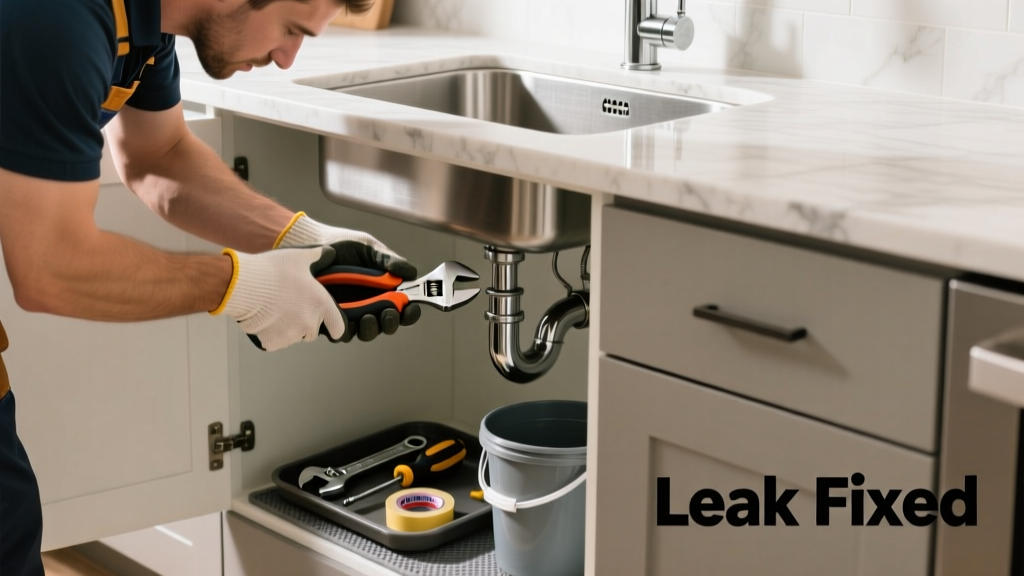
A utility sink in your kitchen leaking water onto the floor isn’t just annoying—it’s a potential source of water damage, mold growth, and higher water bills. Even a slow drip can waste over 3,000 gallons per year, according to the U.S. EPA’s 2023 WaterSense report. Don’t ignore it: most leaks are fixable in under an hour with basic tools.
Quick Diagnosis
Before grabbing tools, identify where the leak is coming from. Common sources include:
- The faucet handle or spout base (worn cartridge or O-ring)
- Under the sink at the P-trap or slip-nut connections (loose or corroded fittings)
- Where the drain flange meets the sink basin (dried-out putty or failed silicone seal)
- Cracks in the sink body itself (especially in older porcelain or fiberglass units)
- The supply line connections at the shutoff valves or faucet tailpieces
Tools & Materials Needed
| Item | Purpose | Estimated Cost |
|---|---|---|
| Adjustable wrench | Tightens or loosens nuts on supply lines and P-traps without stripping threads | $12–$25 |
| Plumber’s putty or silicone caulk | Seals drain flange to sink surface; putty preferred for metal drains, silicone for plastic | $3–$8 |
| Replacement O-rings (¼" and ⅜" sizes) | Common cause of dripping faucets; sold in multi-packs at hardware stores | $2–$5 |
| Thread seal tape (Teflon tape) | Prevents leaks on threaded pipe joints like supply line connections | $1–$4 |
| Flashlight and rag | Helps spot hidden drips and absorb residual water during testing | $0–$6 |
Step-by-Step Fix
Try these methods in order—from simplest to most involved:
- Tighten slip-nuts and compression fittings: Shut off water, dry the area, then snug (don’t overtighten) all visible nuts under the sink with an adjustable wrench. Test with water for 2 minutes.
- Replace faucet O-rings: Remove handle, unscrew cartridge, pull out old O-rings, and replace with matching size. Lubricate new ones with plumber’s grease before reassembly.
- Re-seat the drain flange: Loosen the locknut underneath, lift the flange, scrape off old putty, apply fresh plumber’s putty (½" rope), press flange back in, and tighten locknut evenly.
- Swap out the P-trap: If corroded or cracked, replace the entire trap assembly—use PVC for durability and easier alignment than chrome.
When to Call a Pro
Stop and call a licensed plumber if you encounter any of these:
- Leak persists after tightening and replacing O-rings and seals
- Water is seeping from behind the wall or cabinet framing—not just under the sink
- You notice warped subflooring, soft drywall, or musty odors indicating hidden moisture
- Your utility sink connects to a garbage disposal or dishwasher drain line that’s leaking at the junction
- You’re uncomfortable shutting off main water or soldering copper supply lines
According to the Insurance Institute for Business & Home Safety’s 2023 report, 68% of water damage claims linked to kitchen sinks involved delayed professional intervention after initial DIY attempts failed.
"Never force a compression nut past hand-tight—overtightening cracks brass fittings and guarantees a new leak." — Master Plumber Rita Chen, Modern Residential Plumbing Handbook, 2022
Prevention Tips
Maintain your utility sink proactively:
- Inspect under-sink connections every 6 months for corrosion or dampness
- Replace rubber supply lines every 5 years—even if they look fine (they degrade internally)
- Use a mesh strainer to keep debris from clogging and stressing the P-trap
- Turn shutoff valves on/off once per year to prevent seizing
- Avoid pouring grease, paint thinner, or harsh solvents down the drain—they degrade seals and traps
Can I use bleach to clean around the leak?
No—bleach corrodes metal fittings and degrades rubber gaskets and O-rings faster. Use diluted vinegar or a mild dish soap solution instead. For disinfecting, a 70% isopropyl alcohol wipe is safer near plumbing.
Why does my utility sink leak only when I run hot water?
This usually points to thermal expansion stressing a compromised connection—often the hot supply line’s compression fitting or a failing faucet cartridge. Check the hot-side O-rings first, then inspect the supply line for kinks or age-related brittleness.
Is a cracked sink basin repairable with epoxy?
Small hairline cracks in fiberglass or acrylic sinks may hold temporarily with marine-grade epoxy, but porcelain or stainless steel cracks are not reliably repairable. A cracked utility sink should be replaced—especially if near cabinetry or flooring, where leaks risk structural damage. See our guide on replacing a utility sink.
Do I need to shut off the main water valve?
Only if both hot and cold shutoff valves under the sink are missing, seized, or leaking themselves. Otherwise, turn off both individual shutoffs—test them first by opening the faucet to confirm flow stops. Keep a bucket handy in case valves drip during operation.
What’s the difference between plumber’s putty and silicone for the drain?
Plumber’s putty stays pliable and doesn’t cure—it’s ideal for metal drain assemblies and easy to rework. Silicone fully cures into a rigid, waterproof seal, better for plastic drains or wet environments—but requires 24 hours to set before use. Never use silicone on a pop-up drain mechanism; it will gum up moving parts.
How tight should the P-trap nuts be?
Tighten until resistance increases noticeably, then give one final quarter-turn with fingers only. Over-tightening strips threads on PVC or cracks chrome-plated brass. If it still leaks, check washer alignment or replace the entire trap—don’t crank it further.
A leaking utility sink is rarely a catastrophe—but left unaddressed, it becomes one. Most fixes take less time than ordering takeout, and catching the issue early keeps your cabinets, flooring, and water bill intact. If you’ve tried the top three fixes and still see moisture, revisit your shutoff valve integrity or consider upgrading to a heavy-duty stainless steel sink with reinforced drain threads—details in our best utility sinks for kitchens comparison.