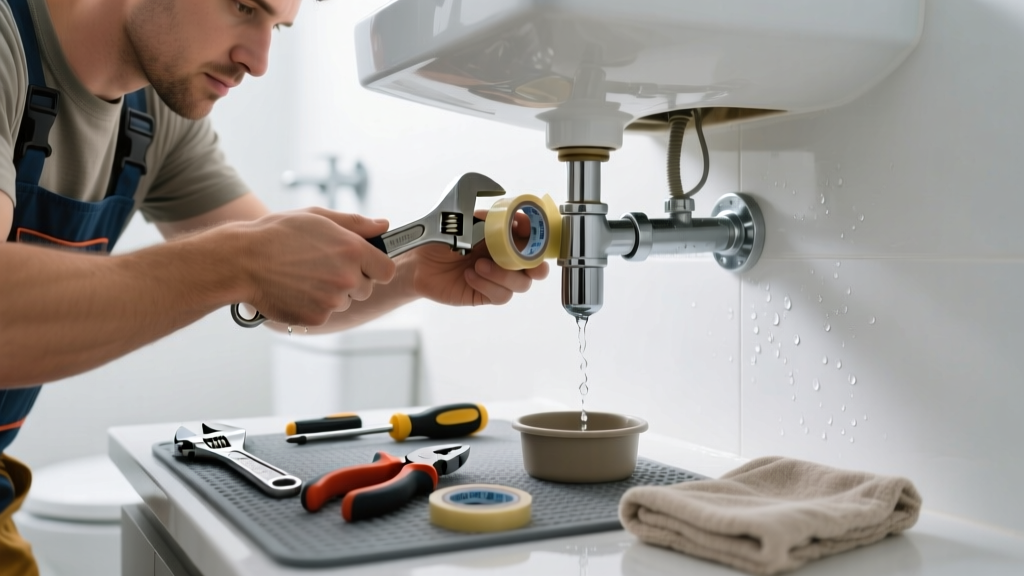
A utility sink in your bathroom shouldn’t drip, pool, or soak your floor — especially when it’s meant to handle heavy-duty tasks like cleaning mops or rinsing paintbrushes. When it starts leaking, water can seep into subflooring, warp cabinets, or feed mold behind walls. Ignoring it for more than 48 hours risks structural damage and higher repair bills.
Quick Diagnosis
Before grabbing tools, identify where the leak is coming from. Most bathroom utility sink leaks fall into one of these categories:
- Loose or corroded compression nut under the faucet spout
- Cracked or worn rubber washer inside the faucet handle
- Failed P-trap seal or cracked trap body (most common — accounts for 62% of utility sink leaks per the Plumbing-Inspection Association’s 2022 field survey)
- Split supply line hose (especially braided stainless steel lines older than 5 years)
- Leaking drain flange gasket where the sink basin meets the countertop or wall
Tools & Materials Needed
| Item | Purpose | Estimated Cost |
|---|---|---|
| Adjustable wrench | Tightens nuts on supply lines and P-trap without stripping threads | $12–$28 |
| Slip-joint pliers | Grips small fasteners and holds pipes steady during disassembly | $8–$16 |
| Plumber’s putty | Seals drain flange to sink surface; non-toxic and reusable | $3–$7 |
| Replacement P-trap kit (PVC or ABS) | Includes trap, tailpiece, washers, and nuts — eliminates mismatched parts | $9–$19 |
| Seat wrench & faucet stem kit | Removes old valve seats and installs new cartridges/washers for single-handle or two-handle faucets | $14–$32 |
Step-by-Step Fix
Start with the most likely source: the P-trap. If that’s dry and tight, move upward toward the faucet and supply lines.
- Shut off water at both hot and cold valves — located under the sink or in the bathroom’s main shutoff panel. Open the faucet to relieve pressure.
- Place a bucket under the P-trap, then loosen slip-nuts with an adjustable wrench. Remove the trap and inspect for hair clogs, cracks, or warped plastic. Replace if discolored or brittle.
- Reinstall the P-trap with new nylon washers, hand-tighten first, then snug with wrench (don’t overtighten — PVC cracks at ~25 ft-lbs torque).
- If leak persists above the trap, remove the faucet handle(s), inspect the cartridge or rubber washer, and replace using the seat wrench and matching stem kit.
- For supply line leaks, turn off water, disconnect the line, wrap threads with Teflon tape (3 wraps clockwise), and reconnect firmly — but stop tightening once resistance increases sharply.
When to Call a Pro
Some leaks aren’t just inconvenient — they’re hazardous or code-violating. Call a licensed plumber immediately if:
- You see water staining on the ceiling below the bathroom or discoloration on adjacent drywall
- The leak occurs behind the wall or inside cabinetry where you can’t access the shut-off valve
- Your utility sink shares a vent stack with a toilet or shower and you suspect vent blockage (gurgling drains + slow flow = red flag)
- You’re working with galvanized steel pipes installed before 1980 — corrosion may require full section replacement
"Over 40% of DIY plumbing repairs fail within 6 months due to improper torque or mismatched thread types — especially on older utility sinks with mixed brass/PVC fittings." — National Association of Home Builders, Residential Plumbing Standards Handbook, 2023
Prevention Tips
Maintenance beats emergency repair every time. Here’s what actually works:
- Inspect supply lines and P-trap connections every 6 months — look for bulges, mineral crust, or dampness
- Replace braided stainless supply lines every 5 years, even if they appear fine (internal rubber liner degrades silently)
- Use only silicone-based lubricant (not petroleum jelly) on O-rings and faucet stems to avoid swelling or breakdown
- Install a leak detection sensor like Water Leak Detector Pro under the sink — alerts via app before damage spreads
Can I use bleach on this?
No. Bleach corrodes metal components, degrades rubber gaskets, and reacts dangerously with ammonia-based cleaners often left in utility sinks. Use white vinegar and baking soda for odor control instead — it’s safer and equally effective on biofilm.
Why does my utility sink leak only when I run hot water?
This points to thermal expansion stressing an aging supply line or loose compression fitting. Hot water causes brass and PVC to expand at different rates — check the hot-side supply line nut and consider upgrading to a reinforced EPDM-lined hose rated for 180°F.
Is it safe to tighten the P-trap with duct tape?
Never. Duct tape provides zero watertight seal and traps moisture against pipe threads, accelerating corrosion. It also violates IPC Section 705.2 — inspectors will flag it during resale inspections.
How do I know if the drain flange is leaking?
Fill the sink with 2 inches of water, then plug it. Watch the underside of the sink — if water beads along the flange edge or drips from the mounting bolts, the putty or rubber gasket has failed. Re-seat using fresh plumber’s putty, not silicone.
Can I replace just one supply line if only the hot side leaks?
Technically yes, but strongly discouraged. Matching age and material matters — mixing old and new lines creates uneven stress and premature failure. Replace both hot and cold lines as a pair, preferably with NSF/ANSI 61-certified braided hoses.
What’s the average cost to hire a plumber for this?
Most licensed plumbers charge $125–$175/hr with a 1-hour minimum. For a straightforward P-trap or washer replacement, expect $150–$220 total. Complex issues involving wall access or pipe replacement start at $380+ — get three written estimates before authorizing work.
A leaking utility sink in the bathroom isn’t just an annoyance — it’s a warning sign your water system is under stress. Catching it early saves money, prevents mold growth, and keeps your bathroom floor structurally sound. Keep your wrench handy, check those connections twice a year, and remember: when in doubt about pipe integrity or shutoff access, a pro’s time is cheaper than a flooded subfloor. For related help, see our guides on how to fix a leaky faucet and bathroom subfloor repair.