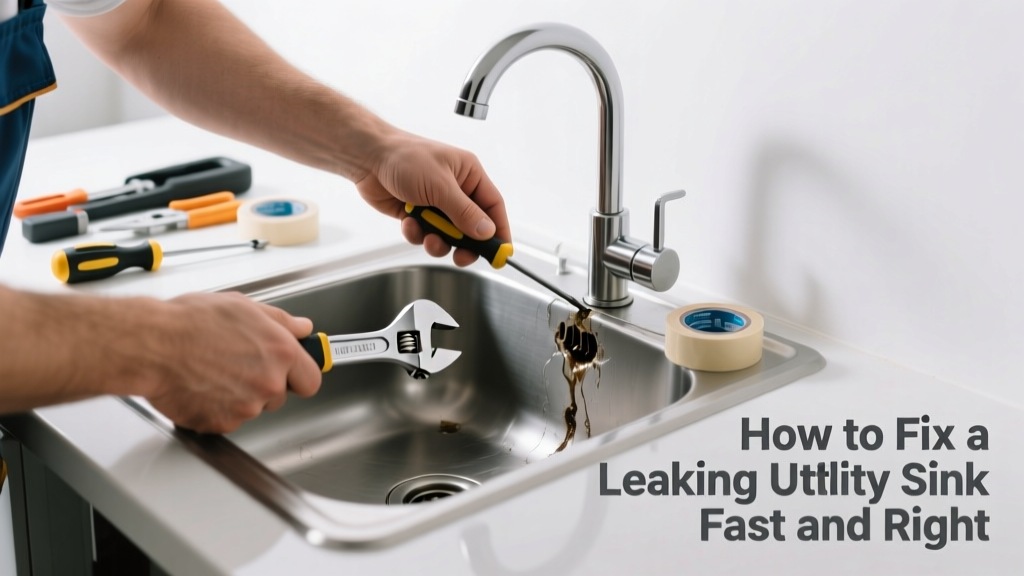
A utility sink leak isn’t just an annoyance—it’s a potential source of water damage, mold growth, and wasted water. Left unaddressed, even a slow drip can waste over 3,000 gallons per year, according to the U.S. EPA’s 2023 WaterSense report. Start here to identify, stop, and prevent leaks—no plumber required (yet).
Quick Diagnosis
Before grabbing tools, pinpoint where the leak originates. Most utility sink leaks fall into one of these categories:
- Leaking faucet handle or spout (worn cartridge or O-ring)
- Dripping drain assembly (cracked gasket or loose locknut)
- Loose or corroded supply line connections (especially at shutoff valves)
- Cracked sink basin (common in older fiberglass or porcelain units)
- Failed P-trap or tailpiece seal (often visible under the sink)
Tools & Materials Needed
| Item | Purpose | Estimated Cost |
|---|---|---|
| Adjustable wrench | Tightens supply lines, P-trap nuts, and faucet mounting hardware | $12–$25 |
| Channel-lock pliers | Grips stubborn or rounded-off nuts; useful for old galvanized pipes | $10–$18 |
| Replacement O-rings (size #10 & #12) | Fixes dripping handles on compression or cartridge faucets | $2–$5 |
| Plumber’s putty or silicone sealant | Re-seals drain flange and strainer basket during reassembly | $4–$9 |
| Flexible braided stainless supply lines (3/8" FIP x 3/8" FIP) | Replaces corroded or kinked rubber lines; lasts 10+ years | $10–$22 |
Step-by-Step Fix
Follow these methods in order of likelihood and complexity. Always shut off both hot and cold water supply valves before starting.
- Replace faucet O-rings: Remove handle screw, lift off handle, unscrew bonnet nut, pull out stem, swap worn O-rings (match size exactly), reassemble, and test.
- Repack the P-trap: Place bucket underneath, loosen slip-nut at trap inlet and outlet, remove trap, clean threads, replace worn washers, reassemble with fresh pipe joint compound, hand-tighten only.
- Swap supply lines: Disconnect old lines at both shutoff valve and faucet tailpiece, wrap threads with Teflon tape, attach new braided lines, tighten firmly but don’t overtighten—over-torquing cracks brass fittings.
- Reseal drain flange: Remove strainer basket, scrape old putty, apply fresh plumber’s putty around flange underside, press into sink, tighten locknut from below, wipe excess putty, let cure 2 hours before use.
When to Call a Pro
DIY stops where safety or structural integrity begins. Call a licensed plumber if:
- You detect persistent leaks after replacing all accessible seals and lines
- The sink’s cast iron or steel body shows hairline cracks or rust-through holes
- Water is pooling beneath the floor or staining drywall behind the wall cabinet
- Your home has polybutylene pipes (installed 1978–1995)—they’re prone to sudden failure and require full replacement
"Over 68% of utility sink leaks originate from supply line connections or P-trap assemblies—not the sink itself," says plumbing contractor Marcus Lee in Modern Residential Plumbing Repair (2022 edition).
Prevention Tips
Maintain your utility sink like you would a major appliance—because it is one. Replace supply lines every 5 years, even if they look fine. Avoid pouring grease or paint thinner down the drain: they degrade rubber gaskets faster. Tighten P-trap nuts annually during spring cleaning—hand-tight plus ¼ turn with pliers is ideal. Install a water pressure regulator if your home exceeds 80 psi; high pressure accelerates seal fatigue. And always open and close shutoff valves fully once per season to prevent seizing.
Can I use bleach to clean the drain and stop a leak?
No. Bleach doesn’t fix mechanical leaks—and it can corrode metal parts, degrade rubber gaskets, and react dangerously with other cleaners. It may temporarily mask odor from standing water, but won’t address the root cause. For clogs, try a manual auger or baking soda/vinegar flush instead.
Why does my utility sink leak only when I use hot water?
This usually points to thermal expansion stressing a weak point—most often a worn cartridge or cracked faucet body. Hot water causes rubber components to swell unevenly, opening micro-gaps. Replace the entire faucet cartridge (not just O-rings) if this pattern repeats.
Is duct tape a safe temporary fix for a leaking supply line?
No. Duct tape offers zero pressure resistance and degrades quickly when wet. A failing supply line can burst at any moment, flooding your laundry room or basement. Use a proper emergency shutoff valve cap or a repair clamp rated for potable water lines—then replace the line within 48 hours.
How tight should I make the P-trap nuts?
Hand-tighten first, then give each slip-nut a firm ¼-turn with channel-locks. Over-tightening strips plastic threads or cracks brass. If water still seeps, replace the nylon or fiber washer inside—not the nut. Never use pipe dope on slip-joint threads; it creates false confidence and makes future repairs harder.
What’s the average lifespan of a utility sink faucet?
Brass-bodied utility faucets last 15–20 years with regular maintenance. Cheaper zinc-alloy models often fail at 7–10 years due to internal corrosion. If yours is over 12 years old and leaking at multiple points, replacement is more cost-effective than repeated part swaps. Consider a commercial-grade gooseneck faucet like those used in auto shops—it handles heavy-duty use and resists mineral buildup better.
Do I need a permit to replace my utility sink?
Generally no—for simple faucet or supply line replacements. But if you’re relocating the sink, adding new water lines, or connecting to a new drain line, most municipalities require a plumbing permit and inspection. Check with your local building department before cutting walls or rerouting pipes. Permits protect your home’s resale value and insurance coverage.
A working utility sink is essential for everything from washing pet bedding to rinsing paint brushes—and fixing its leaks shouldn’t mean calling in backup every time. With the right tools, a little patience, and attention to detail, most common leaks are resolved in under an hour. Keep spare O-rings and supply lines on hand, inspect connections twice yearly, and remember: a drip today is a flood tomorrow. For related fixes, see our guides on how to fix a leaky kitchen faucet and how to replace a P-trap correctly.