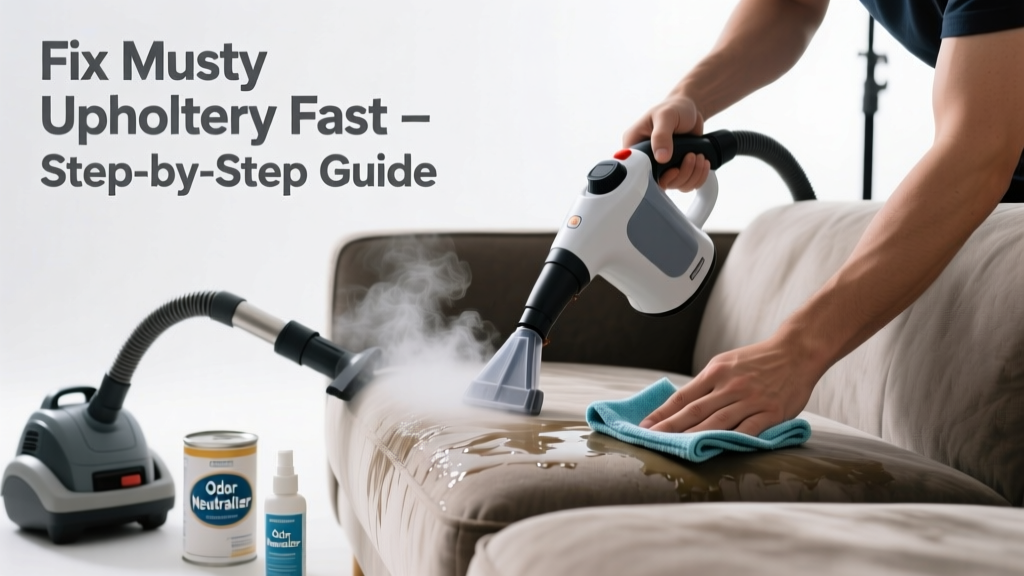
That damp, earthy, slightly sour odor clinging to your sofa or armchair? It’s not just unpleasant—it’s a red flag. Musty smells in upholstery almost always mean hidden moisture and likely mold or mildew growth beneath the fabric or padding. Left untreated, it can worsen air quality and damage furniture structure.
Quick Diagnosis
Before you clean, identify the source. Musty odors rarely come from surface dirt alone. Here are the most common culprits:
- Spills or pet accidents that soaked into foam or springs (even if dried)
- High humidity environments—especially basements or poorly ventilated rooms
- Water damage from leaks above or behind furniture
- Upholstery cleaned with too much water or left wet for >24 hours
- Aging foam padding retaining moisture and breaking down
Tools & Materials Needed
| Item | Purpose | Estimated Cost |
|---|---|---|
| HEPA vacuum with upholstery attachment | Removes spores, dust, and surface mold without spreading them | $80–$250 |
| Isopropyl alcohol (70%) | Kills mold on non-porous surfaces; evaporates fast, low residue | $5–$12 |
| Baking soda (food-grade) | Neutralizes odors; safe for fabrics and foam | $2–$6 |
| White vinegar (5% acetic acid) | Natural antimicrobial; breaks down organic odor sources | $2–$4 |
| Dehumidifier (30–50 pint/day) | Lowers ambient humidity to prevent regrowth | $180–$320 |
Step-by-Step Fix
Start with the least invasive method and escalate only if needed. Never saturate upholstery—wet foam takes 3–7 days to dry fully and can worsen mold.
- Vacuum thoroughly: Use a HEPA vacuum on all seams, tufts, and crevices for 10+ minutes. Empty the canister outdoors immediately after.
- Spot-treat with diluted vinegar: Mix 1 part white vinegar + 1 part distilled water in a spray bottle. Lightly mist affected areas—not soaking—and blot with microfiber. Let air-dry 2 hours before next step.
- Apply baking soda paste for deep odor absorption: Mix ¼ cup baking soda + 2 tsp water into a spreadable paste. Gently work into fabric pile with a soft brush. Let sit 12–24 hours, then vacuum completely.
- Sanitize seams and frame with isopropyl alcohol: Dampen a lint-free cloth (not dripping) and wipe visible wood/metal frames, spring wells, and underside edges. Alcohol kills surface mold but won’t penetrate deep foam.
When to Call a Pro
DIY has limits—and safety risks. Call a certified textile restoration specialist (IICRC-certified) if:
- You see black, green, or fuzzy growth under cushions or along seams
- The odor returns within 48 hours of cleaning—even after full drying
- Your home has tested >60% relative humidity for 3+ days (use a hygrometer)
- The upholstery is antique, leather, or labeled "dry clean only" with no care code
- You or anyone in the household has asthma, allergies, or compromised immunity
According to the Insurance Institute for Business & Home Safety's 2023 report, 68% of upholstery odor complaints linked to visible mold required professional remediation due to hidden growth in cushion cores or deck boards.
Prevention Tips
Odor prevention is cheaper and safer than repeated treatment. Focus on airflow and moisture control:
- Rotate and flip cushions weekly to promote even drying and air circulation
- Keep relative humidity between 30–50% using a dehumidifier or AC (not just fans)
- Leave 3–4 inches of space between furniture and exterior walls to avoid condensation buildup
- After any spill, blot aggressively with absorbent towels, then place a fan blowing across the area for 4–6 hours
- Use breathable, moisture-wicking throws instead of plastic-backed blankets
Can I use bleach on this?
No. Bleach is ineffective against mold growing inside porous upholstery and damages fibers, dyes, and adhesives. The U.S. EPA explicitly advises against using chlorine bleach for mold on fabric or foam—it only removes surface discoloration while leaving roots intact and volatile organic compounds behind.
Will ozone generators work?
Not safely or effectively for upholstery. Ozone doesn’t remove mold—it masks odor temporarily and degrades rubber, foam, and elastic. The CDC warns ozone exposure above 0.05 ppm poses respiratory risks, especially in occupied homes. Skip it.
How long should I wait before reusing the furniture?
Wait until all layers—including foam core—are fully dry: minimum 48 hours with active airflow. Insert a thermometer probe into cushion center—if internal temp stays within 2°F of room temp for 2 hours, it’s dry. Rushing leads to trapped moisture and worse odor later.
Does steam cleaning help?
Rarely—and often makes it worse. Most consumer steam cleaners don’t reach the 140°F+ sustained heat needed to kill mold spores, and excess moisture penetrates deep into padding. Only consider commercial-grade hot-water extraction by an IICRC-certified technician if water intrusion is confirmed.
What if my pet caused the smell?
First, rule out medical causes—urinary tract infections or digestive issues often cause recurring accidents. Then treat the source: use an enzymatic cleaner like Nature's Miracle on the spot, followed by thorough drying and baking soda application. If accidents happen repeatedly in the same spot, inspect for urine wicking into the frame or floor beneath.
Can I replace just the foam?
Yes—and often it’s the best fix. High-density polyurethane foam retains moisture and degrades over time. Replacing foam with soy-based or latex alternatives (like those used in custom reupholstery projects) improves breathability and reduces future odor risk. Expect $45–$120 per cushion, installed.
Musty upholstery smell isn’t just a nuisance—it’s your furniture telling you something’s wrong underneath. Tackle it early with targeted drying and safe antimicrobials, and prioritize airflow over fragrance masking. When in doubt, bring in a pro before mold spreads to walls or HVAC ducts. A dry couch is a healthy couch—and worth the extra hour of effort.