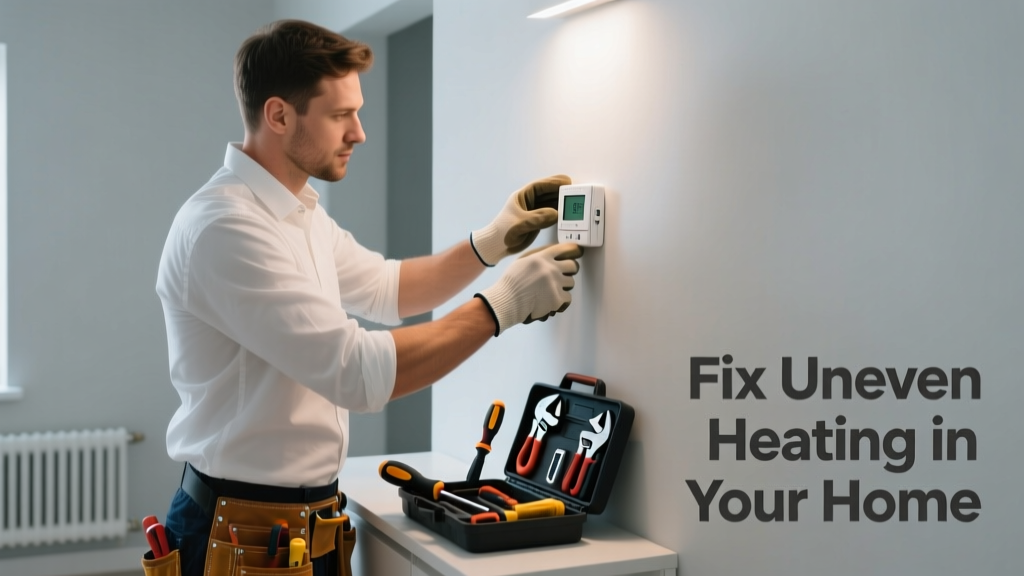
Waking up to icy bedrooms while the living room feels like a sauna? Uneven heating isn’t just uncomfortable—it’s a sign your HVAC system is working inefficiently, wasting energy and wearing out faster. Most cases stem from simple, fixable issues—not a failing furnace.
Quick Diagnosis
Before grabbing tools, rule out these five most common culprits:
- Thermostat location near drafts, windows, or heat sources
- Closed or obstructed supply vents in cooler rooms
- Dirty air filter restricting airflow
- Leaky or poorly insulated ductwork (especially in attics or crawlspaces)
- Imbalanced dampers in multi-zone systems or manual registers
Tools & Materials Needed
| Item | Purpose | Estimated Cost |
|---|---|---|
| Digital thermometer (infrared or probe) | Measure vent output temps and room surface differences | $12–$35 |
| Basic screwdriver set | Adjust damper levers, remove vent covers, access filter slots | $8–$22 |
| High-efficiency pleated air filter (MERV 8–11) | Restores proper airflow without overloading blower motor | $10–$25 |
| Aluminum foil tape & mastic sealant | Seal duct leaks—duct tape fails under heat and humidity | $14–$28 |
| Flexible damper adjustment tool (or bent coat hanger) | Reach and rotate hard-to-access duct dampers | $0–$5 (DIY option) |
Step-by-Step Fix
Try these methods in order—most homes resolve uneven heating with the first two:
- Reset and recalibrate your thermostat: Turn it off for 30 seconds, then back on. If it’s programmable, verify it’s not in "hold" mode or set to "heat pump" when you have a gas furnace. Relocate if mounted near a lamp, exterior wall, or return grille.
- Balance airflow manually: Close vents by 25% in overheated rooms (never fully shut), and open all others fully. Then adjust individual register dampers—look for small levers behind grilles—to direct more air toward cold zones. Use your infrared thermometer to confirm supply air is ≥15°F warmer than room temp.
- Inspect and replace the air filter: A clogged filter reduces static pressure and starves distant duct branches. Replace every 60 days if you have pets or allergies; every 90 days otherwise. According to the U.S. Department of Energy, a dirty filter can increase energy use by up to 15%.
- Check duct access points in unfinished spaces: In basements, attics, or garages, look for disconnected joints, crushed flex ducts, or gaps at seams. Seal only with UL 181-approved aluminum foil tape or duct mastic—not duct tape, which dries out and cracks.
When to Call a Pro
Stop DIY efforts—and call an HVAC technician—if you encounter any of these:
- Furnace cycling on and off rapidly (short-cycling) more than 3–4 times per hour
- Burning smell, soot around vents, or audible banging/knocking from the heat exchanger
- Carbon monoxide detector alarm or symptoms like headaches or nausea when heat runs
- No warm air from any vent after verifying power, filter, and thermostat settings
- Ductwork buried in insulation or inside walls—no safe visual access without cutting
"Over 60% of duct systems in existing homes leak 20–30% of conditioned air—often into unconditioned spaces like attics. That’s why balancing registers alone rarely solves deep-seated uneven heating." — ACEEE Home Energy Audit Guide, 2022
Prevention Tips
Maintain even heating year after year with these habits:
- Replace filters every 2 months during heating season (check monthly if you run heat continuously)
- Keep furniture, rugs, and curtains at least 12 inches from all supply and return vents
- Have ducts professionally cleaned and sealed every 5–7 years—especially if you’ve added rooms or renovated
- Install smart vents (like Keen or Flair) only after confirming duct capacity—oversizing can strain your blower
Why does my upstairs stay cold while downstairs is hot?
This is classic stack effect—warm air rises and escapes, leaving cold air pooled upstairs. First, ensure attic insulation meets R-38 minimum (U.S. DOE 2023 standard). Then check that upper-floor returns aren’t blocked and that the furnace’s blower speed is set for heating (not cooling) on multi-speed units.
Can I adjust duct dampers myself?
Yes—if they’re accessible in basement or crawl space trunk lines. Look for lever handles or rotating discs. Turn slowly: one-quarter turn at a time, then wait 15 minutes to assess temperature change. Never force stiff dampers—they may be rusted or misaligned.
Will closing vents in unused rooms help balance heat?
No—closing more than one or two vents increases duct pressure, which can cause leaks, reduce blower efficiency, and trigger safety shutoffs. The EPA advises keeping at least 80% of vents open at all times.
How do I know if my thermostat is faulty?
Test it by bypassing it: turn off power, remove the R and W wires, twist them together, and restore power. If the furnace fires up and heats evenly, the thermostat is likely defective or miswired.
Is uneven heating a sign of a failing heat exchanger?
Rarely—but it can be. Cracks usually cause inconsistent ignition, flame rollout, or CO leaks—not just uneven temps. If you see yellow flames, hear popping sounds, or notice moisture on windows during heating, shut off the furnace and call a certified technician immediately.
Do smart thermostats fix uneven heating?
They don’t fix airflow problems—but models like Nest or Ecobee with room sensors (smart thermostat room sensors) help compensate by delaying heat calls until colder zones catch up. They work best alongside physical fixes, not instead of them.
Uneven heating rarely means your furnace is dying—it usually means your system is out of sync with your home’s layout and usage patterns. With careful observation and targeted adjustments, most homeowners restore consistent warmth in under two hours. For long-term reliability, pair these fixes with annual HVAC maintenance checklist steps and consider upgrading to a variable-speed blower if your unit is over 10 years old.