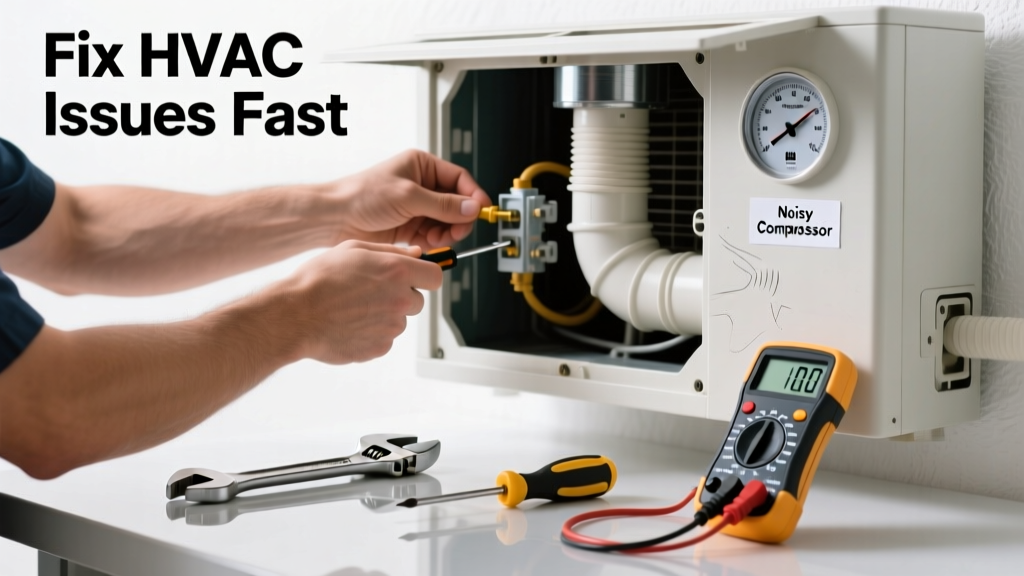
If your furnace kicks on and you hear clanging, whining, or uneven heat distribution—like one room freezing while another bakes—it’s not just annoying. It’s a sign something’s off with airflow, combustion, or mechanical components. Ignoring it can shorten equipment life or even create safety hazards.
Quick Diagnosis
Start by listening and observing. Match the noise and pattern to these most frequent culprits:
- Rattling or buzzing: Loose blower wheel, duct hangers, or cabinet panels
- Banging or popping: Ductwork expanding/contracting (common in older sheet metal ducts) or delayed ignition in gas furnaces
- Whining or screeching: Worn blower motor bearings or slipping belt (on older belt-drive units)
- Uneven heat + gurgling: Air trapped in hydronic baseboard or radiator systems
- Humming + cold air from vents: Faulty limit switch, clogged filter, or failing heat exchanger
Tools & Materials Needed
| Item | Purpose | Estimated Cost |
|---|---|---|
| Non-contact voltage tester | Verifies power is off before touching electrical components | $15–$30 |
| 4-in-1 screwdriver set | Tightens loose panels, dampers, and mounting screws | $8–$22 |
| Replacement furnace filter (MERV 8) | Restores airflow; prevents overheating and cycling issues | $10–$18 |
| Flexible duct sealant (mastic) | Seals leaks causing pressure imbalances and whistling | $12–$25 |
| Hydronic air vent key (for baseboards) | Releases trapped air in hot water heating systems | $4–$9 |
Step-by-Step Fix
Try these methods in order—most require no disassembly and take under 30 minutes:
- Replace the air filter: A clogged filter restricts airflow, forcing the blower to work harder and overheat. Turn off power at the breaker, slide out the old filter, and install a fresh MERV 8. According to the U.S. EPA, 14% of household energy waste comes from dirty filters and leaky ducts (EPA Energy Star Guide, 2022).
- Inspect and tighten duct connections: Look for disconnected flex duct joints or loose rigid duct seams near the furnace and registers. Seal gaps with mastic—not duct tape—and secure with metal straps.
- Bleed radiators or baseboards: If you have hot water heat, open the bleed valve on each unit until water flows steadily (no hissing). Trapped air causes cold spots and gurgling. Do this when the system is cool and off.
- Check blower access panel: Remove the front panel (power off first), then gently press on the blower wheel. If it wobbles or scrapes, the wheel is warped or the motor mount is loose—tighten mounting bolts or replace the wheel.
When to Call a Pro
Stop and call an HVAC technician immediately if you notice:
- A strong smell of sulfur or rotten eggs (possible gas leak—evacuate and call 911 first)
- Visible cracks or corrosion on the heat exchanger (a carbon monoxide risk)
- Repeated tripping of the high-limit switch—even after cleaning the filter and vents
- Noise accompanied by soot around vents or yellow burner flames (sign of incomplete combustion)
According to the National Fire Protection Association’s 2023 report, 15% of home heating fires involve faulty or poorly maintained furnaces—many linked to ignored noise and performance warnings.
"A banging sound during startup isn’t just 'normal wear'—it’s often delayed ignition building unburned gas in the heat exchanger. That’s a potential explosion hazard." — HVAC Technician Certification Board, 2022 Field Manual
Prevention Tips
Maintain consistent performance and avoid repeat issues with these habits:
- Change your furnace filter every 60 days if you have pets or allergies; every 90 days otherwise
- Have ductwork inspected for leaks and insulation gaps every 2 years
- Install a smart thermostat with airflow monitoring (e.g., Nest Learning Thermostat) to detect early cycling anomalies
- Vacuum supply and return grilles quarterly to prevent dust buildup affecting static pressure
Why does my furnace bang only when it first turns on?
This is usually delayed ignition—a small accumulation of gas ignites all at once instead of steadily. Clean or replace the burners and verify proper gas pressure. If it persists, the ignition control module may need replacement. See our guide on gas furnace burner cleaning for safe DIY steps.
Can I lubricate my blower motor myself?
Only if your motor has oil ports (two small caps on the housing). Use 10-weight non-detergent oil—3 drops per port, once per year. Most modern motors are sealed and permanently lubricated; adding oil can damage them. Check your manual—download model-specific manuals here.
Is duct popping dangerous?
Occasional soft popping in metal ducts as they expand/cool is normal. But loud, rhythmic banging suggests undersized ducts or excessive static pressure—often from closed dampers or blocked returns. Measure static pressure with a manometer if you’re troubleshooting deeply.
What noise means my heat exchanger is cracked?
A sharp, metallic 'tink' or 'ping' during cooldown, combined with soot on the heat exchanger surface or inconsistent flame patterns, raises concern. Never ignore flickering flames or CO detector alarms. Schedule a professional inspection immediately—do not run the furnace.
Will tightening loose ducts fix uneven heating?
Yes—if the imbalance stems from air leakage near the furnace or trunk lines. Leaks upstream steal airflow from distant rooms. Sealing those leaks restores pressure balance. But if one room stays cold despite sealed ducts, the issue may be damper misalignment or undersized branch ducts—see our duct damper adjustment guide.
How do I know if the blower wheel is unbalanced?
Spin the wheel by hand (power off!) and watch for wobble. Also listen: a rhythmic thumping that increases with fan speed points to imbalance or debris stuck in the wheel. Clean with a soft brush and compressed air—never use solvents near motor windings.
Uneven heating paired with strange noises rarely resolves itself—and rarely improves with time. Addressing root causes early keeps your system efficient, extends its lifespan past the typical 15-year mark, and protects indoor air quality. Stay proactive, not reactive: schedule annual tune-ups, keep logs of odd sounds, and treat your HVAC like the critical home system it is.