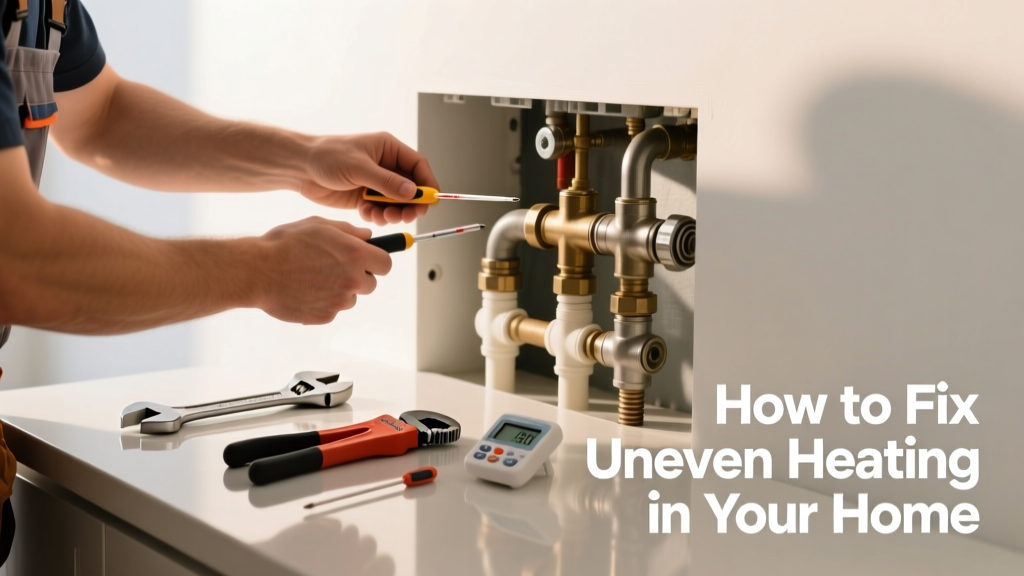
One room freezing while another bakes isn’t just annoying—it’s a sign your HVAC system is out of balance or compromised. Uneven heating wastes energy, strains equipment, and can hint at hidden duct leaks or failing components.
Quick Diagnosis
Before grabbing tools, identify the likely culprit. Most uneven heating stems from one (or more) of these issues:
- Blocked or closed supply vents in warmer rooms
- Ductwork leaks, especially in attics or crawlspaces
- Imbalanced airflow due to undersized or poorly zoned ducts
- Furnace blower motor running at low speed or with worn bearings
- Thermostat location near drafts, windows, or heat sources
Tools & Materials Needed
| Item | Purpose | Estimated Cost |
|---|---|---|
| Smoke pencil or incense stick | Visualize airflow direction and detect weak/leaking vents | $8–$15 |
| Duct sealant (mastic or foil tape) | Seal gaps in metal ducts—duct tape won’t hold long-term | $12–$24 |
| IR thermometer (non-contact) | Measure vent output temps across rooms to spot discrepancies | $25–$60 |
| Adjustable vent dampers (if not built-in) | Manually redirect airflow to cooler zones | $5–$18 each |
| Basic screwdrivers & ladder | Access vents, registers, and furnace access panels safely | $10–$30 |
Step-by-Step Fix
Start with low-risk, high-impact adjustments. Most homeowners resolve 70% of uneven heating cases using these methods:
- Balance vent dampers: Close dampers in overheated rooms by 25–50% (don’t shut fully). Open fully in colder zones. Recheck temps after 24 hours.
- Clear obstructions: Move furniture, rugs, or curtains blocking floor/wall registers. Vacuum dust from grilles and interior vanes.
- Test duct integrity: Light incense near accessible duct joints (especially near furnace and in unfinished spaces). If smoke wobbles or gets sucked away, seal with mastic—not duct tape.
- Verify thermostat placement: If mounted near a sunny window, exterior wall, or return vent, relocate it or install a smart thermostat with remote sensors for zone-based readings.
When to Call a Pro
Stop DIY if you encounter any of these red flags:
- Furnace cycles on/off every 2–3 minutes (short cycling)
- Strong odor of burning plastic or oil near the unit
- Carbon monoxide detector alarms or unexplained headaches/fatigue
- Ducts made of flexible fiberglass ductboard (requires specialized sealing)
- Airflow drops significantly after cleaning filters—suggesting blower wheel debris or motor failure
According to the U.S. EPA, 30% of duct systems in older homes leak 20–30% of heated air—often undetected without pressure testing.
"Duct leakage in forced-air systems is the single largest source of energy waste in most homes with central heating," says the Building Performance Institute's 2022 Duct Diagnostic Guide.
Prevention Tips
Maintain even heating year after year with these habits:
- Replace pleated HVAC filters every 90 days—or every 30 days during heavy use or if you have pets
- Have ducts professionally sealed and insulated every 8–10 years, especially in unconditioned spaces
- Install manual or motorized dampers in main trunk lines for seasonal balancing
- Use ceiling fans on low, reverse rotation in winter to gently push warm air down from ceilings
Why does my upstairs always overheat while the basement stays cold?
This is classic stratification—warm air rises, cool air sinks—and worsened by inadequate return airflow downstairs. Add a dedicated cold-air return in the basement (minimum 16”x20”) and ensure upper-floor returns aren’t blocked. Consider installing a zoned HVAC system for independent temperature control.
Can dirty air filters cause uneven heating?
Absolutely. Clogged filters restrict airflow, causing the heat exchanger to overheat and trigger safety shutoffs—especially in distant zones. A study by the National Renewable Energy Laboratory found that a filter at 75% capacity reduces delivered airflow by up to 40%, directly worsening room-to-room imbalances.
Will closing vents in unused rooms help balance heat?
No—closing more than one or two vents increases duct pressure, risks coil freeze-up, and can damage your blower motor over time. Instead, use adjustable dampers inside ducts or install a zoning system.
How do I know if my ducts are leaking?
Check for visible gaps at seams, disconnected flex ducts, or dusty insulation around joints. Use an IR thermometer: if supply vent temps drop more than 10°F between furnace outlet and farthest register, duct loss is likely significant.
Can smart vents fix uneven heating permanently?
Smart vents (like Keen or Flair) can help fine-tune airflow—but they don’t fix underlying duct leaks, undersized ducts, or blower issues. They’re best as a supplement to physical repairs, not a standalone solution.
Is uneven heating a sign my furnace is failing?
Not always—but if imbalance appeared suddenly alongside longer run times, louder operation, or inconsistent ignition, it may signal heat exchanger cracks, gas valve issues, or failing inducer motors. Get an annual tune-up from a licensed HVAC tech.
Fixing uneven heating doesn’t require replacing your whole system—just targeted observation, simple adjustments, and knowing when airflow physics ends and mechanical limits begin. Consistent temperatures start with understanding where your air goes, not just how hot it gets.