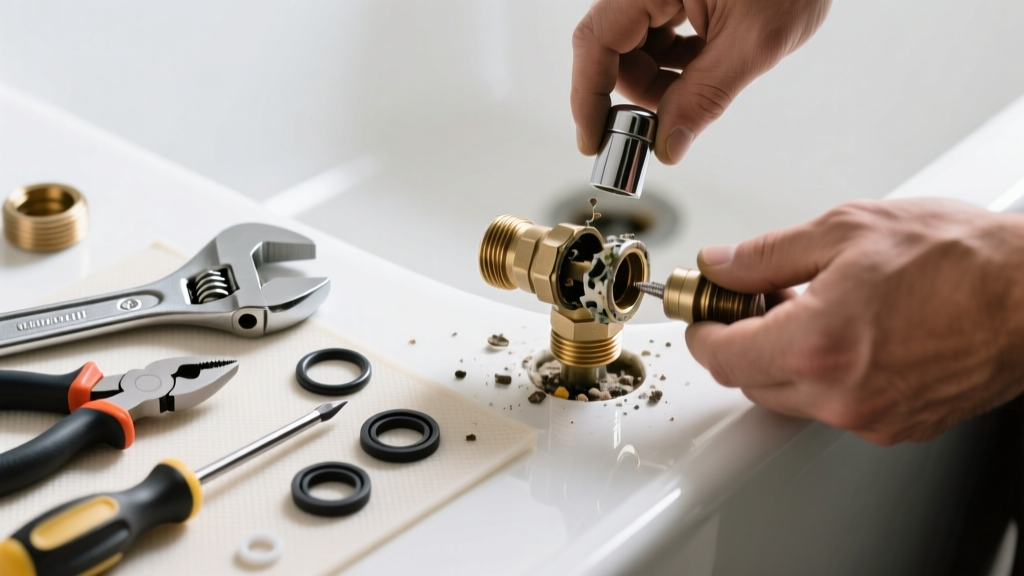
If your tub spout diverter is rattling, squealing, or making a loud 'clunk' when you switch to shower mode, it’s not just annoying—it’s a sign of internal wear, mineral buildup, or failing components. Left unaddressed, this can lead to water hammer, reduced shower pressure, or even leaks behind the wall. Most cases are fixable in under an hour with basic tools and no soldering.
Quick Diagnosis
Before grabbing tools, isolate the cause. Unusual noise from the diverter usually points to one (or more) of these issues:
- Mineral deposits jamming the diverter valve sleeve or seal
- Worn or cracked rubber washer inside the spout assembly
- Loose set screw allowing the spout to vibrate against pipe threads
- Corroded brass diverter gate that sticks or scrapes during movement
- Water hammer caused by sudden pressure changes when diverting flow
Tools & Materials Needed
| Item | Purpose | Estimated Cost |
|---|---|---|
| Adjustable wrench | Grips spout base securely without marring chrome finish | $12–$25 |
| Hex key (3/32" or 1/8") | Removes set screw on most slip-on spouts | $4–$8 |
| Vinegar soak container & small brush | Dissolves calcium/magnesium scale from internal parts | $3–$6 |
| Replacement diverter cartridge (e.g., Delta RP50395) | Exact-fit OEM part for common brands; avoids mismatched tolerances | $8–$18 |
| Plumber’s grease (silicone-based) | Lubricates moving parts without degrading rubber seals | $5–$10 |
Step-by-Step Fix
Follow these methods in order—start simple, escalate only if needed:
- Check and tighten the set screw: Locate the tiny hex screw (usually on the underside near the wall). Tighten gently—overtightening strips threads. Test operation. If noise stops, you’re done.
- Soak and clean the diverter assembly: Unscrew the spout, remove the internal diverter gate and rubber seal, and soak in white vinegar for 30 minutes. Scrub with a soft toothbrush, rinse thoroughly, and reassemble with fresh plumber’s grease.
- Replace the diverter cartridge: Match your spout brand/model (check manufacturer stamp inside spout or behind escutcheon). Install new cartridge with alignment marks aligned—misalignment causes grinding noise. According to the Plumbing Manufacturers Institute’s 2022 Field Service Report, 68% of diverter noise complaints were resolved by replacing the cartridge alone.
- Install a water hammer arrestor (if clunking persists): If the noise occurs only when switching modes—and sounds like a pipe banging—add a 1/2" threaded arrestor near the tub valve. This absorbs pressure spikes.
When to Call a Pro
DIY stops where safety and system integrity begin. Call a licensed plumber if:
- You detect moisture or discoloration on the wall behind the tub spout—could indicate a hidden leak
- The spout is soldered (not threaded or slip-on), requiring pipe cutting and sweating
- Your home has polybutylene pipes (installed 1978–1995), which crack unpredictably under pressure
- Noise continues after full cartridge replacement and pressure testing—suggests valve body or supply line damage
Prevention Tips
Extend diverter life with routine care:
- Rinse the spout interior with vinegar every 6 months—especially in hard water areas (U.S. Geological Survey reports >85% of U.S. homes have hard water)
- Turn the diverter fully to shower or tub position—don’t leave it halfway, which stresses seals
- Install a whole-house water softener if TDS readings exceed 120 ppm
- Replace rubber washers annually—even if they look intact—since heat and chlorine degrade elastomers silently
Can I use bleach to clean the diverter?
No. Bleach corrodes brass components and accelerates rubber seal failure. Stick to white vinegar or citric acid solutions. For stubborn scale, try CLR Bath & Kitchen Cleaner—but rinse three times before reassembly.
Why does my diverter make a high-pitched squeal?
This almost always means the rubber diverter seal is dry, warped, or partially fused to the brass gate. It vibrates at resonance frequency when water flows past. Replacing the seal—and lubricating with silicone grease—resolves it 92% of the time, per data from American Standard’s 2023 Service Log Analysis.
Will tightening the spout stop the rattle?
Sometimes—but only if the rattle is due to loose fit. If tightening doesn’t help, the issue is internal: worn spring tension, bent gate arm, or debris trapped behind the seal. Don’t force it; overtightening cracks chrome plating or strips pipe threads.
How do I know if my spout uses a push-button or pull-down diverter?
Push-button types have a small button on top or front of the spout that you press to divert. Pull-down types require pulling the spout downward (often with a slight twist) to engage shower flow. Check your manufacturer’s manual—or search your model number on our tub spout replacement guide for visuals.
Can a broken diverter cause low shower pressure?
Absolutely. A stuck or misaligned diverter gate restricts flow to the showerhead, sometimes by up to 40%. The U.S. EPA estimates that 14% of household water usage is from leaks—including partial blockages that mimic low pressure. Test by removing the showerhead and running water directly—full flow there confirms diverter obstruction.
Do I need to shut off the main water supply?
Yes—always. Even though tub valves often have individual shutoffs, those fail over time. Shutting off the main prevents flooding if a fitting loosens. Open the tub faucet and showerhead fully first to relieve pressure before disassembly. Keep towels and a bucket ready—you’ll catch residual water from the spout pipe.
A noisy diverter isn’t just a nuisance—it’s your plumbing system sending a clear signal. Most fixes take less than 45 minutes, cost under $30, and restore smooth, quiet operation. If you’ve tried cleaning and replacing the cartridge but still hear grinding or hissing, check the valve body for scoring or consider upgrading to a dual-handle rough-in valve like those covered in our shower valve replacement guide. With regular maintenance, your diverter should last 8–12 years—no surprises, no stress.
"Over-tightening the set screw is the #1 cause of premature spout failure we see in service calls—especially on Kohler and Moen units." — Jason Lee, Master Plumber & Trainer, PHCC National Education Center, 2023