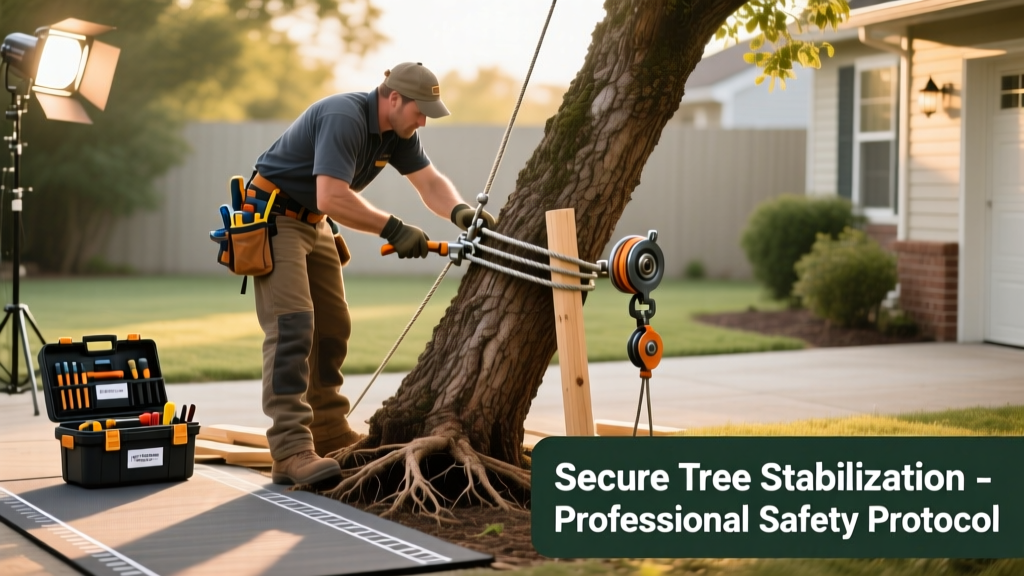
A tree leaning toward your house isn’t just unsightly—it’s a potential liability. Even a slight tilt can worsen after heavy rain or wind, risking roof damage, broken gutters, or worse: collapse onto your home. Don’t wait until branches scrape the siding or roots buckle the foundation.
Quick Diagnosis
Before grabbing tools, identify why the lean started. Most cases stem from one or more of these causes:
- Soil erosion on the uphill or windward side of the trunk
- Root damage from construction, trenching, or compaction
- Uneven root growth due to buried debris or poor drainage
- Storm or ice damage that bent but didn’t break the trunk
- Species-specific growth habit (e.g., silver maple often leans as it matures)
Tools & Materials Needed
| Item | Purpose | Estimated Cost |
|---|---|---|
| 3/8" galvanized steel cable & turnbuckles | Stabilizes trunk without girdling; rated for structural support | $45–$75 |
| 2×6 pressure-treated lumber (10' length) | Used for ground anchors and bracing frames | $22–$28 |
| Auger bit (12" depth) + cordless drill | Drills stable anchor holes in compacted soil | $35–$60 (drill included) |
| Tree-friendly rubberized strap (2" wide) | Protects bark during bracing—never use rope or wire directly | $18–$24 |
| Soil moisture meter | Detects saturation that weakens root anchorage | $20–$32 |
Step-by-Step Fix
Choose the method based on lean severity, tree size, and soil conditions. Never attempt more than one method at once unless supervised by a certified arborist.
- Assess lean angle: Use a smartphone level app or plumb line. If lean exceeds 15° from vertical, skip DIY bracing and call a pro.
- Install dynamic cabling (for moderate lean, <12°): Drill two 3/8" pilot holes at 45° angles into opposing upper limbs (not the trunk), install eye bolts, then connect with galvanized cable and turnbuckle. Tighten incrementally over 3 weeks—not all at once.
- Build a ground-based brace (for young trees <8" DBH): Drive two 36" rebar stakes 24" deep at 45° angles away from the lean. Attach 2×6 frame with lag screws, then secure trunk using rubberized straps at 36" and 60" heights.
- Regrade & rehydrate (for erosion-related lean): Remove soil from the high side, add 4–6" of compost-amended topsoil on the low side, and water deeply for 3 consecutive days using a soaker hose.
When to Call a Pro
DIY intervention becomes dangerous—or ineffective—when any of these apply:
- The lean increased more than 2° in the past 6 months (measured with a digital inclinometer)
- Cracks appear in the soil near the base, especially radiating outward like a star pattern
- More than 30% of the root plate is exposed or lifted above grade
- The tree is over 25 feet tall or has a diameter at breast height (DBH) greater than 10 inches
- You spot fungal conks, oozing sap, or hollow sections in the trunk
According to the International Society of Arboriculture’s Tree Risk Assessment Handbook (2022), “Trees with structural lean and visible decay have a 73% higher probability of failure during wind events exceeding 35 mph.”
Prevention Tips
Long-term stability starts with smart planting and maintenance:
- Plant large-canopy species at least 20 feet from foundations—maples and oaks need 25+ feet
- Aerate compacted soil every 2 years within the drip line using a core aerator
- Install French drains or swales if your yard slopes toward the house and collects runoff near tree bases
- Prune lower limbs annually to reduce wind sail and weight on the crown
- Inspect root zones after any nearby excavation—even minor trenching can sever critical lateral roots
Can I prop up the tree with a wooden beam?
No. A rigid prop transfers stress unevenly and may snap under wind load or freeze-thaw cycles. It also invites rot where wood contacts bark. Certified arborists avoid props entirely—they’re banned in ISA Best Management Practices for structural support.
Will pruning the heavy side fix the lean?
Not reliably—and it often makes things worse. Removing canopy mass on one side shifts the center of gravity unpredictably and weakens structural integrity. Balanced crown reduction (by a trained pruner) helps long-term health but won’t correct existing lean.
How long does bracing last?
Properly installed galvanized cabling lasts 12–15 years before replacement. Ground braces using pressure-treated 2×6s typically hold for 3–5 years before checking for rot or loosening. Always inspect hardware twice yearly—in spring and fall.
Is mulch helpful for a leaning tree?
Yes—but only if applied correctly. Use 2–3 inches of shredded hardwood mulch in a 4-foot radius around the base, keeping it 3 inches away from the trunk. This conserves moisture and moderates soil temperature without encouraging collar rot or rodent nesting.
Can I replant the tree straight?
Only if it’s under 6 feet tall and transplanted within its first 3 growing seasons. Larger trees almost never survive full relocation—and attempting to dig and reset a leaning mature tree usually kills it. The U.S. Forest Service reports a 92% mortality rate for relocated trees over 10 years old (Urban Tree Relocation Guide, 2021).
Does insurance cover damage from a leaning tree?
Most homeowner policies cover sudden, accidental damage (e.g., a storm knocks it over onto your roof)—but not gradual damage or preventive removal. If you knew the tree was leaning and did nothing, insurers may deny claims. Document inspections and mitigation efforts to strengthen your case.
A leaning tree demands attention—not panic. With careful assessment and the right tools, many moderate leans can be stabilized safely. But when roots are compromised or the trunk shows signs of decay, professional evaluation isn’t optional—it’s essential for protecting your home and family. For related guidance, see our articles on how to remove a small tree and tree root damage to foundation.