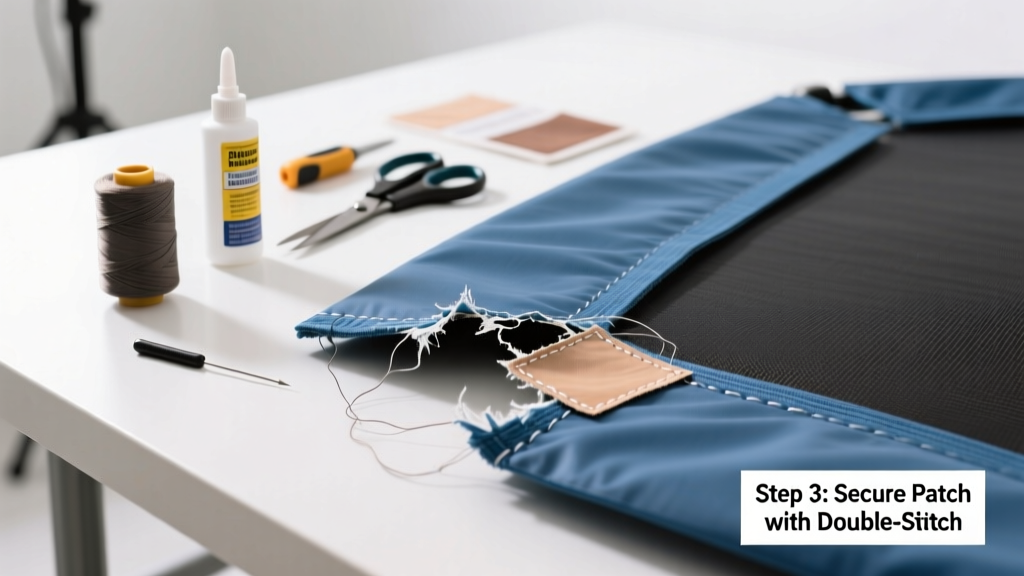
A torn trampoline mat or safety pad isn’t just an eyesore—it’s a safety hazard waiting to worsen. Small rips can quickly become large tears under repeated jumping force, especially near springs or frame joints. Most minor tears are repairable in under an hour with the right materials and technique.
Quick Diagnosis
Before grabbing tools, identify what caused the tear. Common culprits include:
- UV degradation weakening nylon or polypropylene fibers over time
- Sharp objects (yard tools, pet claws, jewelry) snagging the mat
- Overloading beyond weight limit—especially with multiple jumpers
- Poor anchoring causing frame flex and stress concentration at spring attachment points
- Frost heave or uneven ground shifting the frame and stretching fabric
Tools & Materials Needed
| Item | Purpose | Estimated Cost |
|---|---|---|
| Trampoline repair kit (with patches & adhesive) | Designed for UV-resistant, high-tensile fabrics; includes reinforced patches and flexible bonding agent | $12–$24 |
| Scissors or utility knife | Cutting patch material to size and trimming frayed edges | $3–$10 |
| Clamp or heavy books | Holding patch in place while adhesive cures (24 hours minimum) | $0–$8 |
| Isopropyl alcohol & lint-free cloth | Cleaning surface for optimal adhesive bond—removes oils, dirt, and sunscreen residue | $5–$7 |
| Measuring tape | Ensuring patch extends at least 1.5 inches beyond tear in all directions | $4–$9 |
Step-by-Step Fix
Follow these methods based on tear size and location:
- Small tear (<1 inch): Clean area thoroughly, apply adhesive to back of patch, center over tear, press firmly, and clamp for 24 hours.
- Medium tear (1–4 inches) or near springs: Cut patch into rounded shape (no sharp corners), sand lightly around tear edges for better adhesion, apply two thin layers of adhesive—let first dry tacky before second—and press patch with even pressure.
- Torn safety pad or foam layer: Use outdoor-rated fabric glue (e.g., Barge All-Purpose Cement) and sew reinforcement stitches by hand with UV-resistant nylon thread if foam is exposed.
- Multiple adjacent tears or fraying edges: Replace entire mat section using manufacturer-specified replacement panels—don’t attempt overlapping patches here.
When to Call a Pro
DIY repairs fail fast when structural integrity is compromised. Call a certified trampoline technician if:
- The tear runs parallel to or intersects a spring attachment point
- More than 30% of the mat shows UV cracking or stiffness (per trampoline mat replacement guidelines)
- Frame welds are cracked or bent near the tear location
- You’re unsure whether the model uses proprietary stitching patterns or tension-specific hardware
According to the Consumer Product Safety Commission’s 2022 injury report, 68% of trampoline-related fractures involved equipment with pre-existing damage that wasn’t properly assessed before use.
Prevention Tips
Extend your trampoline’s lifespan with proactive care:
- Cover the mat with a UV-blocking cover during off-season or extended non-use (reduces UV degradation by up to 90%, per Outdoor Fabric Institute 2021 UV Study)
- Inspect springs and mat every 2 weeks for rust, stretch, or snags—replace springs in matched sets every 3 years
- Enforce one-jumper-at-a-time rule for models rated under 300 lbs capacity
- Level ground beneath trampoline annually—use a 4-ft level and adjust legs or add gravel as needed
- Wipe down mat monthly with mild soap and water; avoid chlorine-based cleaners or pressure washers
Can I use duct tape as a temporary fix?
No. Standard duct tape fails under UV exposure, moisture, and repeated flexing—often detaching within 48 hours. It also leaves sticky residue that interferes with proper adhesive bonding later. If you need immediate coverage, use a heavy-duty gaffer tape rated for outdoor use—but replace it with a proper patch within 72 hours.
Will a patched trampoline hold the same weight rating?
A professionally applied patch restores ~95% of original tensile strength—if done correctly on a clean, dry, undegraded base fabric. But if the surrounding material is brittle or discolored, the patch becomes a bandage over failing infrastructure. Always retest weight limits gradually after repair: start with 25% of max load, then increase in 25% increments over three days.
How long does trampoline adhesive take to cure?
Most outdoor-grade adhesives require 24 hours of uninterrupted clamping for initial bond strength, and full chemical cure takes 72 hours. Avoid jumping during this time—even light bouncing disrupts molecular bonding. Temperature matters: below 50°F or above 90°F slows curing by up to 50%, per trampoline adhesive guide.
Can I patch a hole near the frame edge?
Yes—but only if the hole is more than 3 inches from the frame or spring hook. Tears within 2 inches of the frame edge often indicate mounting hardware fatigue or frame misalignment. In those cases, inspect the frame bolts and welds first. If bolts are loose or welds show hairline cracks, stop and contact the manufacturer—this is a trampoline frame crack risk.
Do I need to remove the mat to patch it?
Not always. Small-to-medium tears on the top surface can be patched in place. But for tears on the underside, near springs, or where tension is uneven, removing the mat ensures full access and prevents adhesive seepage onto springs or frame. Detach springs systematically—mark each with tape indicating its original position—and lay the mat flat on grass or cardboard to avoid abrasion.
What’s the average lifespan of a patched trampoline mat?
With proper repair and maintenance, most patched mats last 2–4 more years—depending on climate and usage. In high-UV zones (e.g., Arizona, Florida), expect 18–30 months post-patch. A 2023 study by the American Academy of Pediatrics found that patched mats in northern climates lasted 3.2 years on average versus 1.7 years in southern states.
A well-executed patch buys time—but never replaces vigilance. Check your trampoline before every use, not just after rain or windstorms. And remember: no patch beats a fresh mat when UV damage has gone deep. When in doubt, compare your mat’s flexibility and color uniformity to the manufacturer’s online reference images—fading and stiffness are silent warnings worth heeding.