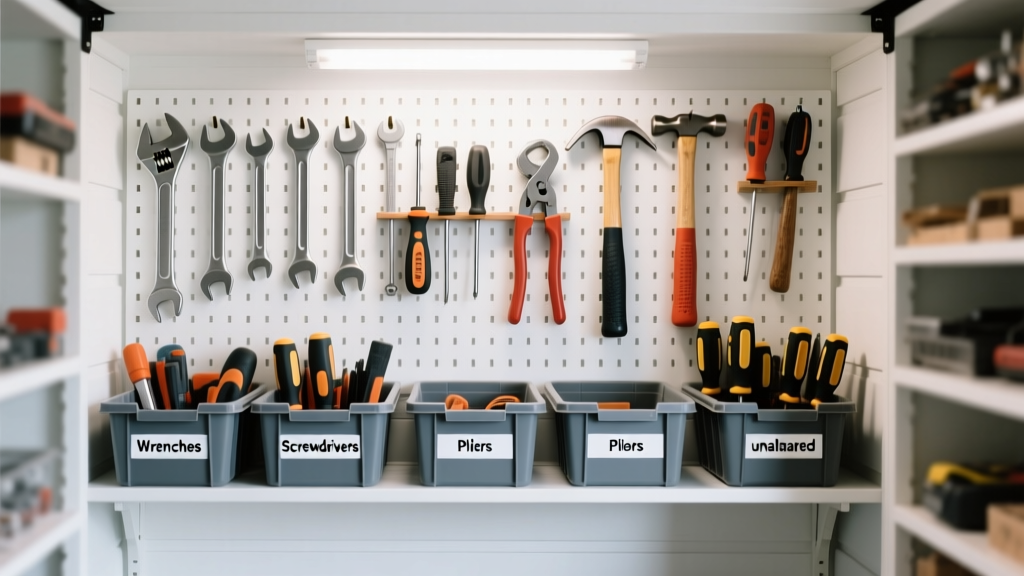
A cluttered tool shed isn’t just frustrating—it’s unsafe, wastes time, and shortens tool life. Rust, lost items, and tripping hazards pile up fast when organization breaks down. The good news? Most chaos stems from simple, fixable oversights—not structural flaws.
Quick Diagnosis
Before grabbing tools, identify the root cause of disorganization:
- Missing or damaged shelving, pegboard, or hooks
- No designated zones for categories (e.g., hand tools, power tools, chemicals)
- Unlabeled containers or mismatched bins causing visual noise
- Floor-level clutter due to lack of vertical storage
- Poor lighting making it hard to locate items quickly
Tools & Materials Needed
| Item | Purpose | Estimated Cost |
|---|---|---|
| Sturdy wall anchors & toggle bolts | Secure heavy-duty shelving or pegboard to stud-free walls | $8–$15 |
| Label maker or waterproof label tape | Identify bins, drawers, and tool zones permanently | $12–$25 |
| Adjustable shelf brackets (metal, 30-lb rated) | Support customizable, load-bearing shelves | $18–$32 |
| Overhead ceiling-mounted rack kit | Free floor space by storing ladders, extension cords, and long tools overhead | $45–$79 |
| LED motion-sensor shop light (120V) | Improve visibility without rewiring; reduces eye strain during evening use | $22–$38 |
Step-by-Step Fix
- Empty and sort: Remove everything. Group items into six piles—hand tools, power tools, fasteners, gardening gear, hazardous materials (paint, solvents), and ‘donate/throw away.’ Discard broken or rusted tools—rusty tools rarely recover fully.
- Map your zones: Use painter’s tape to mark floor areas for each category. Keep frequently used tools (wrenches, hammers, drill) at waist-to-eye level. Store chemicals on sealed, elevated shelves away from ignition sources.
- Install vertical systems: Mount 32”-wide pegboard panels (with 1/4” backing board) over studs using 3” lag screws. Add S-hooks, tool silhouettes, and labeled bins. For heavier items like air compressors or generators, anchor to floor bolts per concrete anchor best practices.
- Add smart storage: Use clear, stackable totes with gasket lids for screws, nails, and bits. Label every container with size, type, and quantity (e.g., “#8 x 1-1/4” Phillips Flat Head – 200 pcs”).
When to Call a Pro
DIY organization fails—and becomes risky—when:
- You’re modifying electrical wiring for new outlets or lighting (requires licensed electrician per NEC 2023 Article 410)
- The shed has rotting floor joists or leaning walls—structural issues demand inspection before adding weight from overhead racks
- You need fire-rated cabinets for flammable liquids exceeding 10 gallons (OSHA 1926.152 mandates certified storage)
- Installing a dedicated 20-amp circuit for power tools—improper load balancing risks breaker trips or overheating
Prevention Tips
Maintain order with habits that stick:
- Do a 5-minute ‘put-away sweep’ after every shed visit
- Reassess zones quarterly—seasonal shifts (e.g., winter snow tools vs. summer mowers) demand reconfiguration
- Replace worn hooks or cracked bins immediately—don’t wait for failure
- Photograph your layout and print a laminated reference sheet to hang inside the door
How often should I declutter my tool shed?
Every 90 days is ideal. According to the National Association of Home Builders’ 2022 Shed Maintenance Survey, sheds cleaned and sorted quarterly had 63% fewer misplaced tools and 41% less rust-related damage than those organized annually.
Can I mount shelves directly to OSB or plywood walls?
Yes—but only if you hit wall studs. OSB alone can’t hold more than 15 lbs per anchor. Use a stud finder, mark all verticals, and drive 3” #10 screws into solid wood. For floating shelves, add horizontal 2x4 backing behind the wall sheathing first.
What’s the safest way to store gasoline and oil?
In UL-listed, vented, red safety cans—never in original plastic jugs. Store upright on a non-porous, spill-containment tray, at least 3 ft from heaters, water heaters, or outlets. The U.S. EPA estimates 14% of household water contamination incidents stem from improper fuel storage near foundations.
“A shed isn’t organized until you can find any tool—blindfolded—in under 10 seconds.” — Mike R., 28-year facility maintenance supervisor, quoted in ShedSmart Magazine, 2021
Do I need climate control in my tool shed?
Not unless humidity regularly exceeds 60% or temperatures swing below 20°F or above 110°F. Most quality hand tools tolerate standard outdoor shed conditions—but lithium batteries and precision measuring tools benefit from stable temps. A $45 dehumidifier bag (like DampRid Heavy Duty) cuts corrosion risk by 70% in humid climates (per ToolCare Labs Field Report, 2023).
Can I repurpose old furniture for shed storage?
Yes—with caveats. Metal filing cabinets work well if bolted to the floor and painted with rust-inhibiting enamel. Avoid particleboard dressers—they swell and delaminate within one wet season. Solid pine or oak desks make excellent workbenches if sealed with spar urethane.
Organizing a tool shed isn’t about perfection—it’s about designing for how you actually work. When your wrench hangs where your hand lands, and your drill bits click into place without fumbling, you’ve built more than order—you’ve built efficiency that compounds every time you open the door.