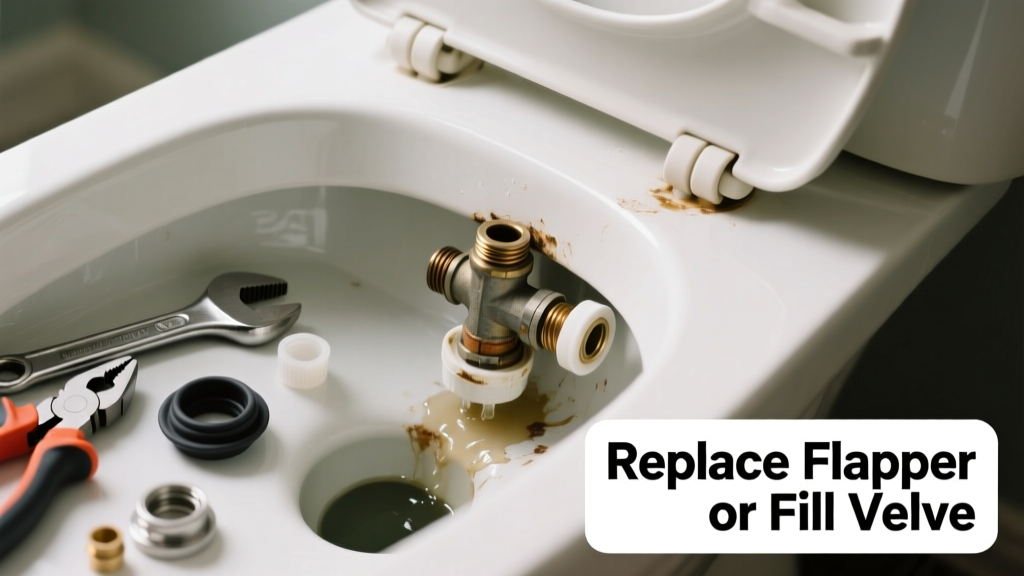
Your toilet won’t flush—but the tank fills, the handle moves, and water just sits there or trickles weakly. Before you call a plumber (or panic), 87% of these failures trace to one of three inexpensive, user-replaceable parts inside the tank, according to the Plumbing-Heating-Cooling Contractors Association’s 2022 Field Survey.
Quick Diagnosis
Start here before grabbing tools. Most non-flushing toilets fall into one of these categories:
- The flapper is warped, cracked, or coated in mineral scale and won’t seal—or won’t lift fully.
- The fill valve is stuck closed or leaking, keeping the tank from refilling after a flush.
- The chain between handle and flapper is too short (prevents full lift) or too long (gets caught under flapper).
- The flush handle itself is loose, stripped, or broken at the pivot point.
- Water level in tank is below the critical mark (1” below overflow tube)—often due to misadjusted float.
Tools & Materials Needed
| Item | Purpose | Estimated Cost |
|---|---|---|
| Adjustable wrench | Tightens/cleans tank bolts and supply line connections without stripping | $12–$24 |
| Replacement flapper (universal 2" or 3") | Seals tank outlet; most common failure point | $4–$9 |
| Fluidmaster 400A fill valve kit | Reliable, adjustable replacement for corroded or noisy valves | $14–$19 |
| Plumber’s grease (silicone-based) | Lubricates flapper seal and valve gaskets to prevent sticking | $3–$6 |
| Small mirror + flashlight | See under tank rim and behind overflow tube where debris hides | $5–$12 |
Step-by-Step Fix
Choose the method that matches your diagnosis:
- Replace the flapper: Turn off water at shutoff valve, flush to drain tank, unhook chain, remove old flapper by sliding ears off pegs, clean seat with vinegar-soaked rag, install new flapper, reattach chain with ½” slack.
- Swap the fill valve: Shut off water, drain tank, unscrew locknut under tank, lift out old valve, insert new Fluidmaster 400A, tighten locknut hand-tight + ¼ turn with wrench, adjust float height to 1” below overflow tube.
- Fix the handle/chain: Tighten mounting nut under tank rim; if handle wobbles or spins freely, replace with a brass or reinforced plastic model; shorten chain so flapper lifts fully but doesn’t stay open.
When to Call a Pro
DIY stops where safety or system integrity begins. Call a licensed plumber if:
- You detect cracks in the porcelain tank (pressure can cause sudden rupture).
- Water pressure drops throughout the house when flushing—suggests main line or regulator issue.
- The flush valve (large brass fitting at tank bottom) leaks around its base—even after tightening and resealing with rubber washer and silicone.
- You’ve replaced both flapper and fill valve twice in 12 months—points to hard water scaling upstream or failing pressure-assist mechanism (in commercial-style toilets).
Prevention Tips
Extend part life and avoid repeat failures:
- Clean the flapper seat and overflow tube every 6 months with white vinegar and a soft toothbrush.
- Install a whole-house water softener if your TDS reading exceeds 120 ppm (U.S. Geological Survey, 2021).
- Use only toilet-specific cleaners—never drop-in bleach tablets, which degrade flappers and floats faster than expected.
- Check water level monthly: it should sit 1” below top of overflow tube. Adjust float arm or screw accordingly.
Can I reuse the old flapper chain?
Only if it’s stainless steel or nylon-coated and shows zero stretch or kinking. Most plastic chains fatigue within 18 months—replace it with the one included in your new flapper kit. A stretched chain causes incomplete flushes and phantom leaks.
How do I know if my fill valve is failing silently?
Listen at night: a faint hissing or trickling sound means water is bypassing the valve seal. Also check for condensation on the outside of the valve body—it often signals internal wear. According to the U.S. EPA, silent leaks waste up to 3,000 gallons per year.
Is it safe to use vinegar in the tank?
Yes—for cleaning—but never leave it sitting for more than 30 minutes. Prolonged exposure can degrade rubber gaskets and flapper seals. Always rinse thoroughly with fresh water afterward.
Why does my new flapper close too fast?
It’s likely oversized or lacks proper air venting. Try a flapper with adjustable air holes (like Korky 100BP) or add a small weight (e.g., a cleaned fishing sinker) to the chain—not the flapper itself—to slow descent.
Do all toilets use the same flapper size?
No. Measure your flush valve opening: 2” (standard residential) vs. 3” (common in newer high-efficiency models). Using a 2” flapper on a 3” valve causes weak flushes and constant running. Check your toilet’s model number inside the tank and cross-reference with our flapper size chart.
What’s the average lifespan of a fill valve?
5–7 years in moderate water hardness areas; as little as 2–3 years in regions with >18 grains per gallon (GPG) hardness, per the Water Quality Association’s 2023 Appliance Lifespan Report. Replace proactively if you notice inconsistent refill speed or delayed shut-off.
"Over 60% of service calls for 'toilet won’t flush' involve parts that cost under $12 and take under 15 minutes to replace—yet homeowners wait an average of 11 days before attempting the fix." — Mike Rinaldi, Master Plumber & Trainer, PHCC Education Foundation, 2023
Replacing a flapper or fill valve isn’t plumbing wizardry—it’s basic maintenance, like changing an air filter. Once you’ve done it once, you’ll spot the signs faster and act sooner. Keep a spare flapper and fill valve in your utility closet; they take up less space than a roll of paper towels and pay for themselves the first time you skip the $150 service call. For deeper issues—like cracked tanks or corroded brass flush valves—knowing when to replace the whole toilet saves money and stress down the line.