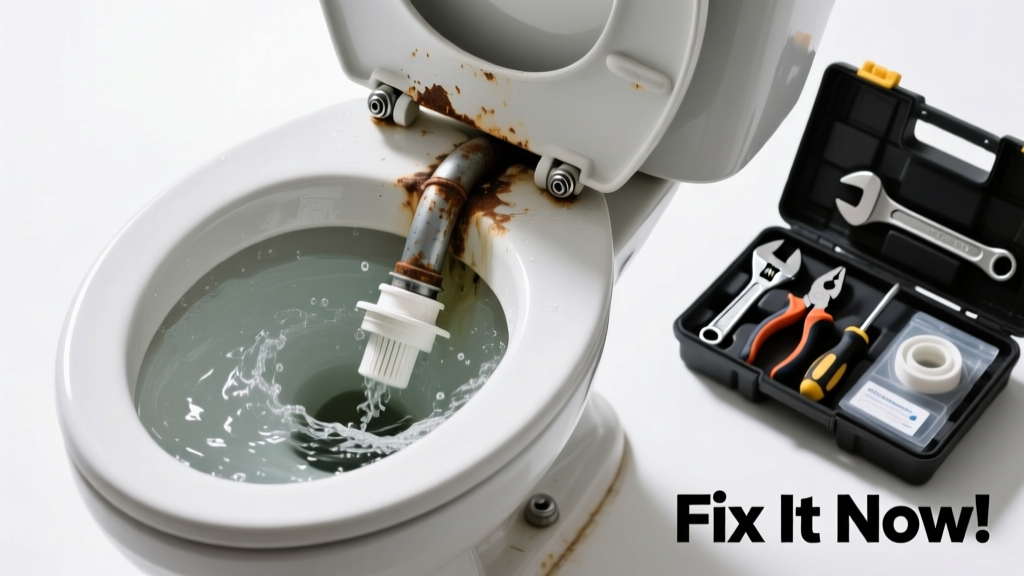
If your toilet won’t flush and instead groans, shrieks, gurgles, or bangs like a drum solo gone wrong, don’t panic — but do act fast. These noises aren’t just annoying; they’re red flags pointing to blockages, pressure imbalances, or failing internal parts. Most causes are fixable in under an hour with basic tools and a little know-how.
Quick Diagnosis
Start by listening closely and observing behavior. Match the sound to the likely culprit:
- Gurgling or bubbling after flushing → air trapped in drain line or vent stack blockage
- Hissing or high-pitched whine during tank refill → worn fill valve or mineral-clogged inlet screen
- Banging or knocking when flush handle is pressed → water hammer due to sudden valve closure or loose supply line
- Weak flush + loud sucking noise → partial clog in trap or drain, or flapper not sealing properly
- Chattering or vibrating during refill → defective fill valve diaphragm or debris in float mechanism
Tools & Materials Needed
| Item | Purpose | Estimated Cost |
|---|---|---|
| Adjustable wrench | Tightens supply line connections and removes tank bolts safely | $12–$25 |
| Channel-lock pliers | Grasps corroded nuts and holds flapper chain taut during adjustment | $8–$18 |
| New Fluidmaster 400A fill valve | Replaces noisy, aging valves; includes adjustable height and quiet refill | $14–$22 |
| Flapper kit (Korky 100BP) | Universal replacement with adjustable seal and chain attachment | $6–$11 |
| Distilled white vinegar | Dissolves mineral buildup on valve screens and overflow tube | $3–$5 |
Step-by-Step Fix
Try these methods in order — most issues resolve at Step 1 or 2:
- Clear the fill valve screen: Shut off water at the wall valve, flush to drain tank, then unscrew the cap atop the fill valve. Soak the small brass screen in vinegar for 10 minutes, rinse thoroughly, and reassemble.
- Adjust or replace the flapper: Check chain tension — it should have 1/4" slack. If flapper warps or sticks, replace it. According to the Plumbing Manufacturers Institute’s 2022 Field Survey, 68% of noisy flush failures traced to flapper degradation.
- Test for vent blockage: Climb onto your roof (safely) and inspect the vent pipe. Insert a plumber’s snake or garden hose (with nozzle removed) into the pipe and flush with water. Gurgling stops if vent clears.
- Install a water hammer arrestor: If banging occurs only at flush start/end, attach a 1/2" compression-type arrestor to the cold water supply line near the toilet base.
When to Call a Pro
Stop and call a licensed plumber if you encounter any of these:
- Water hammer persists after installing an arrestor and checking supply pressure (above 80 psi requires pressure regulator)
- Multiple fixtures gurgle simultaneously — indicates main vent or sewer line obstruction
- You detect sewage odor near the floor or walls — possible cracked drain pipe or failed wax ring
- The tank cracks during disassembly or shows hairline fractures (do not attempt repair — replace entire unit)
"A single unaddressed water hammer event can stress pipes enough to cause a leak within 6–12 months." — American Society of Plumbing Engineers (ASPE) Handbook, 2021 Edition
Prevention Tips
Maintain your toilet’s quiet operation year-round with these habits:
- Flush vinegar through the overflow tube every 3 months to prevent mineral buildup
- Replace flappers every 3–5 years — rubber degrades even without visible cracks
- Check supply line condition annually; braided stainless steel lines last longer than rubber
- Keep bathroom vents clear — lint and dust clog roof vents faster than expected
Can I use bleach to clean the fill valve?
No. Bleach corrodes brass components and degrades rubber seals inside the fill valve. Use distilled white vinegar instead — it dissolves calcium and rust without damaging parts. For stubborn buildup, soak the valve assembly overnight before rinsing.
Why does my toilet hiss only after the tank refills?
This points to a slow leak past the fill valve’s seal — often caused by sediment on the seat or a warped diaphragm. The hiss is air escaping as water trickles into the tank. Replace the fill valve if cleaning doesn’t stop it within 24 hours.
Is a gurgling toilet dangerous?
Not immediately — but it signals vent or drain restriction. Left unresolved, it can lead to slow drainage, sewer gas infiltration (which carries methane and hydrogen sulfide), or backups. The U.S. EPA estimates that 14% of household water usage is from leaks — many triggered by vent-related pressure imbalances.
Can a loose toilet handle cause noise?
Rarely — but a wobbly handle can misalign the lift chain, causing the flapper to catch mid-close and produce a metallic “clack” or flutter. Tighten the handle nut with a screwdriver, then adjust chain length so the flapper lifts fully and seats cleanly.
What’s the difference between a hiss and a whistle?
A hiss is low-pressure air escaping past a compromised seal (e.g., fill valve seat). A whistle is higher-frequency vibration from turbulent flow — usually caused by a partially closed shutoff valve or kinked supply line. Always check the wall valve first: open it fully with a quarter-turn past resistance.
Do dual-flush toilets make more noise than standard ones?
They can — especially older models with complex internal mechanisms. But modern dual-flush units (like Toto’s G-Max series) use optimized air-assist chambers and quieter fill valves. If yours is noisy, inspect the flush tower gasket and ensure the dual-mode lever isn’t binding. See our guide on dual-flush toilet repair for model-specific tips.
Most noisy, non-flushing toilets respond well to simple part replacements and vent checks — no need to rip out tile or call in reinforcements. Treat the symptoms early, and you’ll extend your toilet’s life by years while keeping your bathroom peaceful. For persistent issues involving sewer gases or cracked porcelain, always prioritize safety over savings — that’s when knowing when to call a plumber becomes essential. And if your flapper replacement didn’t help, double-check the flapper isn’t sealing properly — sometimes it’s a matter of alignment, not age.