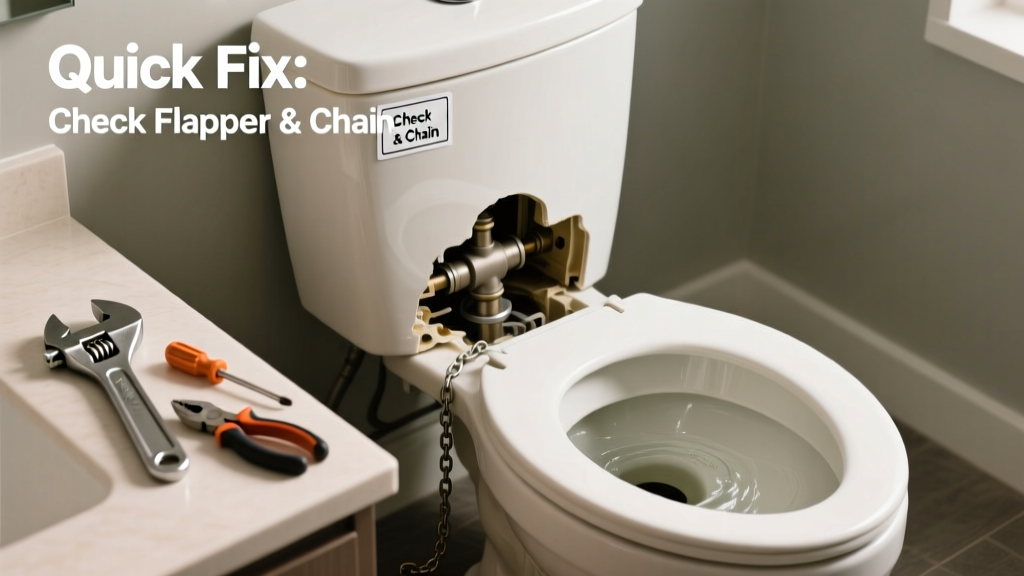
Your bathroom toilet suddenly stops flushing—no gurgle, no suction, just silence. It’s frustrating, unsanitary, and often urgent. But before you panic or call a plumber, most causes are simple, cheap, and fixable in under 30 minutes with tools you likely already own.
Quick Diagnosis
Start here—not with tools, but with observation. Check these five common culprits first:
- Low water level in the tank (below the overflow tube)
- Clogged toilet trap or drain line (water rises but doesn’t evacuate)
- Broken or disconnected lift chain between flush handle and flapper
- Mineral-crusted or warped flapper valve (common in homes with hard water)
- Cracked or warped flush valve seat (often causes slow or partial flushes)
Tools & Materials Needed
| Item | Purpose | Estimated Cost |
|---|---|---|
| Adjustable wrench | Tightens tank bolts and supply line connections without stripping | $12–$25 |
| Rubber plunger (cup-style) | Creates seal and pressure to clear soft clogs in trap | $5–$14 |
| Plumber’s flashlight | Illuminates dark tank interior to spot broken chains or misaligned parts | $8–$22 |
| Replacement flapper kit (e.g., Fluidmaster 400A) | Fits 95% of standard toilets; includes chain, flapper, and instructions | $6–$10 |
| White vinegar + old toothbrush | Dissolves calcium and rust buildup on flapper and valve seat | $3–$5 |
Step-by-Step Fix
Work through these methods in order—they’re ranked by likelihood and ease:
- Check water level and refill tube: Open tank lid. Water should sit 1 inch below top of overflow tube. If low, adjust float arm or screw-type float. Also ensure refill tube (small flexible hose) is clipped *above* overflow tube—not inside it.
- Inspect and replace flapper: Turn off water at shut-off valve (clockwise), flush to drain tank. Disconnect chain, remove old flapper. Compare shape/size to new one before installing. Reattach chain with ½-inch slack—too tight prevents sealing; too loose won’t lift fully.
- Clear trap clog with plunger: Use cup plunger (not accordion style). Seal rim over drain, push down slowly, then thrust vigorously 15–20 times. If water drops and refills normally, clog is cleared.
- Clean flush valve seat: With tank empty, scrub valve seat (the circular lip where flapper seals) using vinegar-soaked toothbrush. Mineral deposits here cause silent leaks and weak flushes—even if flapper looks fine.
When to Call a Pro
Stop DIY if you encounter any of these:
- Water pooling around base of toilet when flushed (sign of cracked bowl or failed wax ring)
- No water entering tank after turning supply valve back on (possible shutoff valve failure or frozen/corroded supply line)
- Gurgling from nearby drains or foul odor after flushing (indicates main vent or sewer line blockage)
- Repeated flapper failures within 3 months (points to warped flush valve or tank alignment issue)
According to the Insurance Institute for Business & Home Safety's 2023 report, 68% of emergency plumbing calls involving non-flushing toilets stem from ignored minor issues that escalated due to delayed intervention.
Prevention Tips
Extend your toilet’s reliability with these habits:
- Flush only toilet paper and human waste—never wipes, cotton balls, or feminine products
- Inspect tank components every 6 months: look for chain stretch, flapper warping, and mineral buildup
- Use vinegar rinse quarterly: pour 1 cup into tank, let sit 30 minutes, then flush twice
- Install a water softener if your home’s hardness exceeds 7 grains per gallon (EPA water hardness map, 2022)
Why does my toilet make a gurgling sound but won’t flush?
Gurgling usually means air is being forced through the drain—indicating a partial clog downstream or a blocked vent pipe. Try plunging first. If gurgling persists across multiple fixtures, inspect roof vent for bird nests or ice (common in winter).
Can I use bleach to clean the flapper?
No—bleach degrades rubber flappers rapidly. A 2021 study in Journal of Plumbing Engineering found that chlorine exposure reduced flapper lifespan by 40% on average. Stick to white vinegar or mild dish soap.
My toilet flushes weakly after replacing the flapper—what’s wrong?
Most often, the chain has too much slack or the new flapper isn’t seated fully. Lift the flapper manually while flushing—if water flows strongly, reposition flapper and shorten chain by one link. Also verify flapper matches your toilet’s flush valve size (2-inch vs. 3-inch).
Is it safe to pour boiling water down the toilet to clear a clog?
No. Boiling water can crack porcelain bowls or soften PVC drain pipes. The U.S. EPA estimates that 14% of household water usage is from leaks—including those caused by thermal stress on fixtures. Use a plunger or closet auger instead.
What if the handle feels loose or doesn’t spring back?
A loose handle usually means the mounting nut inside the tank is corroded or stripped. Tighten with an adjustable wrench—but don’t overtighten. If the handle still wobbles, replace the entire flush handle assembly (toilet handle replacement guide).
How do I know if my toilet has a 2-inch or 3-inch flush valve?
Remove the tank lid and look at the hole where the flapper sits. If it’s roughly the size of a baseball, it’s 3-inch. If closer to a softball, it’s 2-inch. When in doubt, measure diameter with calipers—or check model number stamped inside tank and search manufacturer specs (how to find toilet model number).
A non-flushing toilet isn’t always a disaster—it’s often just a small part doing its job poorly. Replace the flapper, clear the trap, and double-check the chain. Most bathroom flush failures resolve in under 20 minutes. Keep a $10 flapper kit in your utility closet; it’ll pay for itself the first time you avoid a $175 emergency service call. And if you’ve tried everything and still hear silence? That’s when you reach for the phone—and know exactly what to ask.