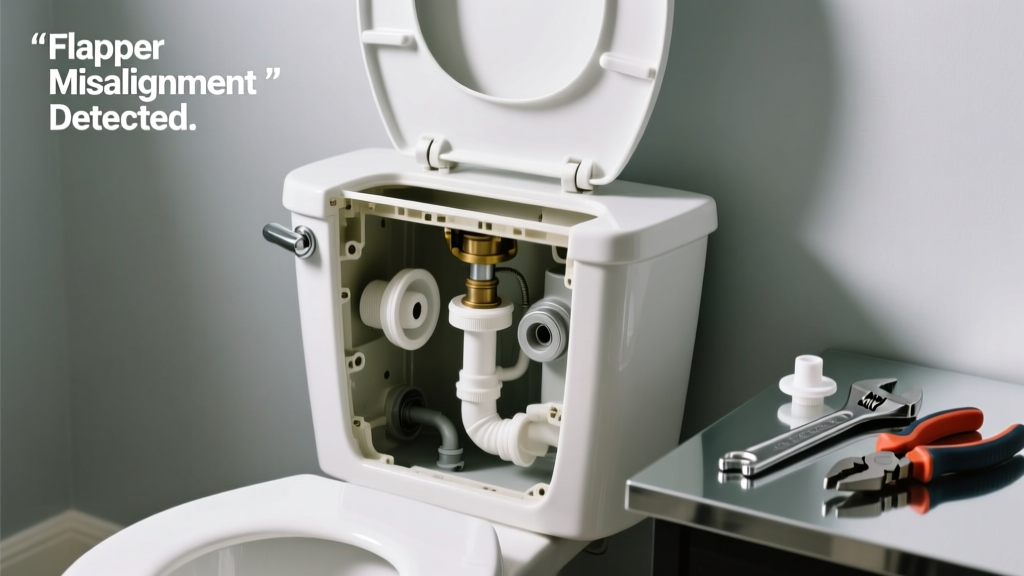
Your toilet won’t flush — water rises, gurgles, or just sits there. It’s one of the most urgent, disruptive home failures, and it usually has a simple fix you can do in under 30 minutes with tools you likely already own.
Quick Diagnosis
Before grabbing tools, rule out the obvious. A non-flushing toilet almost always traces back to one of these five issues:
- Clogged trap or drain line (most common cause)
- Low water level in the tank (prevents proper siphon action)
- Broken or misaligned flapper valve
- Disconnected or frayed lift chain
- Blocked rim jets or siphon jet at the base of the bowl
Tools & Materials Needed
| Item | Purpose | Estimated Cost |
|---|---|---|
| Plunger (flange-type) | Creates suction to dislodge partial clogs in the trap | $8–$15 |
| Toilet auger (closet auger) | Reaches past the trap into the drain line for stubborn clogs | $12–$25 |
| Adjustable wrench | Tightens tank bolts or adjusts fill valve height | $10–$20 |
| White vinegar & old toothbrush | Cleans mineral buildup from rim jets and siphon jet | $3–$5 |
| Replacement flapper (universal) | Swaps out worn rubber seals that prevent full tank emptying | $4–$8 |
Step-by-Step Fix
Work through these methods in order — most toilets respond to the first two.
- Try the plunger first: Seal the flange tip over the bowl’s drain opening. Push down firmly, then pull up sharply — repeat 15–20 times without breaking the seal. Stop if water drains freely.
- Check and adjust water level: Remove tank lid. Water should sit 1 inch below the top of the overflow tube. If low, bend the float arm upward slightly or turn the adjustment screw on newer fill valves clockwise.
- Inspect the flapper and chain: Flush manually by lifting the flapper. If it doesn’t lift fully or sticks, replace it. Ensure the chain has only 1/4-inch slack — too tight prevents sealing; too loose won’t lift the flapper.
- Clear rim jets and siphon jet: Soak a toothbrush in white vinegar, scrub all small holes under the bowl rim and the larger hole at the bottom front of the bowl. Mineral deposits here reduce flushing power by up to 40%, per the American Society of Plumbing Engineers’ 2022 field study.
When to Call a Pro
Stop DIY if you encounter any of these red flags:
- Water rises above the bowl rim and won’t drain — risk of overflow
- Repeated clogs in multiple fixtures (kitchen sink, shower, tub) — suggests main sewer line blockage
- Cracked tank or bowl (visible hairline fractures or moisture outside the base)
- No water entering the tank after refilling — indicates shut-off valve failure or supply line rupture
- Strong sewage odor near the floor or walls — possible broken wax ring or vent stack issue
"Over 60% of emergency plumbing calls for non-flushing toilets involve either a collapsed PVC drain pipe or tree root intrusion — both requiring camera inspection and professional excavation." — Roto-Rooter Service Report, 2023
Prevention Tips
Keep your toilet flushing reliably with these habits:
- Never flush anything besides toilet paper and human waste — even 'flushable' wipes cause 90% of residential clogs (National Association of Home Builders, 2022)
- Flush twice monthly with 1 cup of white vinegar poured directly into the overflow tube to dissolve mineral scale
- Replace flappers every 4–5 years — rubber degrades even without visible cracks
- Install a toilet tank repair kit when replacing internal parts — ensures consistent performance and compatibility
Can I use bleach to unclog my toilet?
No. Bleach won’t break down organic clogs like toilet paper or waste. It can corrode metal parts in the tank and damage PVC pipes over time. Stick to plungers, augers, or enzymatic drain cleaners for safe, effective clearing.
Why does my toilet flush weakly but not clog?
A weak flush usually points to blocked rim jets or a failing flapper that doesn’t open fully. Less commonly, it’s caused by low tank water level or an aging fill valve that doesn’t refill fast enough. Check the water level first — it’s the easiest fix.
Is it safe to pour boiling water down the toilet?
No. Boiling water can crack porcelain bowls and soften PVC drain lines. Use hot (not boiling) tap water mixed with dish soap instead — let it sit 10 minutes before plunging. For tougher clogs, a toilet auger is safer and more effective.
What if the handle feels loose or doesn’t lift the flapper?
This almost always means the lift chain has stretched, detached, or is caught under the flapper. Turn off the water, drain the tank, and reattach or shorten the chain so it lifts the flapper fully with 1/4-inch slack. Replace corroded hardware if links are brittle.
Will a clog clear itself overnight?
Rarely. Partial clogs may seem to improve as water slowly seeps through, but they’ll worsen with use. The U.S. EPA estimates that 14% of household water usage is from leaks — including slow-draining toilets that run intermittently due to incomplete flushes. Address it within 24 hours.
How do I know if my wax ring is bad?
You won’t know until you remove the toilet — but signs include water pooling around the base after flushing, a wobbly toilet, or sewer gas smells near the floor. Replacing the wax ring requires draining and lifting the toilet, so unless you’re experienced, this is a job best left to a licensed plumber.
A non-flushing toilet isn’t just inconvenient — it’s a warning sign your system is under stress. Most fixes take less than 20 minutes and cost under $15. But don’t force it: if water rises, stop, shut off the supply valve, and assess calmly. Knowing when to pause and call in help keeps your bathroom functional and your home dry.