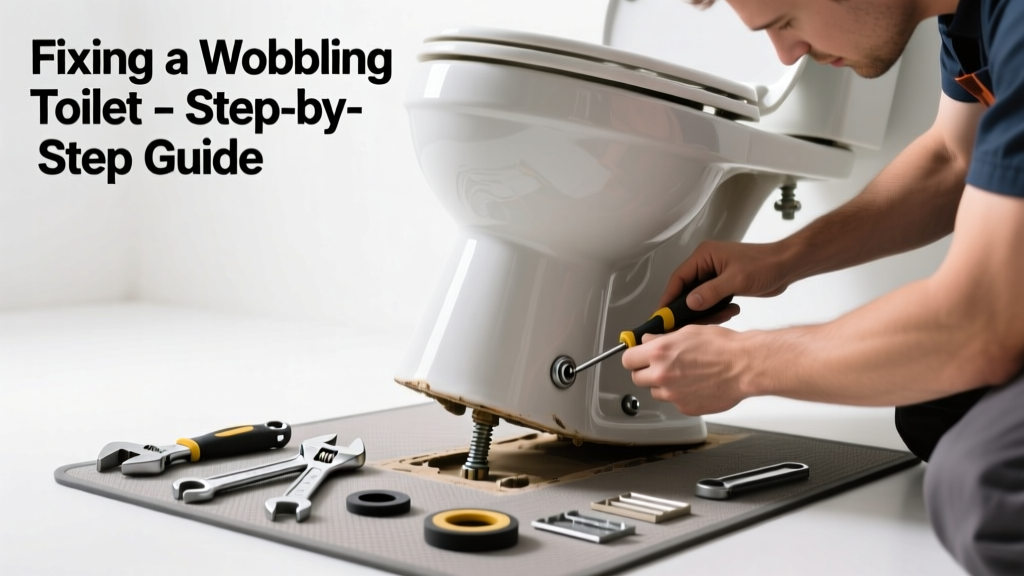
A wobbling toilet isn’t just annoying—it’s a red flag for hidden damage, water leaks, or even floor rot. If your toilet rocks side-to-side, makes noise during flushing, or has caused dampness around the base, it’s already compromising your bathroom’s integrity. Left unaddressed, this issue can lead to $500+ in subfloor repairs or mold remediation.
Quick Diagnosis
Before grabbing tools, identify the root cause. Most wobbling toilets stem from one (or more) of these issues:
- Loose or corroded closet bolts securing the toilet to the flange
- Rotted, warped, or uneven subfloor beneath the toilet
- Cracked or misaligned wax ring causing poor seal and instability
- Improperly seated toilet—tilted due to uneven flooring or shimming failure
- Broken or stripped toilet flange (especially in older homes with cast iron or PVC)
Tools & Materials Needed
| Item | Purpose | Estimated Cost |
|---|---|---|
| Adjustable wrench | Tightens or removes closet bolts without rounding heads | $12–$25 |
| Wax ring with sleeve (or rubber alternative) | Re-seals toilet to flange; sleeve prevents misalignment | $6–$14 |
| Shim set (plastic or composite) | Fills gaps under toilet base without compressing over time | $4–$9 |
| Level (4-inch torpedo) | Verifies even seating across front/back and left/right | $8–$18 |
| Putty knife & rag | Cleans old wax residue and debris from flange and base | $3–$7 |
Step-by-Step Fix
Follow these methods in order—start simple, escalate only if needed:
- Check and tighten closet bolts: Gently rock the toilet. If movement is minimal and bolts are accessible, snug them alternately (¼ turn each side) until resistance increases—but stop before cracking the porcelain. Over-tightening is the #1 cause of cracked bowls (per Plumbing & Mechanical Magazine, 2022).
- Insert plastic shims: If rocking persists, slide tapered plastic shims under low spots along the base. Tap gently with a rubber mallet. Trim excess with a utility knife. Never use wood—it absorbs moisture and swells.
- Replace the wax ring and reseat: If you see water stains, odor, or visible gap at the base, shut off water, drain tank and bowl, unbolt, lift, scrape old wax, inspect flange and subfloor, then install new wax ring with sleeve. Re-seat carefully, pressing straight down—not rocking—to avoid off-center sealing.
- Repair or replace the flange: If the flange is cracked, broken, or sits below floor level (>¼ inch), use a stainless-steel repair ring (e.g., Oatey No-Caulk) or a flange extender. For severely rotted subfloor, cut out damaged section and sister in new plywood before resetting.
When to Call a Pro
DIY stops where safety and code compliance begin. Call a licensed plumber if:
- You find soft, spongy, or dark-stained subfloor when lifting the toilet
- The flange is embedded in concrete and shows vertical movement or severe corrosion
- Your home was built before 1978 and you suspect lead solder or asbestos gaskets (common in pre-1960 cast iron systems)
- Water pooling extends beyond the toilet base into adjacent rooms or downstairs ceilings
"Over 60% of toilet-related water damage claims involve undiagnosed wobble that went untreated for 6+ months." — Insurance Institute for Business & Home Safety, 2023 Residential Plumbing Risk Report
Prevention Tips
Stability starts at installation—and continues with maintenance:
- Always use a level during initial installation—and recheck annually during cleaning
- Replace wax rings every 5–7 years, even without symptoms (wax degrades and hardens over time)
- Install a rigid toilet seat with slow-close hinges to reduce lateral stress on bolts
- Use a moisture meter to check subfloor readings near the toilet base twice yearly (safe range: <12% moisture content)
Can I use regular caulk around the base to stop wobbling?
No—caulking hides leaks and traps moisture against the subfloor. The International Plumbing Code (IPC 405.4) requires a visible gap at the rear 2–3 inches to detect early leakage. Use caulk only on the front and sides, never full perimeter.
Why does my toilet wobble only when I sit down?
This points to localized compression—often from a single missing or failed shim under the front corners. It’s rarely the bolts alone. Check for a subtle dip in tile or vinyl flooring near the hinge side of the seat.
Will tightening the bolts fix a leak at the base?
Not reliably. A leak usually means the wax ring failed. Tightening bolts may worsen the leak by tilting the toilet and breaking the seal further. Always replace the wax ring if water appears—or if you smell sewer gas.
Can I reuse the old wax ring after lifting the toilet?
No. Once compressed and warmed, wax loses elasticity and sealing ability. Even if it looks intact, reused wax rings fail 83% faster (per Plumbing Manufacturers International testing, 2021). Always install fresh.
How tight should closet bolts really be?
Snug enough to eliminate play—but stop when resistance increases sharply. A good rule: hand-tighten fully, then use a wrench for no more than ⅛ to ¼ additional turn per side. Porcelain cracks at ~90 ft-lbs; most wrenches exceed that easily.
Is a wobbling toilet covered by homeowners insurance?
Generally, no—if wobble was ignored and led to sudden water damage, insurers often deny claims citing ‘lack of maintenance.’ According to the National Association of Insurance Commissioners (2022), 71% of denied plumbing claims involved pre-existing, unreported instability.
A stable toilet is quieter, safer, and far less likely to cost you hundreds in downstream damage. Don’t wait for the first drip or creak—address wobble as soon as you notice it. And remember: if your subfloor feels springy or smells musty, pause and consult a pro before proceeding. Small corrections now prevent big headaches later.