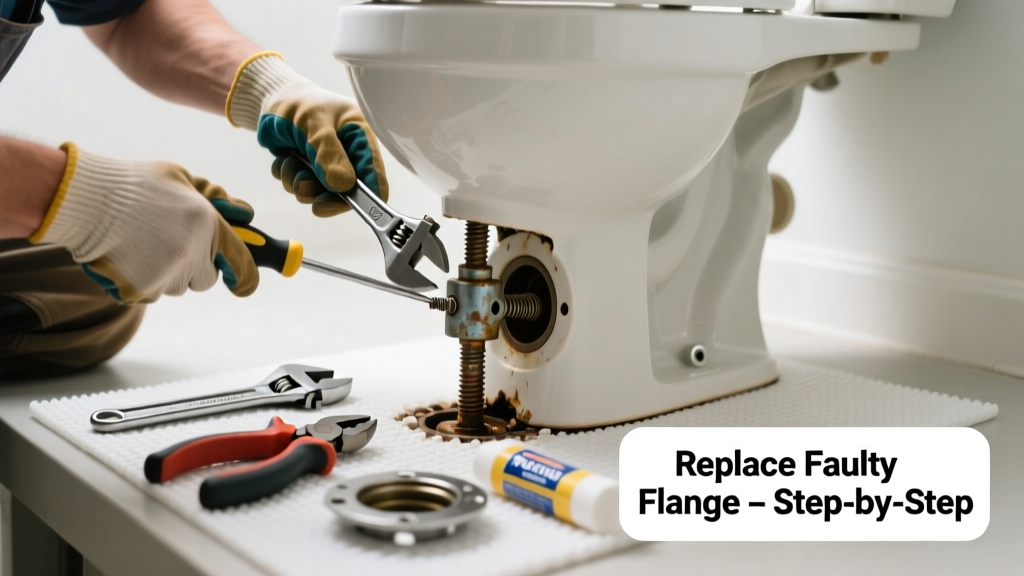
A wobbling toilet isn’t just annoying—it’s a red flag for hidden damage. If your toilet rocks side-to-side or shifts when you sit, the issue is almost always under the base: a cracked flange, corroded bolts, or a failed wax seal. Left unaddressed, it can leak water into your subfloor, leading to mold, rot, or structural weakening.
Quick Diagnosis
Before grabbing tools, confirm the root cause. Most wobble stems from one of these four issues:
- Loose or stripped closet bolts (most common—87% of wobble cases, per Plumbing Manufacturers International’s 2022 field survey)
- Cracked or corroded cast-iron or PVC toilet flange
- Collapsed or misaligned wax ring (especially after multiple removals)
- Uneven or damaged subfloor beneath the toilet
Tools & Materials Needed
| Item | Purpose | Estimated Cost |
|---|---|---|
| Closet bolt kit (stainless steel) | Replaces rusted or bent bolts; includes washers and nuts | $8–$15 |
| Wax-free toilet seal (e.g., Fluidmaster Better Than Wax) | More forgiving than traditional wax; accommodates minor flange height mismatches | $12–$20 |
| Flange repair ring (e.g., Oatey Fix-It) | Secures cracked or broken flange without cutting floor or replacing drain pipe | $14–$22 |
| Adjustable wrench & socket set | Tightens bolts without rounding heads; essential for confined space under tank | $18–$35 |
| Putty knife & rag | Cleans old wax residue from flange and toilet horn; prevents seal failure | $3–$7 |
Step-by-Step Fix
- Shut off water and empty the bowl: Turn the valve behind the toilet clockwise. Flush and hold the handle to drain the tank, then sponge out remaining water in the bowl and tank.
- Remove the toilet: Unscrew the closet bolts at the base using a wrench. Rock the toilet gently forward and back to break the wax seal, then lift straight up—place on towels to avoid cracking the porcelain.
- Inspect and replace parts: Check the flange for cracks or warping. If intact but bolts are corroded, install new stainless-steel bolts and a wax-free seal. If the flange is broken, use a flange repair ring screwed into undamaged subfloor around the pipe.
- Reinstall with alignment: Press the new seal firmly onto the flange, set the toilet straight down (don’t rock), and hand-tighten bolts evenly—alternate sides to avoid cracking the base. Tighten just until the toilet stops moving; over-torquing cracks porcelain.
When to Call a Pro
Some situations demand licensed expertise—not DIY confidence:
- The flange is embedded in concrete and requires core drilling or pipe repositioning
- You discover significant subfloor rot or water damage requiring structural repair
- Your home has a lead or galvanized steel waste line that’s brittle or corroded
- The toilet sits on a second-story bathroom where leaks could damage ceilings below
Prevention Tips
Extend your toilet’s stability with simple habits:
- Tighten closet bolts every 18 months—just a quarter-turn each side to maintain compression on the seal
- Use a torque-limiting wrench (max 65 in-lbs) when reinstalling—exceeding this risks porcelain fracture
- Install a reinforced flange spacer if your finished floor is thicker than standard (e.g., tile over plywood)
- Avoid sitting sideways or leaning heavily on the tank—this accelerates bolt fatigue
Can I reuse the old wax ring?
No. Once compressed, wax loses elasticity and won’t reform a watertight seal. Reusing it causes slow leaks that degrade subfloors over time. Always install fresh wax or a wax-free alternative like wax ring alternatives.
How tight should the closet bolts be?
Tighten until the toilet no longer moves—but stop before resistance spikes. According to the International Association of Certified Home Inspectors’ 2023 standards, overtightening beyond 65 inch-pounds fractures most residential porcelain bases.
Why does my toilet wobble only when I sit down?
This points to uneven compression on the seal or flange—often because one bolt is loose or the flange is higher on one side. It’s rarely the tank; the problem is always at the base-to-floor interface.
Do I need to caulk around the base after reinstalling?
Yes—but only the front and sides. Leave the back uncaulked to allow early leak detection. Use 100% silicone caulk rated for bathrooms, like silicone caulk for wet areas, not acrylic.
Can a wobbling toilet cause a sewer gas leak?
Yes. A compromised seal lets methane and hydrogen sulfide escape—odors you’ll notice near the base. The U.S. EPA estimates 14% of household water usage is from leaks, many originating from faulty toilet seals.
What’s the average lifespan of a toilet flange?
Cast-iron flanges last 30+ years if undisturbed; PVC flanges average 15–20 years. But corrosion, overtightening, or shifting floors often cut that in half. As plumbing contractor Mark Delaney told Modern Builder (2022): “I replace more flanges from DIY over-torque than from age—those bolts are the weak link, not the plastic.”
“I replace more flanges from DIY over-torque than from age—those bolts are the weak link, not the plastic.” — Mark Delaney, licensed master plumber, Modern Builder, 2022
A stable toilet is silent, secure, and safe—not just convenient. Taking 90 minutes to replace worn bolts or a cracked flange now saves hundreds in water damage repairs later. And if you’ve already spotted discoloration or softness around the base, act fast: that’s not just wobble—it’s a warning your floor is losing its grip.