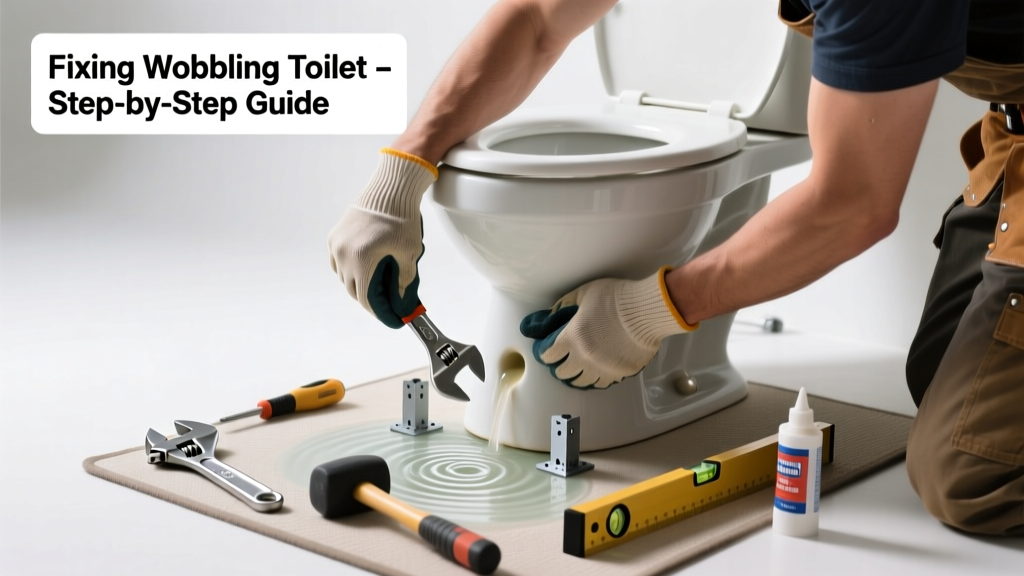
If your toilet rocks side-to-side when you sit, emits a metallic groan during flushing, or makes a hollow thud when stepped near, it’s not just annoying—it’s a red flag. A loose toilet can break the wax seal, leak water into your subfloor, and even warp floor joists over time. Most cases are fixable in under an hour with basic tools and a methodical approach.
Quick Diagnosis
Before grabbing tools, isolate the source. Wobbling + noise usually points to one (or more) of these:
- Loose closet bolts anchoring the toilet to the flange
- Rotted or cracked subfloor beneath the toilet base
- Worn or improperly seated wax ring causing uneven contact
- Cracked toilet base or damaged flange (especially in older homes with cast-iron or PVC)
- Over-tightened bolts crushing the porcelain or compressing the wax ring unevenly
Tools & Materials Needed
| Item | Purpose | Estimated Cost |
|---|---|---|
| Adjustable wrench | Tightens or loosens closet bolts without stripping them | $12–$25 |
| Wax ring with flange (or rubber seal) | Replaces degraded seal; prevents leaks and stabilizes base | $4–$12 |
| Replacement closet bolts (stainless steel) | Prevents rust and ensures long-term hold; includes washers and nuts | $3–$8 |
| Shim kit (composite or plastic) | Fills gaps between toilet base and floor without compressing wax | $6–$10 |
| Level (6-inch) | Verifies even seating before final tightening | $8–$15 |
Step-by-Step Fix
Follow this sequence—skipping steps risks re-leaking or cracking the bowl:
- Turn off water supply and flush to drain tank and bowl. Sponge out remaining water from tank and bowl.
- Remove toilet: Unscrew closet bolts, gently rock and lift straight up (have a helper). Place on towels to protect finish.
- Inspect flange and subfloor: Check for cracks, corrosion, or soft spots in wood around the flange. Tap the floor nearby—if it feels spongy, stop and read 'When to Call a Pro' below.
- Replace wax ring and bolts: Scrape old wax residue from base and flange. Install new wax ring (or rubber alternative), set toilet carefully over bolts, press down evenly (don’t rock), then hand-tighten bolts alternately until snug—but never overtighten.
- Shim and level: Use plastic shims where gaps exist between base and floor. Trim excess shim with utility knife. Recheck level front-to-back and side-to-side before final bolt torque.
When to Call a Pro
DIY stops being safe or effective in these scenarios:
- The flange is broken, recessed more than ¼ inch below floor level, or mounted on concrete with no access underneath
- You find rot, mold, or structural sagging in the subfloor—especially if the floor dips more than ⅛ inch within 12 inches of the toilet
- Your home was built before 1975 and has lead or galvanized pipes connected to the waste line
- After reinstallation, water pools around the base within 24 hours—even with a new wax ring
According to the Insurance Institute for Business & Home Safety's 2023 report, 68% of toilet-related water damage claims stem from undiagnosed wobble-related seal failure—not clogs or overflows.
Prevention Tips
Maintain stability year after year with these habits:
- Check for wobble every 6 months: Sit fully, shift weight gently, listen for creaks or movement
- Never use caulk around the entire toilet base—it traps moisture and hides leaks
- Replace wax rings every 5–7 years, even if no symptoms appear (wax hardens and loses elasticity)
- Use stainless steel closet bolts instead of plated steel—they resist corrosion for 10+ years
Can I tighten the bolts without removing the toilet?
Yes—but only if the wobble is minor (<1/8 inch) and the wax seal is intact. Loosen both bolts slightly, then alternate tightening ¼ turn at a time while checking level and resistance. Stop immediately if you hear cracking or feel sudden give.
Why does my toilet make a clanking noise when flushed?
That’s usually loose mounting bolts vibrating against the flange or a worn fill valve rattling inside the tank. If tightening bolts doesn’t eliminate it, inspect the fill valve’s lock nut and replace the entire valve assembly if corroded—how to replace a fill valve takes 20 minutes.
Is a rubber seal better than a wax ring?
Rubber seals (like Fluidmaster Perfect Seal) handle minor flange height mismatches better and don’t harden over time—but they cost 3× more and require precise installation. For most standard installations, a high-quality wax ring with sleeve remains the industry standard per the Plumbing-Heating-Cooling Contractors Association (PHCC) 2022 Field Manual.
How do I know if my subfloor is rotten?
Press a screwdriver tip into the floor near the toilet base. If it sinks in more than 1/16 inch, or if the area feels soft or spongy under foot pressure, rot is likely present. Also look for dark stains, musty odors, or visible mold along baseboard seams—subfloor repair basics apply here.
Can I reuse old closet bolts?
No. Rust, stripped threads, or bent shanks compromise holding power. Replacement bolts cost under $5 and prevent future wobble. Always pair them with fiber or neoprene washers to distribute load and reduce porcelain stress.
What if the toilet still wobbles after shimming?
That signals either insufficient shim support (add more at pivot points) or deeper issues—like a warped toilet base or flange misalignment. Try a double-shim technique: place one shim flat, then a second angled slightly to conform to curvature. If movement persists, the toilet itself may be cracked—inspect the base closely with a flashlight and mirror.
A stable toilet shouldn’t move—and shouldn’t sound like a loose hinge in a haunted house. Addressing wobble early saves hundreds in potential water damage repairs and keeps your bathroom quiet, safe, and functional. Keep a small shim kit and spare bolts in your utility closet—you’ll thank yourself the next time you hear that telltale groan.