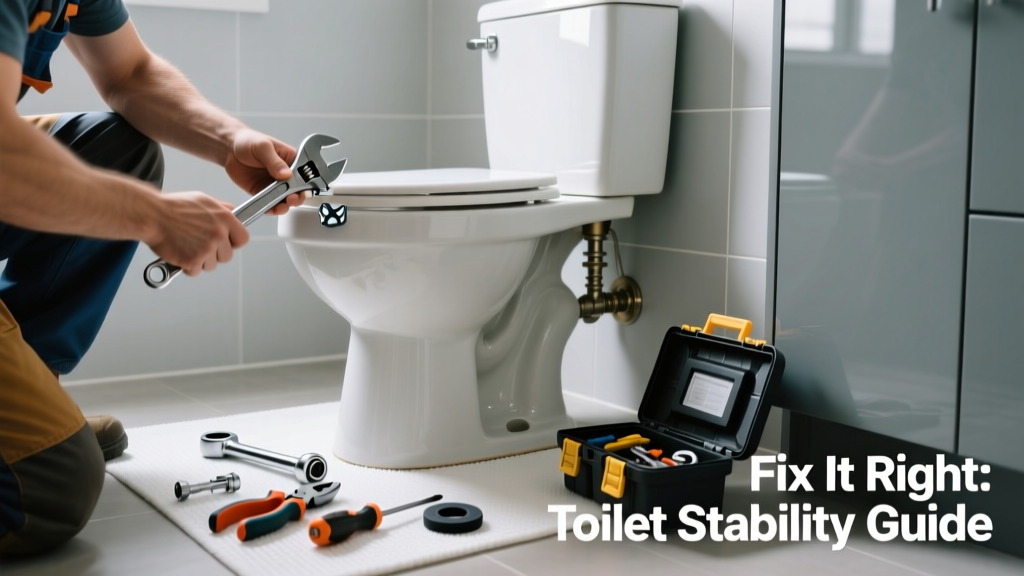
A wobbling toilet in the kitchen isn’t just annoying—it’s a red flag for potential water damage, cracked flooring, or even sewer gas leaks. Unlike bathrooms, kitchens often have thinner subfloors, non-standard plumbing layouts, and higher foot traffic that accelerates instability. If your kitchen toilet rocks side-to-side or lifts at the base, don’t ignore it: 14% of household water waste comes from undetected leaks tied to loose fixtures (U.S. EPA, 2022).
Quick Diagnosis
Before grabbing tools, rule out these five common causes:
- Loose or corroded closet bolts anchoring the toilet to the flange
- Rotted or uneven subfloor beneath the toilet base
- Cracked or misaligned PVC or cast-iron flange
- Missing or compressed wax ring causing uneven seating
- Improperly secured floor tile or vinyl that flexes under load
Tools & Materials Needed
| Item | Purpose | Estimated Cost |
|---|---|---|
| Adjustable wrench | Tightens closet bolts without stripping threads | $12–$25 |
| Wax ring with flange extender | Compensates for recessed flanges and seals gaps | $8–$15 |
| Shim set (plastic or composite) | Fills minor gaps between toilet base and floor without compressing | $5–$12 |
| Level (6-inch torpedo) | Verifies levelness front-to-back and side-to-side after reseating | $7–$20 |
| Flange repair kit (e.g., Oatey Heavy-Duty) | Reinforces or replaces broken flange ears without cutting floor | $18–$32 |
Step-by-Step Fix
Try these methods in order—start simple, escalate only if needed:
- Tighten closet bolts evenly: Alternate tightening each bolt ¼ turn at a time until resistance increases; stop before cracking the porcelain base.
- Add shims where rocking occurs: Slide tapered plastic shims into gaps at the front or sides, then trim flush with a utility knife and seal with silicone caulk.
- Replace wax ring and reseat toilet: Shut off water, drain tank and bowl, lift toilet, inspect flange and subfloor, install new wax ring with flange extender, and carefully lower toilet straight down while pressing evenly.
- Repair or replace damaged flange: If flange screws spin or ears are broken, use a stainless-steel repair ring bolted to existing flange or subfloor anchors.
When to Call a Pro
DIY ends here if you encounter any of these:
- Visible rot or soft spots in the subfloor around the toilet footprint
- Cast-iron flange with snapped lugs or severe corrosion requiring soldering or replacement
- Signs of sewer gas odor (rotten egg smell) after reseating
- Toilet base lifts more than ⅛ inch—even with tightened bolts and shims
According to the Insurance Institute for Business & Home Safety’s 2023 report, improperly repaired toilet flanges contribute to 22% of early-stage bathroom and kitchen water damage claims—most avoidable with professional-grade flange anchoring.
Prevention Tips
Extend your fix’s lifespan with these habits:
- Check toilet stability every 6 months using a level and gentle lateral pressure test
- Avoid aggressive cleaning chemicals near the base—vinegar-based cleaners only
- Install a reinforced plywood subfloor patch (½" minimum) beneath kitchen toilets during remodels
- Use flange bolts with nylon lock washers instead of standard nuts to resist vibration loosening
Can I use regular bathroom wax rings in the kitchen?
No—kitchen floors often sit lower than adjacent rooms due to plumbing rough-ins or slab variations. Use a wax ring with flange extender or a rubber compression gasket (like Fluidmaster Better Than Wax) to bridge height differences safely.
Why does my kitchen toilet wobble more than the bathroom one?
Kitchen subfloors are typically thinner (often ¾" OSB vs. 1" subfloor in bathrooms) and may lack blocking beneath the toilet footprint. High-traffic areas also accelerate fastener fatigue—especially if the floor wasn’t engineered for fixture loads.
Is caulking around the base required—or optional?
It’s required by IPC (International Plumbing Code) Section 405.5 for kitchen toilets to prevent moisture infiltration into cabinets or toe-kick spaces. Use 100% silicone caulk—not latex—and leave a 1" gap at the back for leak detection.
Can I shim under the entire toilet base?
No—shimming only under high spots creates point loading and cracks porcelain. Shim only where rocking occurs (usually front corners), and never exceed ⅛" total thickness per side. Over-shimming stresses the horn and risks breaking the seal.
What’s the average cost to professionally fix a wobbling kitchen toilet?
Most plumbers charge $180–$320 for flange repair, reseating, and leak testing—including diagnostics. That’s 3.2x the average DIY cost ($55–$95), but avoids $1,200+ in hidden water damage repairs (HomeAdvisor 2024 Cost Guide).
Does a wobbling toilet always mean the wax ring is bad?
No—only about 40% of wobble cases involve failed wax rings. More often, it’s loose bolts (35%) or subfloor issues (25%), per data from the National Association of Home Builders’ 2023 Fixture Failure Survey.
A stable kitchen toilet protects your cabinetry, flooring, and indoor air quality—especially important where food prep happens. Address wobble early, use the right materials for your floor type, and remember: if the floor feels spongy or the flange spins freely, pause and reach out to a licensed plumber. For related issues, see our guide on fixing a leaking kitchen faucet or repairing cracked tile floors.