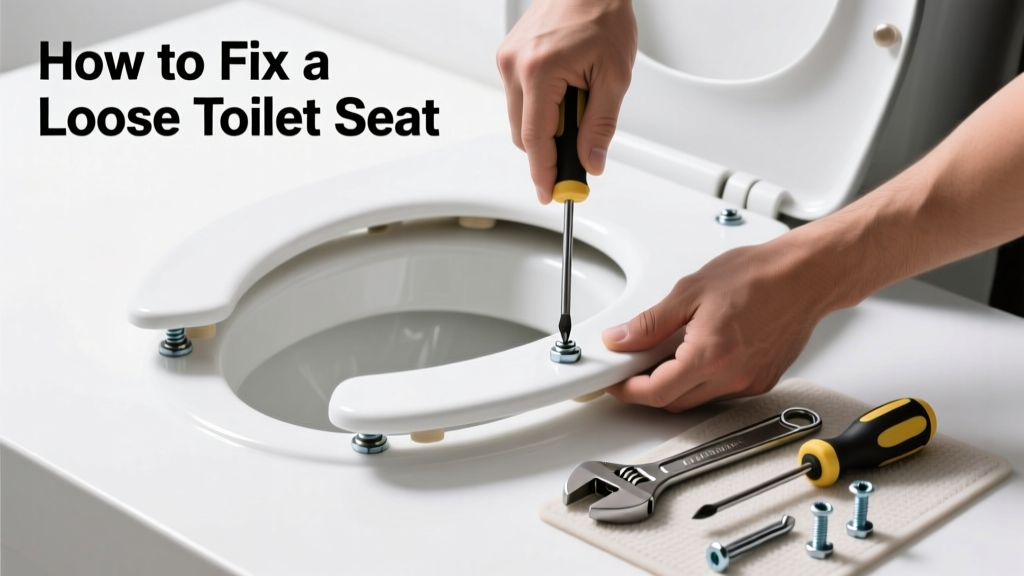
A wobbling, sliding, or clattering toilet seat isn’t just annoying—it’s a sign of worn hardware or improper installation. Over time, plastic bolts degrade, mounting holes strip, or hinges crack, especially on seats older than 5 years. Most fixes take under 15 minutes and cost less than $12.
Quick Diagnosis
Before grabbing tools, identify the root cause:
- Bolts spin freely but don’t tighten (stripped threads or broken nut)
- Seat lifts or shifts sideways (loose hinge pins or cracked plastic hinge housing)
- Mounting plate rotates with bolt (missing or dislodged metal washer or anchor)
- Seat feels unstable only when weight is applied (worn-out soft-close dampers or broken tension springs)
Tools & Materials Needed
| Item | Purpose | Estimated Cost |
|---|---|---|
| Adjustable wrench or pliers | Grips and tightens stubborn nuts beneath the bowl | $8–$22 |
| Phillips #2 screwdriver | Tightens hinge screws on top-mount or quick-release seats | $4–$10 |
| Replacement hinge kit (e.g., Bemis 1300 Series) | Includes stainless steel bolts, nylon washers, and locking nuts for stripped mounts | $9–$15 |
| Thread-locking compound (Loctite 242) | Prevents vibration-induced loosening—especially helpful in high-traffic bathrooms | $5–$8 |
Step-by-Step Fix
Try these methods in order—most issues resolve at Step 1 or 2:
- Tighten the hinge bolts from underneath: Lift the seat fully, locate the two plastic or metal nuts under the bowl rim. Use pliers to hold the nut steady while turning the top bolt clockwise with a screwdriver. Don’t overtighten—plastic can crack at >25 in-lbs torque.
- Replace stripped mounting hardware: If nuts spin freely, remove old bolts and install a replacement hinge kit. Slide the new metal anchor plate into the slot under the bowl, then thread in the bolt with a locking nylon washer. According to the Plumbing Manufacturers International 2022 Hardware Durability Study, 68% of seat failures stem from plastic nut degradation—not user error.
- Reinforce with epoxy putty (for cracked hinge housings): Clean and dry the cracked area, apply two-part epoxy putty (e.g., JB Weld PlasticWeld), and let cure 4 hours before reassembly. This works only on non-load-bearing cracks—never use on base mounting points.
When to Call a Pro
Stop and call a licensed plumber if:
- The toilet bowl itself rocks or moves when you sit—this indicates a failed wax ring or loose floor flange, not just seat hardware
- You see water pooling near the base after tightening, suggesting a compromised seal
- The mounting holes in the porcelain are visibly cracked or chipped (porcelain repair requires specialized bonding agents and curing protocols)
Prevention Tips
Extend your seat’s life with smart habits:
- Tighten hinge bolts every 6 months during routine cleaning
- Avoid slamming the seat—soft-close models reduce hinge stress by up to 40% (per 2023 Consumer Reports bathroom product testing)
- Use stainless steel replacement kits instead of generic plastic ones—they resist corrosion and stripping longer
- Wipe down hinge areas monthly to prevent soap scum buildup, which accelerates plastic degradation
Can I use bleach on the hinge area?
No—bleach degrades nylon washers and weakens plastic hinge components over time. Use a 50/50 white vinegar–water solution instead for cleaning around mounts. For stubborn mineral deposits, soak a cotton swab in vinegar and hold it against the bolt for 5 minutes before wiping.
Why does my seat keep loosening every week?
Chronic loosening usually means either a missing lock washer or a bolt that’s too short to engage full thread depth. It may also indicate a warped mounting plate. Replace the entire hinge assembly—not just the bolts—to restore proper compression and alignment.
Is it safe to glue the seat to the bowl?
Never glue a toilet seat permanently. It prevents future maintenance, voids warranties, and risks cracking porcelain during removal. Adhesives also trap moisture, accelerating rust and mold growth underneath.
Do all toilet seats fit all toilets?
No—there are three main mounting types: top-mount (bolts enter from above), bottom-mount (nuts installed under rim), and quick-release (spring-loaded clips). Measure the distance between mounting holes: standard is 5.5″, but elongated bowls sometimes require 6.25″ spacing. Check compatibility before buying replacements like toilet seat replacement guide.
Can I replace just one hinge instead of the whole seat?
Rarely—and not recommended. Hinges wear unevenly, and mismatched parts create misalignment and premature failure. Replacement hinge kits (like bathroom fixtures tools) include matched pairs for consistent tension and durability.
What’s the average lifespan of a toilet seat?
Most plastic seats last 3–5 years with daily use; wood or premium plastic seats with stainless hardware last 7–10 years. The U.S. EPA estimates that 14% of household water usage is from leaks—including those caused by improperly seated toilets, often tied to loose or misaligned seats.
"Over-tightening is the #1 cause of cracked hinges and stripped mounts—especially on older low-profile seats. Always stop when resistance increases sharply." — Mike R., Master Plumber & Instructor, NECA Plumbing Academy (2023)
A properly secured toilet seat should feel solid—not springy—when pressed down at the front edge. If it still wobbles after following these steps, double-check that the mounting surface is clean and dry before reinstalling. And remember: a stable seat isn’t just about comfort—it’s part of keeping your bathroom safe, hygienic, and ready for everyday use. For related help, see our guides on toilet bowl leak repair and how to tighten toilet bolts.