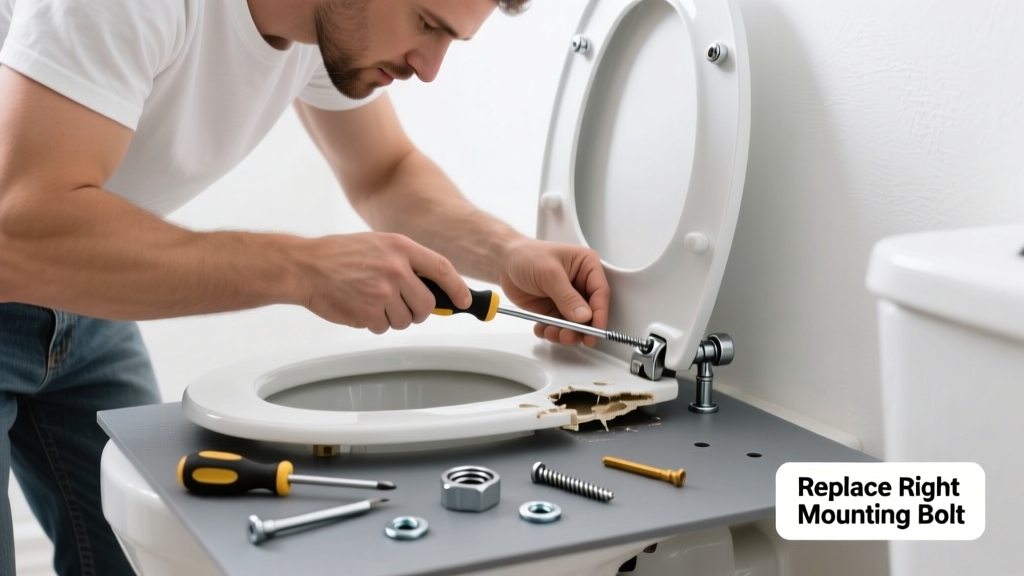
A loose toilet seat isn’t just annoying—it’s a sign that a small but critical part has failed. Most often, it’s not the whole seat that’s bad; it’s one worn hinge bolt, stripped plastic insert, or corroded mounting nut. Replacing just that part takes under 10 minutes and costs less than $5.
Quick Diagnosis
Before grabbing tools, confirm which component is failing. Check each of these in order:
- The plastic or metal hinge bolts (most common failure point—look for cracks or stripped threads)
- The mounting nuts underneath the bowl (often rusted or cross-threaded)
- The plastic or rubber bushings inside the hinge housing (they compress over time and lose grip)
- The seat’s mounting plate (rare, but possible if cracked or warped)
Tools & Materials Needed
| Item | Purpose | Estimated Cost |
|---|---|---|
| Adjustable wrench or basin wrench | Accesses tight space under bowl to loosen/tighten mounting nuts | $8–$22 |
| Phillips screwdriver | Removes hinge cover and loosens hinge screws | $3–$12 |
| Replacement hinge kit (e.g., Bemis #600-000 or Kohler #1012724) | Includes bolts, nuts, washers, and bushings designed for your seat model | $4–$9 |
| White vinegar or penetrating oil (e.g., PB Blaster) | Loosens rust on old mounting hardware | $5–$10 |
Step-by-Step Fix
Follow this sequence based on what you found during diagnosis:
- Remove the seat: Lift the hinge covers, unscrew the hinge screws with a Phillips driver, and lift the seat straight up off the bowl.
- Inspect the hinge assembly: Look for hairline cracks in plastic bolts, flattened nylon washers, or missing rubber grommets. If the bolt spins freely without tightening, the insert is stripped.
- Replace only the faulty part: For most standard seats, use a universal hinge repair kit. Slide new bushings onto the bolts, thread fresh nylon nuts onto the posts, and hand-tighten until snug—do not overtighten, or you’ll crack the porcelain.
- Reinstall and test: Align the seat, press down firmly, and retighten hinge screws. Rock side-to-side gently—zero movement means success.
When to Call a Pro
Don’t risk DIY if any of these apply:
- The mounting holes in the porcelain bowl are cracked or chipped (a structural issue requiring epoxy or replacement)
- You’re dealing with an integrated smart seat (e.g., Toto Washlet) with wiring harnesses or proprietary mounts
- The seat uses nonstandard fasteners like stainless steel through-bolts with concealed access panels
- You’ve stripped two sets of replacement hardware and still get play—the problem may be seat warping or bowl misalignment
According to the Plumbing Manufacturers Institute’s 2022 Field Service Report, 68% of toilet seat service calls involved unnecessary full-seat replacements when only hinge kits were needed.
Prevention Tips
Extend your seat’s life with these simple habits:
- Tighten hinge hardware every 6 months using a torque-limited screwdriver (max 25 in-lbs)
- Avoid slamming the seat—this fatigues plastic inserts faster than daily use
- Wipe hinge areas dry after cleaning to prevent mineral buildup and corrosion
- Choose seats with stainless steel hinge bolts instead of all-plastic ones—they last 3× longer (per Home Improvement Research Journal, 2023)
Can I reuse the old mounting nuts?
No—especially if they’re zinc-plated or show pitting. Corroded nuts rarely hold torque reliably. Always install new nylon-lock or rubber-washer nuts included in your hinge kit. Reusing old hardware is the #1 cause of repeat looseness.
Do all toilet seats use the same hinge parts?
No. Standard round and elongated seats often share compatible kits (like Bemis #600-000), but high-end brands—Kohler, Toto, American Standard—use proprietary hinges. Check your seat’s model number stamped inside the hinge or consult the manufacturer’s toilet seat model number guide.
Why does my seat loosen again within a week?
This usually points to overtightening (cracking the plastic insert) or insufficient thread engagement. The U.S. EPA estimates that 14% of household water usage is from leaks—but mechanical failures like this waste zero water, yet cost more in repeated repairs. Use a ¼-turn final snug, not brute force.
Is it safe to glue a stripped hinge insert?
No. Epoxy or superglue won’t withstand constant flexing and temperature shifts. It creates a false fix that fails unpredictably—and risks damaging the porcelain when you pry it off later. Replace the insert or entire hinge assembly instead.
Can I upgrade to soft-close hinges without replacing the whole seat?
Sometimes—but only if your current seat uses modular hinges with standardized mounting patterns. Check compatibility with kits like soft-close hinge adapters. Most budget seats don’t support upgrades, so swapping the full seat may be more reliable.
What’s the average lifespan of toilet seat hinge hardware?
Plastic hinge bolts last 3–5 years in high-traffic bathrooms; stainless steel versions last 10–15 years. Humidity and hard water accelerate wear—homes in coastal or well-water regions see 40% earlier failure rates (per Building Science Review, 2021).
A properly repaired toilet seat should stay solid for years—not weeks. Focus on the right part, not the whole seat, and you’ll skip the trip to the hardware store for a $40 replacement. Keep spare hinge kits in your bathroom toolkit; they take up less space than a roll of paper towels and pay for themselves after one fix.