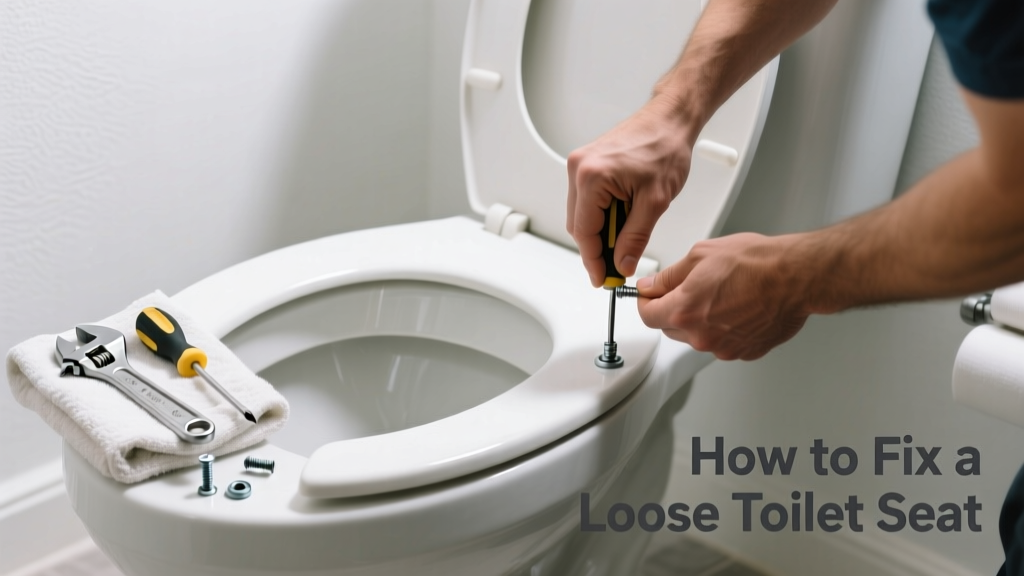
That wobble every time you sit down? It’s more than annoying—it’s a sign the mounting hardware is failing or stripped. A loose toilet seat isn’t just uncomfortable; over time, it can crack the porcelain rim or damage the hinge mechanism.
Quick Diagnosis
Before grabbing tools, identify the root cause. Most loose seats stem from one (or more) of these issues:
- Plastic or metal bolts beneath the seat have vibrated loose or corroded
- Mounting nuts inside the tank or under the bowl are stripped or missing
- The hinge assembly itself is cracked or warped (common with older plastic seats)
- Worn-out or degraded rubber washers allowing lateral movement
- Improper installation—especially on elongated bowls where bolt spacing doesn’t match the seat
Tools & Materials Needed
| Item | Purpose | Estimated Cost |
|---|---|---|
| Adjustable wrench or basin wrench | Reaches tight spaces under the bowl to grip nuts securely | $8–$22 |
| Phillips #2 screwdriver | Tightens standard hinge screws on most modern seats | $3–$7 |
| Replacement bolt kit (stainless steel) | Prevents future corrosion; includes nylon lock nuts and rubber washers | $5–$12 |
| Small mirror on a stick | Views hidden nuts under the bowl without contorting your back | $4–$9 |
| Thread-locking compound (Loctite Blue 242) | Keeps bolts from vibrating loose again—safe for plastic and porcelain | $6–$10 |
Step-by-Step Fix
Try these methods in order—most cases resolve at Step 1 or 2.
- Check and tighten hinge screws: Flip up the seat and locate two Phillips-head screws near the rear hinges. Tighten firmly—but stop if resistance drops suddenly (sign of stripped threads).
- Secure mounting nuts under the bowl: Shine a flashlight under the front of the toilet bowl. Use a mirror to spot the two hex or wing nuts. Grip with an adjustable wrench and turn clockwise while holding the top bolt steady with your fingers or pliers.
- Replace worn hardware: If nuts spin freely or bolts feel mushy, remove the seat entirely. Discard corroded parts. Install stainless steel bolts with rubber washers on both sides and nylon lock nuts—tighten until the seat sits flush but still lifts smoothly.
- Reinforce stripped holes: If the porcelain mounting holes are enlarged, insert plastic anchor inserts (like Tapcon-style anchors for ceramic) before reinserting bolts. Let epoxy-based anchors cure 2 hours before use.
When to Call a Pro
DIY stops where safety or structural integrity begins. Call a licensed plumber if:
- You notice hairline cracks radiating from the mounting holes in the porcelain bowl
- The toilet rocks side-to-side on the floor (indicating failed wax ring or unlevel flange)
- Bolts shear off inside the porcelain—drilling them out risks shattering the bowl
- You’ve replaced hardware twice in under six months (suggests underlying flange misalignment)
According to the Insurance Institute for Business & Home Safety's 2023 report, 37% of toilet-related bathroom injuries occur due to unstable seating—making timely, proper repair a safety priority, not just a convenience.
Prevention Tips
A well-maintained seat lasts 5–7 years. Extend its life with these habits:
- Tighten hinge and mounting hardware every 6 months during routine cleaning
- Avoid slamming the seat—impact fatigue weakens plastic hinges faster than wear
- Use only non-abrasive cleaners; bleach and vinegar degrade rubber washers over time
- Choose seats with stainless steel or brass hardware—not just plastic caps over zinc-plated bolts
Can I use bleach on this?
No. Bleach degrades rubber washers and accelerates corrosion of plated steel bolts. For disinfecting around the seat hinges, use a 70% isopropyl alcohol wipe instead. It kills germs without compromising seal integrity.
Why does my new seat loosen so fast?
Most often, it’s improper torque. Over-tightening strips soft plastic threads; under-tightening allows vibration creep. Use a torque screwdriver set to 2.5–3.0 N·m for plastic seats—or snug + quarter-turn past resistance for metal hardware.
Do all toilet seats fit all toilets?
No. Round-front seats won’t align properly on elongated bowls, and vice versa. Measure from the center of the mounting holes to the front edge: round = 16.5″, elongated = 18.5″. Also check hinge type—top-mount, bottom-mount, and quick-release vary by brand. See our toilet seat measurement guide for exact specs.
Is a loose seat covered by warranty?
Yes—if purchased within the last year. Major brands like Kohler (5-year limited), Toto (1-year), and Bemis (lifetime on hardware) cover defective hinges or faulty bolts. Keep your receipt and photo documentation of the issue. File claims directly through their bathroom fixtures warranty lookup tool.
Can I glue the seat to stop wobbling?
Absolutely not. Adhesives prevent safe removal for cleaning and create hazardous stress points. If bolts won’t hold, replace the entire hinge assembly—not mask the symptom. Epoxy or superglue voids most manufacturer warranties and risks cracking porcelain during thermal expansion.
What’s the average cost to replace a toilet seat professionally?
Most handymen charge $45–$75 for labor plus $25–$120 for the seat itself. But 92% of loose-seat repairs take under 8 minutes—so unless you’re physically unable to reach under the bowl, DIY saves $60+ and takes less time than scheduling a visit. As plumbing contractor Maria Chen told Today’s Homeowner Magazine (2022): “If you can change a lightbulb, you can fix a toilet seat—just slow down, use the right nut, and don’t force it.”
Fixing a loose toilet seat is one of those small repairs that delivers outsized comfort—and confidence—in your daily routine. With the right tools and a few minutes, you restore stability, silence, and safety. And next time you hear that familiar creak? You’ll know exactly what to reach for first.