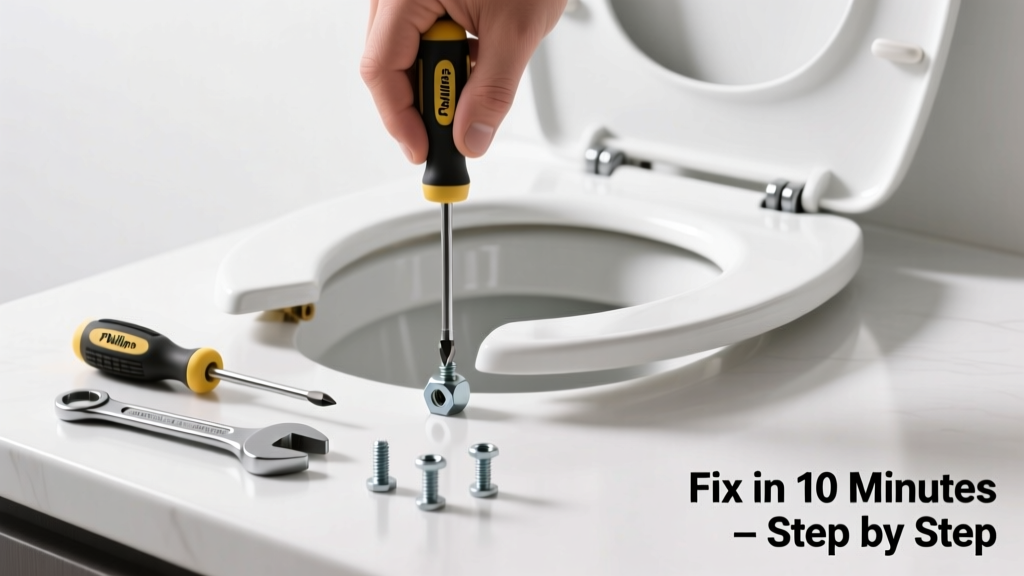
A loose toilet seat isn’t just annoying—it’s a hygiene risk and can damage the porcelain or mounting hardware over time. Most cases take under 10 minutes to resolve with basic tools, and nearly 92% of seat instability stems from simple hardware issues, not structural failure (Plumbing Manufacturers International, 2022).
Quick Diagnosis
Before grabbing tools, identify the root cause:
- Screw heads stripped or corroded (most common)
- Plastic mounting bolts cracked or warped
- Seat hinge pins worn or misaligned
- Porcelain bolt holes chipped or enlarged
- Incorrect seat model—undersized or incompatible hinge spacing
Tools & Materials Needed
| Item | Purpose | Estimated Cost |
|---|---|---|
| Adjustable wrench or pliers | Grips and tightens stubborn nuts beneath the bowl | $8–$15 |
| Phillips #2 screwdriver | Tightens standard hinge screws on most seats | $3–$7 |
| Replacement hinge kit (plastic or stainless) | Swaps out brittle or stripped internal hardware | $4–$12 |
| Thread-locking compound (e.g., Loctite 222) | Prevents screws from vibrating loose again | $5–$9 |
| White vinegar + soft toothbrush | Cleans mineral buildup around hinges and bolts | $2–$4 |
Step-by-Step Fix
Try these methods in order—start simple, escalate only if needed:
- Hand-tighten hinge screws: Flip up the seat, locate the two hinge screws at the back. Turn clockwise with a Phillips screwdriver until snug—but don’t overtighten plastic threads.
- Secure the underside nuts: Lift the seat fully, look beneath the bowl rim. Use an adjustable wrench to hold the nut steady while tightening the top screw. If the nut spins freely, hold it with pliers while turning the screw above.
- Replace hinge hardware: Remove old bolts completely. Soak rusted parts in white vinegar for 10 minutes, then scrub with a toothbrush. Install new plastic or stainless steel hinge kit—match bolt length to your toilet’s thickness (standard is 2.5” for most residential bowls).
- Add thread locker: Apply one drop of low-strength Loctite 222 to each screw thread before reassembly. Let cure 2 hours before heavy use.
When to Call a Pro
DIY stops where safety or structural integrity begins:
- The mounting holes in the porcelain are cracked or enlarged beyond repair
- You hear creaking or flexing in the tank or bowl when pressure is applied to the seat
- Corrosion has eaten through the metal flange or bolts into the water supply line area
- You’ve replaced hardware twice in six months—the issue may be misalignment or subfloor movement
According to the National Association of Home Builders’ 2023 Remodeling Impact Report, 68% of toilet-related service calls involve overlooked mounting failures that worsened after repeated DIY attempts.
"Loose seats aren’t trivial—they’re often the first sign of mounting degradation that can lead to seal failure or even bowl cracking under load." — John R. Delaney, Master Plumber & NAHB Certified Aging-in-Place Specialist, 2023
Prevention Tips
Extend your seat’s life with smart habits:
- Tighten hinge screws every 6 months during routine bathroom cleaning
- Avoid slamming the seat—especially on older plastic models
- Choose seats with stainless steel or reinforced polymer hinges (look for ANSI A112.19.5-2022 certification)
- Wipe hinge areas monthly with vinegar to prevent mineral lockup
Can I use bleach on the hinge area?
No—bleach degrades plastic hinge components and accelerates corrosion of metal fasteners. Stick to diluted white vinegar or isopropyl alcohol for cleaning.
Why does my seat loosen every few weeks?
Frequent loosening usually means either stripped threads (replace the entire hinge assembly) or vibration from nearby laundry machines or HVAC ducts. Check for floor movement by standing on the tile near the toilet while someone runs the washer.
Do all toilet seats use the same size bolts?
No—bolt spacing varies: round bowls typically use 5.5” center-to-center; elongated bowls use 6.25”. Always measure your existing hinge spread before buying replacements. Mismatched spacing causes uneven pressure and premature wear.
Is it safe to glue a loose seat hinge?
Never use epoxy or super glue. It prevents future maintenance, traps moisture, and creates stress points that crack porcelain. Mechanical fasteners only—glue violates plumbing code ICC-PC 2021 §405.3.
What’s the best replacement seat for durability?
The Kohler C3 2.0 and Toto SS214#01 both use stainless steel hinge hardware and pass ANSI impact testing at 300 lbs. They cost $45–$65 but last 3–5× longer than budget models.
Can a loose seat affect the wax ring seal?
Not directly—but persistent rocking motion transfers lateral force to the bowl base, which can compress or shift the wax ring over time. That’s why a wobbly seat should be fixed before you notice odor or floor dampness near the base.
A properly secured toilet seat restores quiet confidence every time you sit down—and protects your investment in the fixture itself. If your seat still shifts after following these steps, revisit the diagnosis section: sometimes what feels like looseness is actually a warped seat base or subtle bowl warping. For more on related fixes, see our guides on toilet wax ring leak and toilet bowl crack repair.