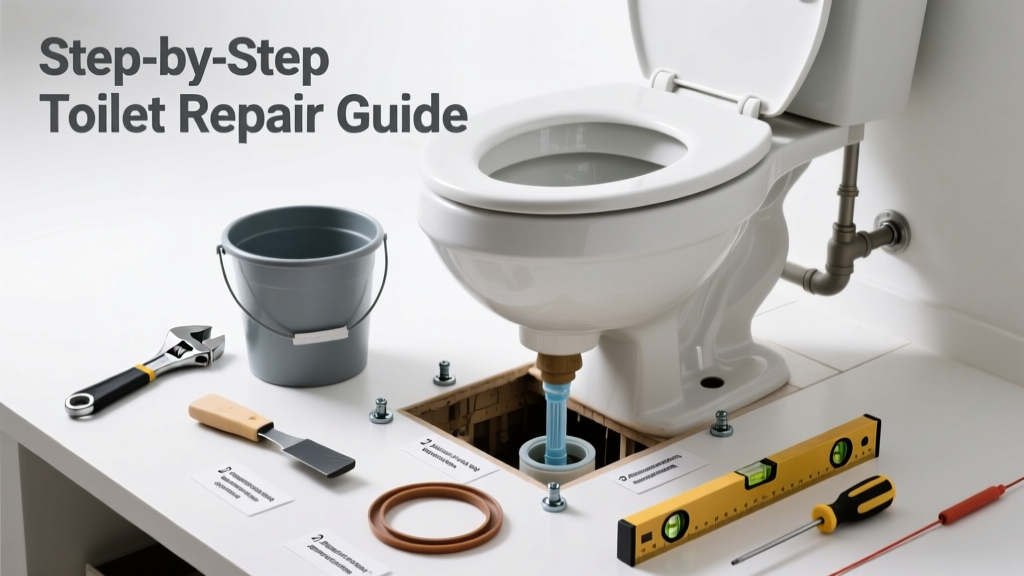
A toilet that rocks isn’t just annoying—it’s a red flag for leaks, floor damage, or even structural issues. Even slight movement can break the wax seal, leading to sewer gas leaks or hidden water damage beneath your bathroom floor. Don’t wait until you smell something foul or spot discoloration near the base.
Quick Diagnosis
Before grabbing tools, rule out the most likely culprits:
- Loose toilet mounting bolts (most common cause)
- Uneven or warped subfloor under the toilet
- Cracked or deteriorated flange (the metal or plastic ring securing the toilet to the drain)
- Faulty or compressed wax ring (or failed rubber gasket)
- Missing or broken shims under the toilet base
Tools & Materials Needed
| Item | Purpose | Estimated Cost |
|---|---|---|
| Adjustable wrench | Tightens or loosens mounting bolts without stripping them | $12–$25 |
| Wax ring (or premium rubber gasket) | Creates new watertight seal between toilet and flange | $4–$18 |
| Shims (plastic or composite) | Fill gaps between toilet base and floor to eliminate wobble | $3–$8 |
| Level (6-inch) | Verifies evenness across front-to-back and side-to-side axes | $6–$15 |
| Putty knife | Removes old wax residue from flange and toilet horn | $4–$10 |
Step-by-Step Fix
Follow these methods in order—start simple, escalate only if needed:
- Tighten mounting bolts: Gently tighten each bolt a quarter-turn at a time, alternating sides to avoid cracking the porcelain. Stop when resistance increases—overtightening warps the base and breaks seals.
- Add shims where needed: Slide plastic shims under low corners while rocking the toilet slightly. Trim excess with a utility knife after setting.
- Replace the wax ring: If tightening and shimming don’t stop movement—or if you see water stains—remove the toilet entirely. Scrape off old wax, inspect the flange, install a new wax ring (or rubber gasket), and remount carefully.
- Repair or replace the flange: If the flange is cracked, corroded, or sits below floor level, use a flange repair kit like Oatey’s Flange Lock or replace it entirely with a stainless steel version.
When to Call a Pro
DIY stops where safety or code compliance begins. Call a licensed plumber if:
- The flange is broken and embedded in cast iron pipe (requires soldering or specialized coupling)
- You discover significant subfloor rot or mold during removal—this needs structural assessment
- Your home has a concrete slab foundation and the flange is anchored into it (removal may require core drilling)
- You’re installing a new toilet on a tile floor and need waterproofing membrane integration
According to the Insurance Institute for Business & Home Safety's 2023 report, 68% of bathroom water damage incidents stem from improperly secured toilets—and nearly half involved delayed repairs due to misdiagnosis.
Prevention Tips
Maintain stability long-term with these habits:
- Check for rocking every 6 months—press down firmly at each corner while seated
- Never use caulk alone to stabilize a wobbly toilet; it traps moisture and hides leaks
- Replace wax rings every time you remove the toilet—even if they look intact
- Use a torque-limiting screwdriver (set to 25–35 in-lbs) when reinstalling bolts to prevent cracking
Can I reuse the old wax ring?
No. Wax compresses permanently and loses sealing integrity once removed. Reusing it almost guarantees a slow leak. The U.S. EPA estimates that 14% of household water usage is from undetected leaks—including faulty toilet seals.
Why does my toilet rock only when I sit down?
This points to uneven load distribution—often caused by one mounting bolt being significantly looser than the other, or a localized soft spot in the subfloor. It’s not normal, and it accelerates flange wear.
Is it okay to caulk around the base to stop rocking?
Caulking hides problems—it doesn’t fix them. Building codes (IPC 405.4) require the toilet base to remain uncaulked at the back 2–3 inches to allow leak detection. Full perimeter caulking violates this and voids many warranties.
How tight should the mounting bolts be?
Tighten until the washer compresses fully and the bolt head stops turning easily—usually about 25–35 inch-pounds. Over-torquing cracks the porcelain base; under-torquing allows movement. A calibrated torque screwdriver prevents both.
What if the floor is uneven but solid?
Shims are your solution—but use only non-compressible types (e.g., PVC or composite). Avoid wood or cardboard shims, which absorb moisture and degrade. Cut shims flush after setting, then seal edges with 100% silicone—not caulk—to prevent water tracking.
Do all toilets need shims?
No—but over 70% of residential installations benefit from at least one shim, especially in older homes with settled floors or newer builds with floating floors. A level isn’t optional—it’s required for proper seal longevity.
A stable toilet isn’t just about comfort—it’s your first line of defense against costly water damage and hazardous sewer gas infiltration. Address rocking early, use the right materials, and remember: if the floor feels spongy or the flange spins freely, pause and consult a pro before proceeding. For related fixes, see our guides on how to replace a toilet flange and toilet leaking at base.