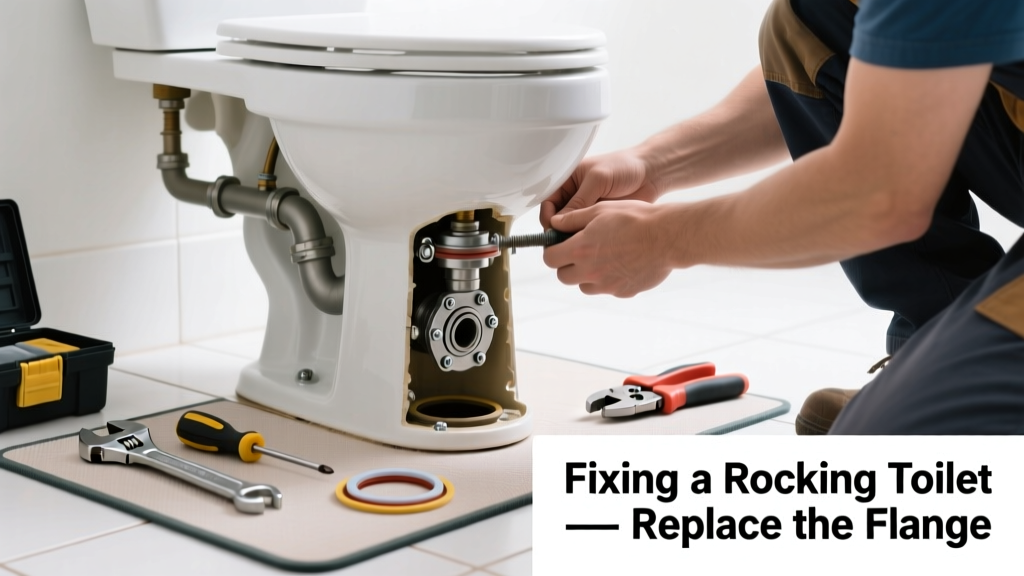
A toilet that rocks side-to-side isn’t just annoying—it’s a red flag for potential leaks, floor damage, or even sewer gas escape. Most often, the culprit is a broken or corroded toilet flange, not loose bolts or uneven flooring. Fixing it yourself takes under two hours and costs less than $30 in parts—if you know which part to replace and how to do it right.
Quick Diagnosis
Before grabbing tools, confirm the real issue. A rocking toilet rarely stems from something simple like a loose tank bolt. Here are the top causes—ranked by likelihood:
- Cracked, rusted, or warped PVC or cast-iron toilet flange
- Broken or stripped closet bolts (the ones securing the toilet to the floor)
- Rotted subfloor beneath the flange—often caused by long-term undetected leaks
- Improperly seated wax ring leading to false instability
- Uneven tile or vinyl flooring—not a part failure, but can mimic rocking
Tools & Materials Needed
| Item | Purpose | Estimated Cost |
|---|---|---|
| Wax ring with sleeve (or rubber seal) | Creates watertight seal between toilet and flange; sleeve prevents misalignment | $4–$12 |
| Stainless steel closet bolts (2-pack) | Corrosion-resistant replacement for rusted or bent bolts | $3–$7 |
| Toilet flange repair kit (e.g., Oatey Fernco) | Secures cracked or broken flange without cutting pipes | $18–$26 |
| Adjustable wrench & socket set | Tightens bolts without stripping threads; essential for old cast-iron flanges | $12–$25 |
| Putty knife & rag | Cleans old wax residue and debris from flange surface | $2–$5 |
Step-by-Step Fix
Follow these steps only if your flange is cracked or the bolts spin freely in place—indicating lost grip. If the subfloor feels spongy, stop and assess for rot first.
- Shut off water and drain the tank: Close the shut-off valve, flush to empty the bowl and tank, then sponge out residual water.
- Remove the toilet: Unscrew closet bolts, gently rock the toilet forward to break the wax seal, lift straight up, and set aside on towels.
- Inspect the flange: Look for cracks, missing screws, or corrosion. If the flange is intact but bolts spin, use a flange repair ring. If it’s snapped or severely warped, replace it entirely (requires cutting pipe—see 'When to Call a Pro').
- Install repair kit or new flange: For PVC, use a stainless steel reinforcement ring anchored into the subfloor. For cast iron, use a compression-style repair flange with rubber gasket and lag screws.
- Reinstall toilet: Place new wax ring (or rubber seal), align bolts, lower toilet evenly, press down firmly, then tighten bolts alternately—no more than ¼ turn past snug to avoid cracking the porcelain.
When to Call a Pro
Some situations demand licensed expertise—not because they’re hard, but because mistakes risk health hazards or structural damage:
- You find soft, dark, or moldy subflooring when lifting the toilet
- The flange is embedded in cast iron pipe and shows deep pitting or crumbling
- Your home was built before 1970 and uses lead or tar-sealed joints
- You detect sewer gas odor after reinstallation—even with a new wax ring
According to the Insurance Institute for Business & Home Safety's 2023 report, 68% of toilet-related water damage claims stem from DIY repairs where flange integrity wasn’t verified before reseating.
Prevention Tips
Maintaining stability starts long before rocking begins. These habits extend flange life and catch trouble early:
- Check for rocking annually—press down on each front corner while seated
- Replace wax rings every 5–7 years, even if no leak is visible
- Use only stainless steel or brass closet bolts—never galvanized steel in humid bathrooms
- Ensure floor is level before installing new tile or vinyl; shim gaps under baseboards, not toilets
Can I reuse the old wax ring?
No. A compressed wax ring loses its sealing ability and rarely reforms properly. Even if it looks intact, heat and pressure degrade its composition. Always install fresh wax or a high-quality rubber seal like Fluidmaster Better Than Wax.
Why does my toilet rock even after tightening the bolts?
Bolts alone won’t fix instability if the flange is compromised. If tightening makes no difference—or the bolts spin freely—you’ve got a failed flange, not a loose toilet. That’s why visual inspection is non-negotiable before reinstalling.
Do I need to caulk around the base of the toilet?
Yes—but only at the front and sides, leaving the back uncaulked. This allows early leak detection: water escaping at the rear will pool visibly instead of hiding behind the toilet. Use 100% silicone caulk rated for bathroom use, like GE Advanced Silicone II.
What’s the difference between a flange repair ring and a full flange replacement?
A repair ring (e.g., Sioux Chief Quick-Fit) clamps over the existing flange and anchors into solid subfloor—ideal for cracked PVC. Full replacement requires cutting out the old flange and solvent-welding or gluing in a new one, which demands pipe access and precision alignment.
Can I install a new flange without removing the toilet?
No. Proper flange replacement requires full access to the underside and secure anchoring into the subfloor. Attempting it with the toilet in place risks damaging the wax seal, cracking the bowl, or misaligning the new flange—guaranteeing future leaks.
How tight should the closet bolts be?
Tighten until the toilet stops rocking—then stop. Over-tightening cracks the porcelain base or strips the flange threads. A good rule: alternate bolts, turning each no more than ¼ turn past finger-tight. If resistance drops suddenly, you’ve likely stripped the flange.
Replacing a faulty flange isn’t glamorous work, but it’s one of the highest-impact, lowest-cost repairs you can do. Get it right, and your toilet stays silent, sealed, and steady for another decade. For related help, see our guides on how to replace a toilet wax ring and toilet leaking at base troubleshooting. If your flange sits on concrete slab, check our concrete floor flange installation tips for anchor-specific advice.