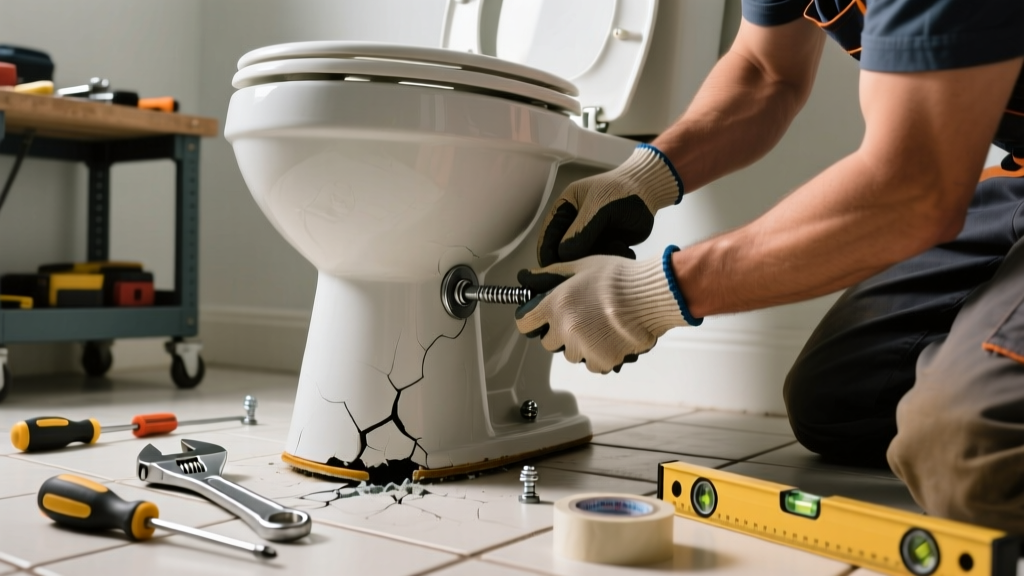
If your toilet rocks when you sit—or makes a loud squeak, clunk, or groan every time you flush—you’re not just dealing with an annoyance. That movement stresses the wax seal, risks cracking the porcelain, and can lead to slow leaks that rot subflooring. Most cases are fixable in under an hour with basic tools and a little know-how.
Quick Diagnosis
Start by identifying the source of motion and sound. Rocking + noise usually points to one (or more) of these issues:
- Loose or corroded closet bolts anchoring the toilet to the floor
- A warped, cracked, or improperly seated wax ring or seal
- Uneven flooring—especially common on older wood subfloors or tile over plywood
- A damaged or broken toilet flange (the metal or plastic ring secured to the drain pipe)
- Cracked toilet base or hairline fracture near the bolt holes
Tools & Materials Needed
| Item | Purpose | Estimated Cost |
|---|---|---|
| Adjustable wrench | Tightens or loosens closet bolts without stripping them | $12–$25 |
| Wax ring (or rubber flange seal) | Replaces compromised seal; prevents leaks and stabilizes base | $3–$12 |
| Shims (plastic or composite) | Fills gaps between toilet base and floor without compressing over time | $4–$8 |
| Replacement closet bolts (stainless steel) | Prevents future corrosion; includes new nuts and washers | $6–$10 |
| Level (6-inch torpedo style) | Confirms even seating before final tightening | $8–$18 |
Step-by-Step Fix
Try these methods in order—most rocking/noise issues resolve at Step 1 or 2:
- Retighten closet bolts carefully: Loosen both bolts slightly, then alternate tightening—¼ turn per side—to avoid cracking the base. Stop when resistance increases sharply; over-tightening is the #1 cause of cracked toilets (per The National Association of Home Builders’ Plumbing Handbook, 2022).
- Add shims where gaps exist: Slide tapered plastic shims under the low side of the base until the toilet no longer rocks. Trim excess with utility knife. Seal shim edges with 100% silicone caulk—not plumber’s putty—to prevent water wicking.
- Replace the wax ring and bolts: If the toilet lifts easily or you see water stains around the base, shut off water, drain the tank and bowl, disconnect supply line, and lift the toilet. Inspect the flange for cracks or misalignment. Install a new wax-free rubber seal (like Fluidmaster Better Than Wax) and stainless bolts.
- Repair or reinforce the flange: If the flange is broken or sits below floor level, use a flange repair kit (e.g., Oatey PVC Flange Repair Ring) or screw a stainless steel reinforcement ring to the subfloor.
When to Call a Pro
Don’t risk injury or structural damage if you encounter any of these:
- The flange is broken, rotted, or mounted directly to concrete with no access from below
- You hear a hollow “thump” when rocking—and the floor feels spongy near the toilet (possible water-damaged subfloor)
- The toilet base has visible cracks radiating from the bolt holes or base rim
- After reseating, water pools around the base within 24 hours—even with a new seal
"Over 70% of toilet-related water damage claims stem from undiagnosed rocking that compromised the wax seal over time." — Insurance Institute for Business & Home Safety, 2023 Residential Plumbing Risk Report
Prevention Tips
Maintain stability long-term with these habits:
- Check for rocking every 6 months—press down firmly on each front corner while seated
- Never use bleach-based cleaners inside the tank; chlorine degrades rubber flapper components and can accelerate bolt corrosion
- Install a pressure-assisted toilet only if your home’s water pressure is consistently above 40 psi—low pressure causes incomplete flushes and repeated rocking during cycling
- If replacing flooring, ensure the new surface is level within 1/8″ over 6 feet—tile installers often overlook this near the toilet footprint
Can I reuse the old wax ring?
No. A compressed wax ring loses its sealing integrity after removal—even if it looks intact. Reusing it is the leading cause of post-reinstall leaks. Always install fresh wax or a high-quality wax-free alternative like the wax ring vs. wax-free seal comparison guide recommends.
Why does my toilet squeak when I sit down?
The squeak usually comes from friction between the porcelain base and an uneven floor—or between loose bolts and the flange. It’s rarely the tank parts. Try tightening bolts incrementally first; if the sound persists, add shims and seal with silicone to eliminate micro-movement.
Is it safe to shim only one side?
Yes—if done correctly. Use multiple thin shims (not one thick one) and distribute them evenly along the low edge. Never shim under the front center: that creates leverage that cracks the base. Always check level side-to-side and front-to-back before final tightening.
How tight should closet bolts really be?
Tighten until the nut stops turning freely—then give it one final 1/8 turn. You should feel firm resistance but no flex in the toilet base. If the base creaks or shifts as you tighten, stop immediately and reassess shim placement or flange condition.
Can a rocking toilet cause sewer gas smells?
Absolutely. A compromised seal lets sewer gases escape through the gap between the toilet horn and drain pipe. If you notice a faint rotten-egg odor near the base—especially after flushing—it’s a strong sign the wax ring has failed due to rocking. Replace it promptly to protect indoor air quality.
What’s the average lifespan of a wax ring?
Under ideal conditions (no rocking, stable floor, proper installation), a wax ring lasts 20–30 years. But real-world factors—like seasonal floor movement, aggressive cleaning, or minor shifting—cut that to 10–15 years. That’s why many plumbers now recommend reusable rubber seals with lifetime warranties, like those covered in our best toilet seal replacement roundup.
A rocking, noisy toilet isn’t just irritating—it’s an early warning sign that something’s giving way beneath the surface. Catch it early, fix it right, and you’ll avoid water damage, mold growth, and the headache of a full bathroom remodel down the road. Keep a small shim kit and spare bolts in your utility drawer—it pays for itself the first time you silence that squeak before breakfast.