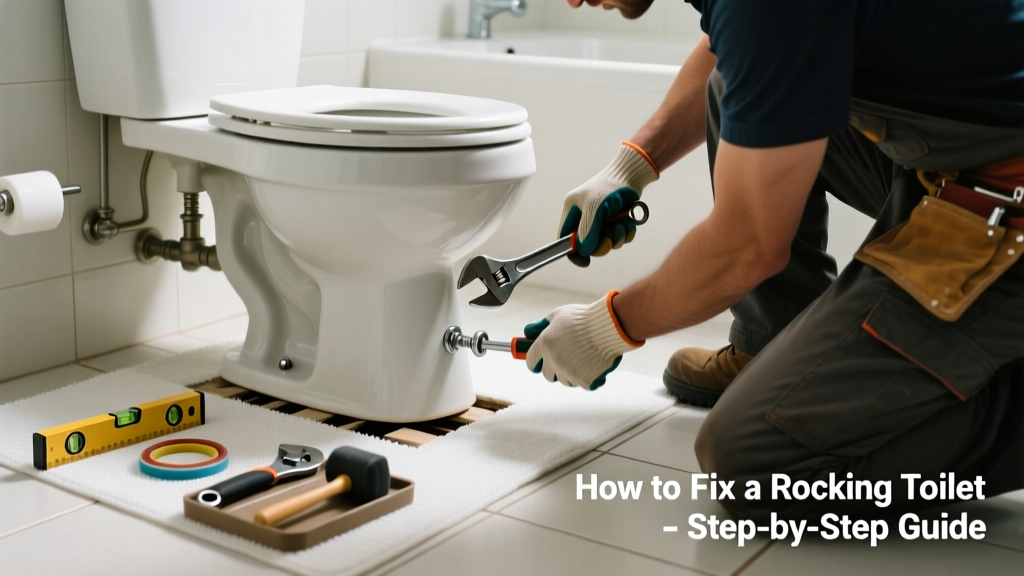
A rocking toilet isn’t just annoying—it’s a red flag for potential leaks, floor damage, and even mold growth beneath the bathroom subfloor. If your toilet wobbles side-to-side or lifts at the front, don’t ignore it: that movement stresses the wax seal and can lead to slow, hidden water intrusion. Most cases are fixable in under an hour with basic tools and a little patience.
Quick Diagnosis
Before grabbing tools, identify the root cause. Rocking usually stems from one (or more) of these issues:
- Loose or corroded closet bolts securing the toilet to the flange
- An uneven bathroom floor—especially common on older homes with sagging subfloors or tile over plywood
- A cracked, rusted, or improperly seated toilet flange
- A warped or damaged toilet base (rare, but possible with older cast-iron or low-quality porcelain)
- Missing or compressed shims under the toilet feet
Tools & Materials Needed
| Item | Purpose | Estimated Cost |
|---|---|---|
| Adjustable wrench or socket set | Tightens or replaces closet bolts without stripping heads | $12–$25 |
| Plastic or composite shims (0.03"–0.125") | Fills gaps between toilet base and floor without compressing or rotting | $4–$8 |
| Wax ring with sleeve (or rubber gasket alternative) | Replaces compromised seal; sleeve prevents misalignment during reseating | $6–$14 |
| Level (6" or longer) | Verifies flatness across front-to-back and side-to-side axes | $8–$18 |
| Drill/driver + carbide-tipped masonry bit (if anchoring into concrete) | Secures flange repair plates or new anchors in slab installations | $0 (if owned) or $25–$45 |
Step-by-Step Fix
Try these methods in order—start simple and escalate only if needed:
- Retighten closet bolts: Turn off water, flush to empty tank, sponge out remaining water. Loosen both bolts slightly, then alternate tightening—¼ turn per side—to avoid cracking the base. Stop when resistance increases sharply; overtightening cracks porcelain.
- Add shims where gap exists: Slide a plastic shim under the rocking corner until the toilet sits solid. Trim excess with utility knife. Seal shim edges with silicone caulk—not plumber’s putty—to prevent moisture trapping.
- Replace the wax ring and reset: If rocking persists or you notice odor or dampness, remove the toilet entirely. Inspect flange height (must be flush or up to ¼" above finished floor). Install new wax ring with sleeve, carefully lower toilet straight down, and press evenly to compress seal.
- Repair or replace the flange: If flange is cracked, broken, or mounted too low, use a stainless-steel repair ring (like Oatey’s Set-Rite) bolted to existing flange—or cut out and replace with a PVC or brass flange anchored to subfloor.
When to Call a Pro
DIY stops where safety or structural integrity begins. Call a licensed plumber if:
- The flange is broken below the subfloor level (e.g., snapped off inside cast-iron pipe)
- You discover significant water damage, soft flooring, or rot in the subfloor—this requires removal and replacement
- Your home has a concrete slab with no access panel, and the flange bolts won’t hold due to crumbling concrete
- You’ve attempted reseating twice and still detect sewer gas odors or visible seepage at the base
According to the Insurance Institute for Business & Home Safety's 2023 report, 68% of bathroom water damage claims involved undetected toilet seal failure—often preceded by months of unnoticed rocking.
Prevention Tips
Maintain stability long-term with these habits:
- Check for rocking every 6 months—press down firmly at front corners while seated
- Never use metal shims; they corrode and puncture flooring or toilet bases
- After any floor renovation (e.g., new tile or vinyl), verify flange height and reinstall toilet with fresh seal
- Use a torque-limiting screwdriver (set to 40–45 in-lbs) when tightening closet bolts—prevents cracking
Can I use regular wood shims instead of plastic?
No. Wood absorbs moisture, swells, and eventually crumbles—creating new gaps and inviting mold. Plastic or composite shims resist compression and moisture, making them the only safe choice for long-term stability.
Why does my toilet rock only when I sit down?
This points to insufficient support at the front of the base—often due to a slight dip in the floor or a worn wax ring that no longer fills the gap evenly. It’s a warning sign: pressure from sitting breaks the seal microscopically each time, accelerating leak development.
Do I need to replace the entire flange if it’s slightly bent?
Not always. A minor bend can often be corrected with a flange-spreading tool or by gently tapping it back into shape with a rubber mallet. But if the bolt holes are elongated or the flange lifts more than 1/8" off the subfloor, replacement is safer—and toilet flange replacement is a manageable weekend project.
Is caulking around the base required or optional?
It’s required—but only along the front and sides, leaving the back 2–3 inches uncaulked. This allows early leak detection: water escaping from a failed seal will pool visibly at the rear rather than hiding under caulk and rotting the subfloor unseen. For best results, use 100% silicone caulk rated for bathrooms, like GE Advanced Silicone II.
Can a rocking toilet cause sewer gas smells?
Yes—immediately. Even tiny movements break the water barrier in the P-trap or compromise the wax seal, letting methane and hydrogen sulfide rise through the gap. If you smell rotten eggs near the toilet, shut off water, inspect the seal, and consider replacing the wax ring—even if rocking seems minor. Learn more about sewer gas smell in bathroom troubleshooting.
What’s the average cost to fix a rocking toilet professionally?
Most plumbers charge $175–$325 for diagnosis, reseating, and wax ring replacement. If flange repair or subfloor work is needed, expect $450–$900. DIY saves $150–$250—but only if the flange and floor are sound. Delaying repairs adds risk: the U.S. EPA estimates that 14% of household water usage is from leaks—including silent toilet seal failures.
Stability isn’t just about comfort—it’s the first line of defense against costly water damage and health hazards. A few minutes spent checking and shimming today could spare you a flooded bathroom tomorrow. And remember: if the floor itself feels spongy or the rocking returns within weeks, it’s not the toilet—it’s the foundation beneath it, and that deserves expert eyes before things get worse. For related help, see our guide on bathroom floor repair and toilet leak detection.