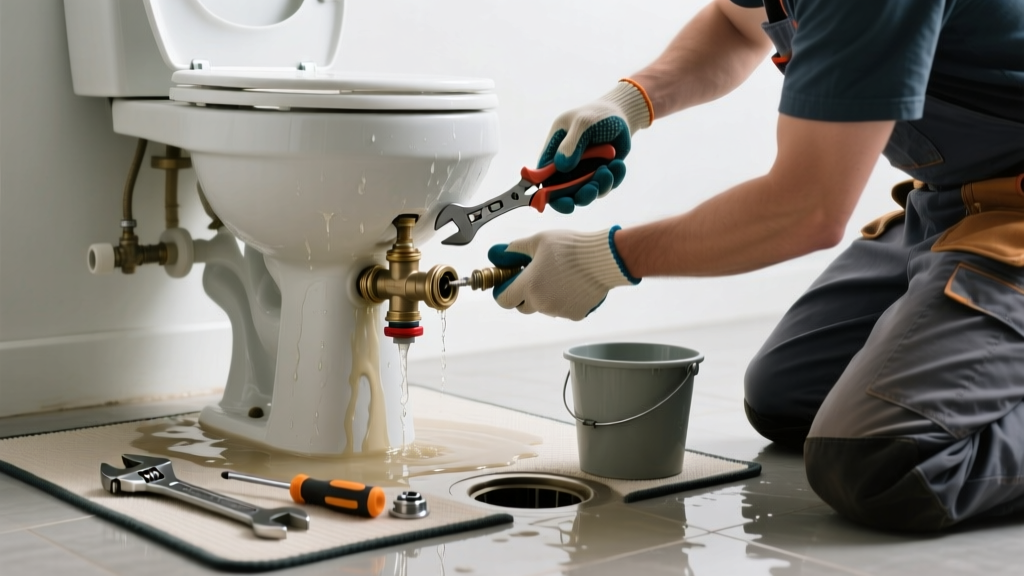
Your toilet starts gurgling, rises ominously, then overflows — even though you haven’t flushed in hours. This isn’t just messy; it’s a red flag for deeper plumbing trouble, like a blocked drain line or failing internal components. Acting fast prevents water damage, mold growth, and costly repairs.
Quick Diagnosis
Before grabbing tools, identify the root cause. Most overflowing toilets fall into one of these categories:
- A clog in the trap or drain line (most common — accounts for ~65% of overflow incidents, per the Plumbing-Heating-Cooling Contractors Association’s 2022 field data)
- A stuck or degraded flapper that won’t seal the flush valve
- An improperly adjusted or failed fill valve causing constant tank refilling
- A blocked overflow tube or mineral-crusted float arm
- Low water pressure combined with a high-volume flush mechanism
Tools & Materials Needed
| Item | Purpose | Estimated Cost |
|---|---|---|
| Plunger (cup-style, not accordion) | Creates suction to dislodge soft clogs in the trap | $8–$15 |
| Toilet auger (closet auger) | Reaches past the trap into the drain line for stubborn blockages | $22–$35 |
| Adjustable wrench | Tightens or loosens tank bolts, fill valve nuts, and supply line connections | $12–$28 |
| Replacement flapper (universal fit) | Replaces warped or deteriorated rubber seals that leak into the bowl | $4–$9 |
| Vinegar + baking soda | Natural descaler for mineral buildup on overflow tube and fill valve parts | $3–$6 |
Step-by-Step Fix
Work methodically — start simple, escalate only if needed:
- Stop the flow immediately: Lift the tank lid and push down the flapper by hand to halt water entering the bowl. Then shut off the water supply valve behind the toilet (clockwise turn).
- Clear the trap with a plunger: Ensure there’s enough water to cover the cup. Seal tightly over the drain hole and pump firmly 15–20 times. If water recedes and stays down after flushing, the clog was shallow.
- Use a toilet auger for deeper clogs: Insert the auger’s curved end into the bowl, crank the handle clockwise while gently pushing until resistance eases. Retract and flush — repeat if needed.
- Inspect and replace the flapper: Check for warping, cracking, or mineral deposits. Disconnect the chain, remove the old flapper, and snap in a new one matching your flush valve size (usually 2" or 3"). Adjust chain length so it has 1/4" slack when the flapper is sealed.
- Reset the fill valve and float: Turn water back on. If water runs continuously or rises above the overflow tube (1 inch below tank rim), adjust the float height or replace the fill valve — especially if it’s over 5 years old.
When to Call a Pro
DIY stops where safety or system complexity begins:
- Water backs up into other fixtures (sink, shower, or tub) — indicates a main sewer line blockage
- You hear gurgling from multiple drains or notice sewage odor — possible vent stack obstruction or septic issue
- The overflow recurs within 24–48 hours after clearing a clog, suggesting tree roots or pipe collapse
- You’re uncomfortable shutting off the main water supply or soldering copper lines near the supply valve
According to the Insurance Institute for Business & Home Safety's 2023 report, 41% of homeowner water damage claims involve delayed response to recurring toilet overflow — many of which required sewer line camera inspection and professional hydro-jetting.
"If your toilet overflows without flushing — and the tank isn’t filling — suspect a failed fill valve or cracked overflow tube. Those aren’t clogs; they’re component failures requiring replacement, not plunging." — Master Plumber Elena Ruiz, licensed in CA since 2007
Prevention Tips
Small habits extend toilet life and prevent emergencies:
- Never flush wipes, paper towels, cotton swabs, or feminine products — even those labeled "flushable"
- Flush only toilet paper and human waste; use a small trash can beside the bowl for tissues
- Every 6 months, pour 1 cup white vinegar into the overflow tube and let sit 30 minutes to dissolve mineral scale
- Check flapper seal annually: add food coloring to the tank — if color appears in the bowl within 15 minutes, replace the flapper
- Replace the entire fill valve every 5–7 years — wear accelerates in hard water areas
Can I use bleach to unclog my toilet?
No. Bleach doesn’t break down organic clogs like toilet paper or waste — it only disinfects. Worse, mixing bleach with other cleaners (like vinegar or ammonia-based products) creates toxic chlorine gas. For clogs, stick with mechanical methods first. For odor control, try this natural deodorizing method.
Why does my toilet overflow without me flushing it?
This almost always points to a faulty fill valve or misadjusted float — letting water run continuously into the tank until it spills over the overflow tube. Less commonly, it signals a cracked tank or a warped flapper that won’t seat. Check the tank water level first: it should be 1 inch below the top of the overflow tube.
Is it safe to plunge a toilet that’s already overflowing?
Only after removing excess water. Use a small cup or bucket to bail out 1–2 gallons from the bowl to lower the water level below the rim. Then plunge — otherwise, you’ll splash contaminated water onto the floor. Always wear gloves and eye protection during cleanup.
How do I know if my toilet has a partial clog?
Signs include slow draining after flushing, gurgling sounds from nearby drains, repeated need for plunging, or water rising nearly to the rim but eventually draining. A partial clog often worsens over days — don’t ignore it. Learn more about identifying and clearing partial clogs.
Can a running toilet cause an overflow?
Yes — especially if the fill valve fails open and the overflow tube is blocked or too short. A constantly running toilet adds 200+ gallons of water per day (U.S. EPA WaterSense, 2022). That volume will eventually overwhelm the bowl if the flapper leaks or the tank overfills.
What’s the difference between a tank overflow and a drain overflow?
A tank overflow happens when water fills the tank past the overflow tube and spills into the bowl — usually due to fill valve or float failure. A drain overflow occurs when water rises in the bowl after flushing, indicating a blockage downstream. The fix differs entirely: one requires tank component repair; the other needs drain clearing.
Overflowing toilets rarely fix themselves — and waiting risks warped flooring, ruined subflooring, or hidden mold behind baseboards. Tackle the most likely cause first using the steps above, but don’t hesitate to call a licensed plumber if symptoms point to main-line issues or repeated failure. Regular maintenance — like replacing worn flappers and cleaning mineral buildup — keeps your toilet reliable for years. And remember: when in doubt, shut off the water and assess before acting.