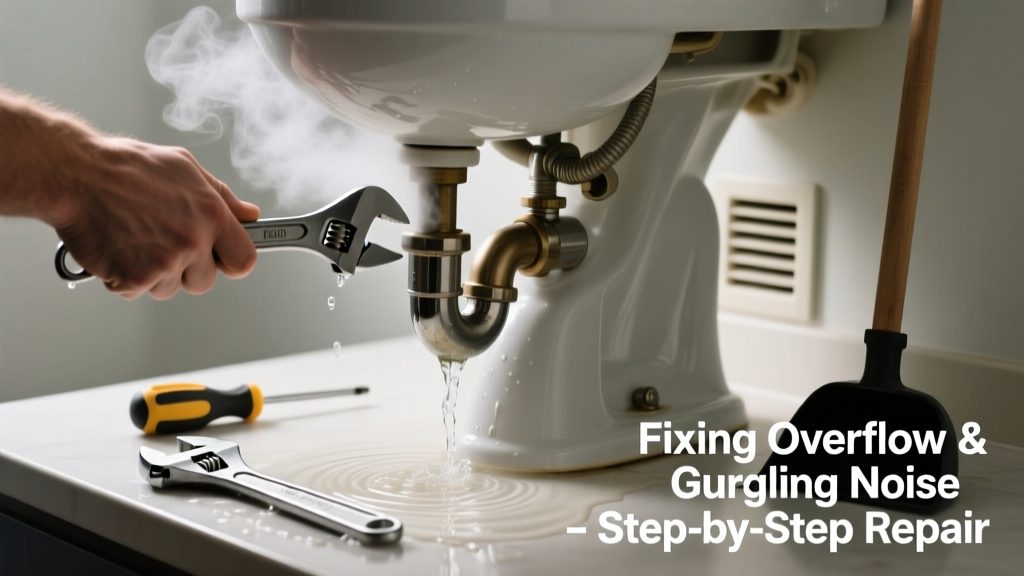
If your toilet is overflowing *and* making strange noises—like gurgling, hissing, or loud bubbling—it’s not just a clog. That noise signals pressure imbalances, vent blockages, or failing internal components. Ignoring it risks water damage, mold growth, and sewer gas exposure.
Quick Diagnosis
Start here before grabbing tools. These are the top culprits behind noisy overflows:
- A blocked drain line (most common—especially if other fixtures gurgle too)
- A clogged or damaged roof vent stack (causes suction and air pockets)
- Failing flapper or fill valve allowing constant water flow into the bowl
- Cracked overflow tube or corroded flush valve seat causing erratic siphoning
- Sewer line backup (confirmed by sewage odor or multiple fixture backups)
Tools & Materials Needed
| Item | Purpose | Estimated Cost |
|---|---|---|
| Plumber’s snake (1/4" x 25 ft) | Clears deep clogs in drain or vent lines beyond the trap | $18–$25 |
| Rubber plunger (flange type) | Creates seal for effective bowl and trap clearing | $8–$15 |
| Adjustable wrench | Tightens loose tank bolts, replaces fill valve hardware | $12–$22 |
| Replacement flapper & fill valve kit | Addresses worn parts causing phantom refills and noise | $14–$28 |
| Roof access ladder & flashlight | Inspects vent stack for bird nests, ice, or debris | $0 (borrow)–$65 |
Step-by-Step Fix
Work methodically—start simple, escalate only when needed:
- Stop the overflow first: Turn off the shut-off valve (usually on the wall behind the toilet). Lift the tank lid and hold the float arm down to halt water filling.
- Clear the immediate clog: Use a flange plunger firmly—30 seconds of steady, vigorous plunging. If gurgling stops and water drains, the issue was likely a shallow clog.
- Snake the drain and vent: Insert a plumber’s snake into the toilet bowl (not the overflow tube!) and feed it 10–15 ft. Rotate clockwise while advancing. Pull out debris. Then, access your roof vent and snake downward 3–5 ft to clear obstructions.
- Replace the flapper and fill valve: Shut off water, flush to empty tank, disconnect supply line. Remove old flapper (hook/unclip), install new one matching your flush valve size (2" or 3"). Replace fill valve if it hisses continuously or fails to shut off fully—follow manufacturer instructions for height and float adjustment.
When to Call a Pro
DIY ends where safety or system complexity begins. Call a licensed plumber immediately if:
- You detect raw sewage odor near floor drains or basement walls
- Multiple fixtures back up simultaneously (kitchen sink, shower, tub)
- Water rises in the toilet bowl *after* shutting off the valve (indicates main sewer line blockage)
- You’ve snaked both drain and vent twice with no improvement
- There’s visible cracking in the toilet’s porcelain base or tank
According to the Insurance Institute for Business & Home Safety's 2023 report, 68% of water damage claims linked to toilets involve delayed response to early warning signs like unusual noises or slow draining.
Prevention Tips
Proactive care prevents repeat failures:
- Flush only toilet paper and human waste—never wipes, cotton balls, or feminine products
- Inspect flapper every 6 months; replace annually (rubber degrades even without use)
- Pour 1 quart of white vinegar down the roof vent quarterly to dissolve mineral buildup
- Install a quiet-fill fill valve (e.g., Fluidmaster 400AH) to eliminate hissing and improve longevity
- Check for condensation on supply lines—if present, insulate them to prevent thermal expansion noise
Can I use bleach to clear the noise-causing clog?
No. Bleach won’t dissolve organic clogs (hair, soap scum, tissue) and can corrode seals, damage PVC vent pipes, and react dangerously with ammonia-based cleaners. It also masks odors without fixing underlying vent or drain issues. Stick to mechanical removal—plunging or snaking.
Why does my toilet gurgle only when the washing machine drains?
This points directly to a shared drain line or undersized vent. When the washer pumps wastewater fast, it creates negative pressure. Without proper venting, air gets pulled through your toilet trap—causing gurgling and potentially siphoning water out of the bowl. Inspect the main vent stack and consider adding an air admittance valve (AAV) if roof access isn’t feasible.
Is a hissing sound always a fill valve problem?
Most often yes—but not always. A hiss that lasts more than 3–5 seconds after flushing usually means the fill valve isn’t sealing fully. However, if the hiss coincides with water dripping into the bowl (visible at the rim or overflow tube), check for a warped flapper or mineral deposits on the flush valve seat. Clean with vinegar and a soft brush before replacing parts.
Will turning off the water stop the gurgling noise?
Temporarily—yes. But if gurgling persists *after* shutting off the valve and the bowl remains full, it indicates trapped air or pressure equalization in a blocked vent or drain. That’s a sign the issue lies deeper than the tank. Don’t assume silence means resolution.
How do I know if my vent stack is frozen?
In cold climates (<20°F), look for frost buildup around the roof pipe opening or ice dams near the vent cap. You might also hear rhythmic bubbling during showers or notice slow drainage across multiple fixtures. Use a steamer or pour warm (not boiling) water down the vent from the roof—never use heat guns or open flame.
Can a cracked toilet cause gurgling and overflow?
Rarely—but yes, in specific cases. A hairline crack in the toilet’s internal trapway or the horn (the curved section under the bowl) can allow air to enter the siphon path, disrupting normal flow and creating gurgles. If you see moisture on the floor *around the base*, especially after flushing, shut off water and call a pro—don’t risk further leakage or structural failure.
Unusual toilet noises paired with overflow aren’t random quirks—they’re urgent signals from your plumbing system. Addressing them quickly with the right tools and knowledge protects your home’s integrity and avoids costly water damage. Keep a flange plunger and spare flapper in your utility closet, and revisit your vent stack inspection schedule each fall. For persistent issues, leaks at the base or gurgling when the shower runs may share root causes worth cross-checking.