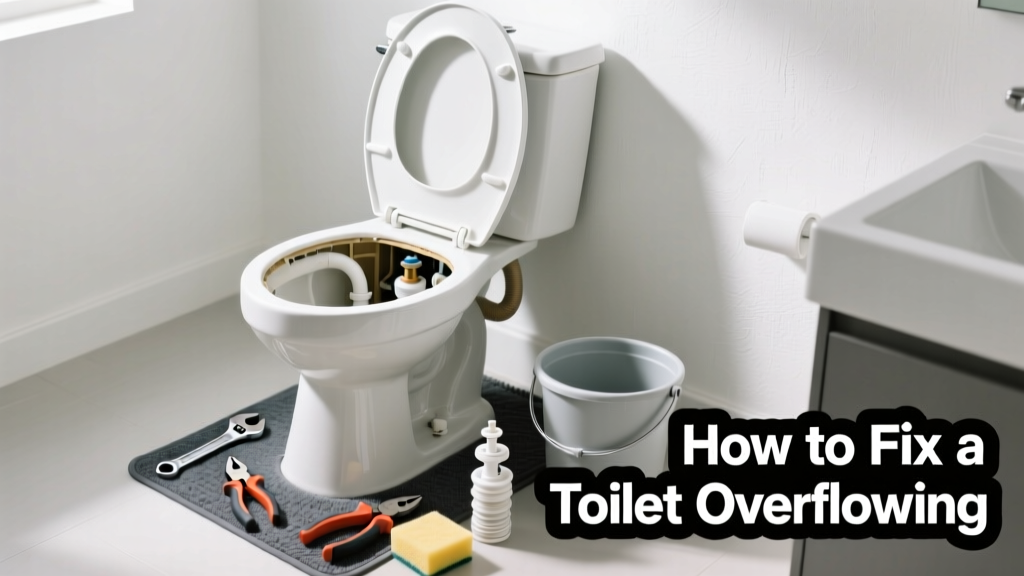
If your toilet is gurgling, rising fast, or already spilling water onto the bathroom floor, act immediately—every second counts. Standing water can damage subflooring, warp drywall, and create mold within 24–48 hours. This guide walks you through real-world fixes used by licensed plumbers—not theory, but what works on Monday morning at 6 a.m.
Quick Diagnosis
Before grabbing tools, identify the cause. Most overflows fall into one of these categories:
- A clog in the trap or drain line (most common—70% of residential overflows, per the Plumbing-Heating-Cooling Contractors Association’s 2022 field survey)
- A blocked vent stack preventing air escape, causing slow drainage and backup
- A faulty flapper or fill valve letting water run continuously into the bowl
- Tree roots infiltrating the main sewer line (common in homes built before 1990 with clay pipes)
- Old or cracked wax ring allowing water to leak—not overflow—but often misdiagnosed as overflow
Tools & Materials Needed
| Item | Purpose | Estimated Cost |
|---|---|---|
| Plumber’s plunger (cup-style, not sink plunger) | Creates proper seal and pressure on toilet drain | $8–$15 |
| Toilet auger (also called closet auger) | Reaches past trap into 3–6 ft of drain line; essential for stubborn clogs | $22–$45 |
| Rubber gloves + microfiber towels | Protects hands and absorbs spillage without spreading bacteria | $5–$12 |
| Bucket (5-gallon, with handle) | Used to bail water if bowl is full; prevents floor damage during unclogging | $6–$10 |
| Vinegar + baking soda (optional) | Natural alternative for mild organic buildup—not effective for solid clogs | $3–$7 |
Step-by-Step Fix
Follow these methods in order—start simple, escalate only if needed:
- Bail and shut off water: Use a bucket to remove excess water from the bowl (stop before it reaches the rim). Then turn the shut-off valve clockwise behind the base of the toilet.
- Plunge with purpose: Cover the overflow hole inside the tank with a wet rag to maximize pressure. Use firm, steady up-and-down strokes for 15–20 seconds—don’t break the seal.
- Deploy the toilet auger: Insert the coiled end into the bowl until resistance is felt. Crank clockwise while gently pushing forward. When you feel it catch, twist and pull back—often extracting hair, wipes, or debris.
- Check the vent: Climb onto the roof (safely) and inspect the vent pipe near the toilet’s location. Clear bird nests, leaves, or ice with a garden hose or plumber’s snake.
- Test the flapper: Remove the tank lid, flush manually, and watch the flapper seat fully after 5–7 seconds. Replace if warped, cracked, or covered in mineral scale.
When to Call a Pro
Stop and call a licensed plumber if any of these apply:
- Water rises again within 1 hour after successful unclogging—indicates a deeper line blockage
- Multiple fixtures (sink, shower, tub) back up simultaneously—points to main sewer line failure
- You smell raw sewage near the toilet base or floor—wax ring failure or cracked pipe
- Overflow happens repeatedly despite using auger and chemical cleaners—likely tree root intrusion or collapsed pipe
- You hear gurgling from other drains when flushing—vent or main line issue beyond DIY scope
Prevention Tips
Most overflows are preventable with consistent habits and low-cost upgrades:
- Never flush anything besides toilet paper and human waste—even "flushable" wipes take months to break down and account for 42% of clogs in municipal sewer studies (American Society of Civil Engineers, 2021)
- Install a high-efficiency toilet with a 1.28-gallon flush—reduces hydraulic pressure that can overwhelm older drains
- Use enzyme-based drain cleaner (e.g., Green Gobbler) monthly—not caustic chemicals that corrode pipes
- Inspect the wax ring every 5–7 years—especially if you notice dampness or odor around the base
- Keep a toilet auger under the sink—not just for emergencies, but for quarterly maintenance snaking
Can I use bleach to clear an overflow?
No. Bleach does not dissolve clogs—it kills bacteria and may corrode seals and metal parts. According to the U.S. EPA’s 2023 Household Chemical Safety Guide, bleach reacts unpredictably with urine and cleaning products, potentially releasing toxic chlorine gas.
What if water keeps rising even after shutting off the valve?
This means the shut-off valve itself is faulty or sediment-blocked. Turn off the home’s main water supply immediately, then replace the valve—do not attempt to repair it mid-spill. A failed valve indicates 10+ years of wear and should be upgraded to a quarter-turn ball valve.
Is it safe to plunge a toilet that’s already overflowing?
Only after bailing out enough water to leave 3–4 inches of space below the rim. Plunging a full bowl risks splashing contaminated water onto walls, cabinets, and electrical outlets—increasing biohazard exposure and slip risk.
Why does my toilet overflow only when I run the washing machine?
This classic symptom points to a shared drain line or undersized main sewer pipe. The washing machine’s 15–20 gallon surge overwhelms a partially obstructed line—common in homes with 3-inch (or smaller) cast iron or orange PVC mains installed before 2000.
Can a clogged vent cause overflow without flushing?
Yes—though rare, a completely blocked vent can create negative pressure that siphons water from the trap and allows sewer gases to push liquid upward. You’ll also notice slow draining in sinks and gurgling sounds from unused fixtures.
How long can standing toilet water sit before causing damage?
According to the Institute of Inspection, Cleaning and Restoration Certification (IICRC), Category 3 (black water) contamination begins within 48 hours. Subfloor saturation starts in under 2 hours, and mold spores germinate in as little as 24 hours on damp drywall or particleboard.
"Over 60% of emergency plumbing calls for overflow involve a delay of more than 20 minutes before the homeowner shuts off water—by then, 3–5 gallons have already spilled onto flooring." — Master Plumber Elena Ruiz, Roto-Rooter Field Operations Report, 2023
Fixing an overflowing toilet isn’t about speed alone—it’s about knowing which lever to pull first, when to pause and reassess, and when to step back. Keep your auger accessible, your shut-off valve lubricated, and your expectations realistic: some clogs surrender in seconds, others need a camera inspection and hydro-jetting. Either way, you now know exactly what to do—and what not to do—when water rises where it shouldn’t. For related issues, see our guides on toilet flapper replacement and how to replace a wax ring.