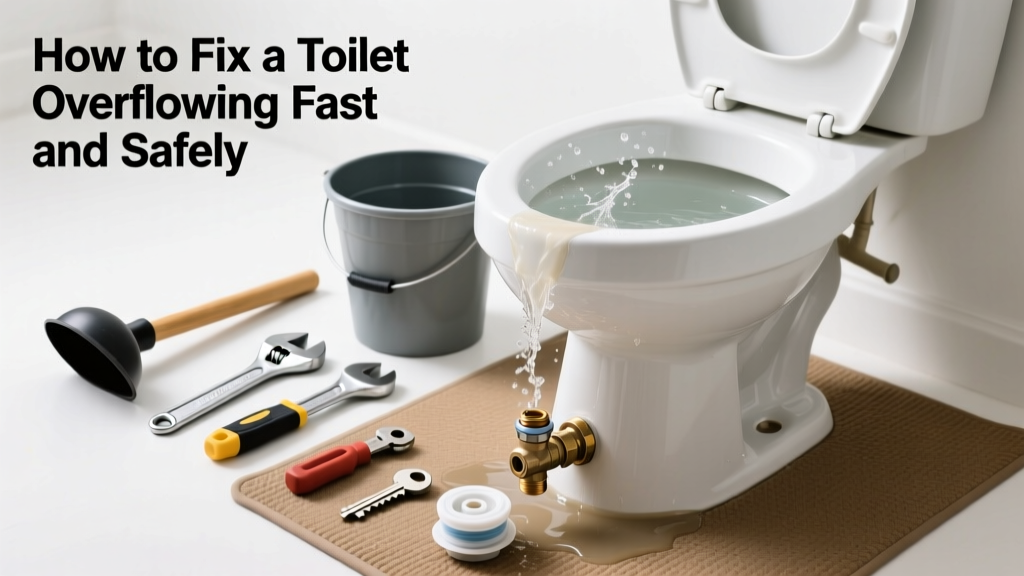
Water rising over the rim of your toilet is one of the most urgent home emergencies you’ll face — and acting fast prevents thousands in water damage. Most overflows happen due to simple clogs or flapper failures, not major plumbing failures. You can usually stop and fix it in under 15 minutes with basic tools and calm hands.
Quick Diagnosis
Before grabbing tools, identify the likely cause. Look for these telltale signs:
- Water rises slowly then stops — partial clog in trap or drain line
- Water surges up immediately after flushing — severe clog or blocked vent
- Toilet flushes weakly but doesn’t overflow — failing flapper or low water level in tank
- Overflow happens without flushing — sewer line backup or main drain blockage
- Gurgling from other drains when flushing — vent stack obstruction
Tools & Materials Needed
| Item | Purpose | Estimated Cost |
|---|---|---|
| Plunger (cup-style, not accordion) | Creates seal and pressure to dislodge soft clogs | $8–$15 |
| Toilet auger (closet auger) | Reaches past trap into drain pipe for stubborn clogs | $12–$25 |
| Rubber gloves & old towels | Protects hands and absorbs spillage during cleanup | $3–$10 |
| Bucket and sponge | Removes standing water safely before plunging | $5–$12 |
| Vinegar & baking soda | Natural alternative for mild organic buildup (not for severe clogs) | $4–$7 |
Step-by-Step Fix
Follow these methods in order — skip ahead only if the previous step fails:
- Stop the flow: Lift the tank lid and push down the flapper by hand, or lift the float arm to cut off water supply. If that doesn’t work, turn off the shut-off valve behind the toilet (clockwise).
- Remove excess water: Use a cup or small bucket to bail out water until the bowl is half-full — this gives the plunger room to build pressure.
- Plunge firmly: Place the cup plunger fully over the drain hole. Push down slowly, then pull up sharply — repeat 15–20 times without breaking the seal. Don’t force it; rhythm matters more than strength.
- Try the auger: Insert the auger tip into the drain, crank the handle clockwise while gently pushing forward until you feel resistance. Rotate and push 2–3 inches deeper, then retract while turning to hook and pull debris.
- Test and reset: Turn water back on, let tank refill, then flush once. If water drains normally and no gurgling occurs, you’re done.
When to Call a Pro
DIY stops working — and risks increase — in these scenarios:
- Water backs up into showers, sinks, or floor drains when flushing
- Multiple fixtures overflow simultaneously — sign of main sewer line blockage
- You smell raw sewage in the bathroom or basement
- Augering brings up black, greasy sludge or tree roots
- The toilet rocks or leaks at the base — could indicate a broken wax ring or subfloor damage
According to the Insurance Institute for Business & Home Safety's 2023 report, 68% of homeowner water damage claims involving toilets stem from delayed response to early overflow symptoms — not the initial clog itself.
Prevention Tips
Small habits prevent most overflows before they start:
- Never flush anything beyond toilet paper and human waste — even "flushable" wipes clog pipes 3x more often than standard TP (NSF International, 2022)
- Install a toilet tank bank or displacement bag to reduce flush volume and stress on older pipes
- Check flapper every 6 months — replace if warped, cracked, or doesn’t seal cleanly
- Pour ½ cup white vinegar into the overflow tube monthly to dissolve mineral buildup
- Keep a closet auger under the sink — don’t wait until an emergency to buy one
Can I use bleach to unclog my toilet?
No. Bleach won’t break down toilet paper or organic clogs — and mixing it with other cleaners (like vinegar or ammonia) creates toxic chlorine gas. It also degrades rubber flappers and seals over time, increasing leak risk.
Why does my toilet overflow only when I flush the upstairs bathroom?
This points to a shared drain line or blocked vent stack serving both fixtures. Air can’t escape the system, creating negative pressure that pulls water from the toilet trap. A roof vent inspection or camera scope is usually needed.
Is it safe to plunge a full toilet?
Not initially. Bailing out some water first gives the plunger room to compress air and build effective suction. Plunging a completely full bowl often just sprays contaminated water — wear goggles and cover nearby outlets.
What if the water keeps rising after I shut off the valve?
That means the blockage is downstream of the toilet — possibly in the branch drain or main sewer line. Stop all water use in the house and call a licensed plumber immediately. Delaying risks sewage backup.
Can a running toilet cause an overflow?
Yes — especially if the fill valve fails and the tank overflows into the overflow tube continuously. That steady trickle can overwhelm the bowl’s capacity if the drain is partially restricted. Check for a hissing tank or water flowing into the overflow tube when the tank is full.
Should I caulk around the base of my toilet after fixing an overflow?
No — caulking hides leaks and makes future wax ring replacement harder. The base should remain uncaulked so moisture from a failing seal is visible. Only seal the front and sides if required by local code (e.g., ADA facilities), never the back.
A toilet overflow isn’t just inconvenient — it’s a warning sign your drainage system needs attention. Fixing it quickly builds confidence for bigger plumbing tasks, like replacing a flapper or adjusting a tank water level. And if you’ve tackled three overflows in six months, it’s time to inspect your sewer line — roots or bellies may be narrowing the pipe silently.