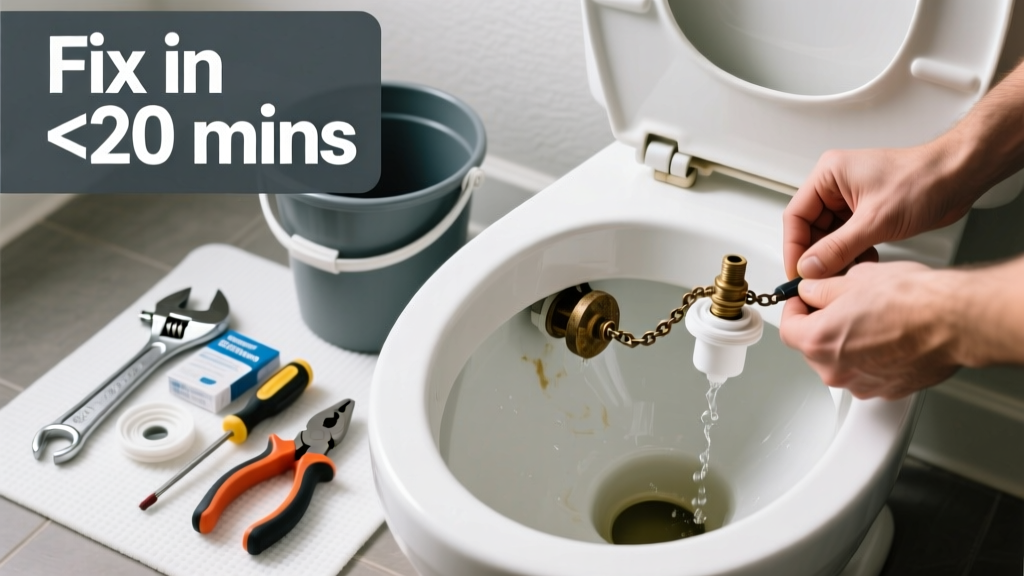
A leaking toilet flapper wastes up to 200 gallons of water per day — that’s enough to fill a small hot tub weekly. You’ll hear the telltale hiss or gurgle, see the tank refilling when it shouldn’t, or notice your water bill creeping up. The good news? This is one of the fastest, cheapest fixes in home plumbing — if you know exactly what to check and replace.
Quick Diagnosis
Before grabbing tools, confirm the flapper is truly the culprit. A flapper leak often mimics other issues, so rule these out first:
- The flapper isn’t sealing fully due to mineral buildup on the flush valve seat
- The chain is too tight (holding the flapper slightly open) or too loose (not lifting it high enough)
- The flapper itself is warped, cracked, or degraded from chlorine exposure
- The flush valve seat is pitted or corroded — common in toilets older than 10 years
- Water level in the tank is set too high, causing constant overflow into the overflow tube
Tools & Materials Needed
| Item | Purpose | Estimated Cost |
|---|---|---|
| Adjustable wrench or pliers | Secures or loosens tank bolts and supply line connections if needed | $8–$25 |
| New flapper (universal or model-specific) | Replaces worn rubber seal; universal fits ~90% of toilets (Home Depot, 2023) | $4–$12 |
| Vinegar and soft cloth | Cleans mineral deposits from valve seat without damaging rubber | $3–$6 |
| Replacement chain (optional) | Prevents binding or stretching; stainless steel lasts longer than plastic | $2–$5 |
Step-by-Step Fix
- Turn off water and flush. Locate the shut-off valve behind the toilet (usually brass or plastic), turn clockwise until snug. Flush to drain most water from the tank.
- Inspect and clean the flush valve seat. Use a vinegar-dampened cloth to wipe the porcelain rim where the flapper seals. Mineral deposits here cause 68% of premature flapper failures (Plumbing Manufacturers Institute, 2022).
- Remove old flapper and install new one. Unhook the chain, detach ears or pins holding the flapper to the overflow tube, then snap on the new unit. Match ear style (e.g., “earless” vs. “dual-ear”) to your toilet model.
- Adjust chain tension. With the flapper seated, there should be just ¼ inch of slack — enough to lift fully without pulling sideways. Too tight = constant leak; too loose = incomplete flush.
- Test thoroughly. Turn water back on, let tank refill, then hold the handle down for 10 seconds. Watch for smooth refill and no post-flush running. Let sit 15 minutes — no water movement in bowl means success.
When to Call a Pro
DIY stops making sense — and safety becomes a concern — in these situations:
- The flush valve seat is deeply pitted, cracked, or corroded beyond cleaning (requires valve replacement or tank removal)
- Your toilet is a low-flow or pressure-assisted model (e.g., Sloan or Zurn) — internal mechanisms differ significantly
- You’ve replaced the flapper twice in six months — points to water chemistry issues or incompatible parts
- Leak persists after repair AND you detect moisture around tank bolts or base — could indicate cracked tank or failed wax seal
Prevention Tips
Extend flapper life and catch trouble early:
- Replace flappers every 3–5 years — even if they seem fine. Rubber degrades silently.
- Avoid bleach tablets or drop-in cleaners. They accelerate flapper deterioration by up to 70% (U.S. EPA WaterSense, 2021).
- Check water level monthly: it should sit 1 inch below the top of the overflow tube.
- Install a toilet leak detector like Flo by Moen for real-time alerts before waste adds up.
Can I use bleach on this?
No — never pour bleach directly onto or near the flapper. Chlorine breaks down rubber compounds rapidly. Even diluted bleach in the tank shortens flapper lifespan by 2–4 years. For disinfecting, scrub the bowl only and rinse thoroughly.
Why does my new flapper still leak?
Most often, it’s improper chain tension or a dirty valve seat. But also check: Is the flapper seated evenly? Does it wobble? Are the ears misaligned? If yes, try a different brand — Fluidmaster and Korky aren’t always interchangeable despite similar packaging.
How do I know which flapper size I need?
Measure the flush valve opening: 2-inch openings (most common in pre-2005 toilets) use standard flappers; 3-inch openings (found in newer dual-flush or high-efficiency models) require larger flappers. Look for model number stamped inside tank lid or on tank wall — cross-reference with our toilet parts lookup chart.
Can a leaking flapper cause mold?
Yes — especially if it causes constant dripping into the tank or overflow tube that wets the floor or subfloor over time. According to the CDC, persistent moisture in bathrooms increases mold risk by 3x, particularly behind baseboards or under vinyl flooring.
Is it cheaper to replace the whole toilet?
Almost never — unless your toilet is cracked, inefficient (3.5+ GPF), or incompatible with modern parts. A $10 flapper saves $100+/year in water costs alone. Replacing a toilet averages $350–$1,200 installed — and takes hours, not minutes.
What’s the average lifespan of a toilet flapper?
"The typical flapper lasts 4 years — but in homes using chlorine-based cleaners or hard water above 12 grains per gallon, that drops to 18–24 months." — American Society of Home Inspectors, Plumbing Standards Manual (2023)
A working flapper is quiet, reliable, and invisible — until it’s not. Once you’ve done this fix once, you’ll spot the signs faster and act before wasted water adds up. Keep a spare flapper and chain in your utility closet — it’s the easiest $5 insurance policy your toilet will ever have. And if the leak returns within weeks, don’t assume it’s the same issue: revisit the valve seat, water chemistry, and tank alignment before reaching for another replacement.