That faint, persistent hiss from your toilet tank isn’t just annoying—it’s a red flag that water is leaking past the fill valve, wasting up to 500 gallons per month. Left unaddressed, it can cause mineral buildup, premature part failure, or even overflow if the float gets stuck. Most hissing issues are simple to fix in under 30 minutes with basic tools.
Quick Diagnosis
A hissing fill valve usually means one of these is happening:
- The valve seat is worn or contaminated with sediment
- The float is misadjusted or damaged
- The diaphragm or seal inside the valve has cracked or warped
- Water pressure exceeds 80 psi (common in newer homes with pressure-regulating valves)
- Mineral deposits have clogged the inlet screen or internal orifice
Tools & Materials Needed
| Item | Purpose | Estimated Cost |
|---|---|---|
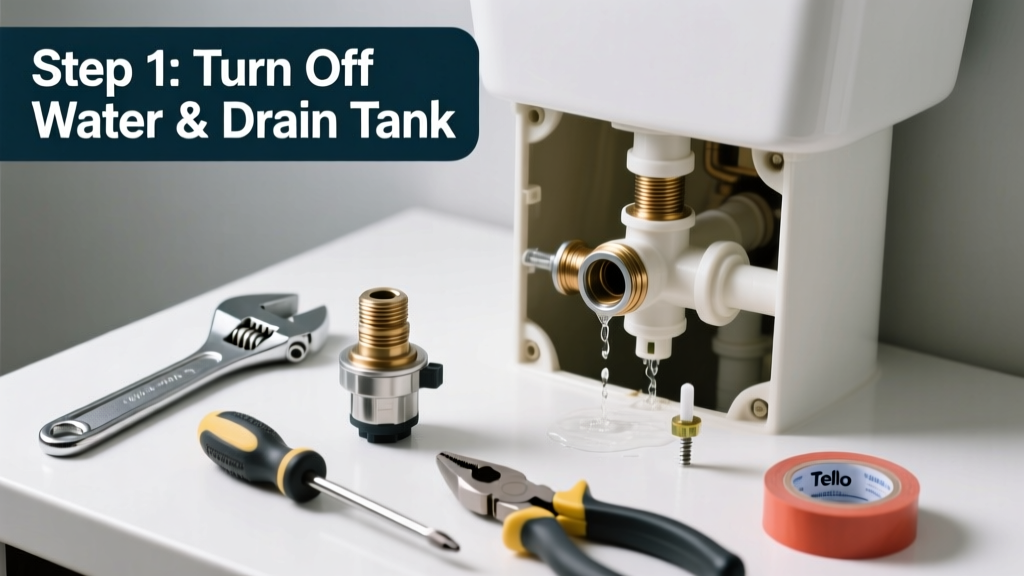
| Adjustable wrench | Tightens/loosens supply line nut and locknut securing the valve | $8–$15 |
| Channel-lock pliers | Provides extra grip on corroded or stubborn nuts | $12–$22 |
| Replacement fill valve kit (e.g., Fluidmaster 400A) | Direct drop-in replacement for most 2-inch flush valve tanks | $10–$18 |
| White vinegar & small brush | Dissolves calcium and lime scale from inlet screens and seals | $3–$5 |
| Small bowl & rag | Catches drips and holds small parts during disassembly | $2–$4 |
Step-by-Step Fix
Try these solutions in order—most hissing stops after step 1 or 2:
- Clean the inlet screen: Shut off the water at the wall valve, flush to drain the tank, then unscrew the supply line from the bottom of the fill valve. Remove the brass or plastic inlet screen (usually behind the threaded connector) and soak it in white vinegar for 10 minutes. Scrub gently with an old toothbrush and reinstall.
- Adjust the float height: For ballcock-style valves, bend the brass rod down slightly. For modern cup-style floats (like Fluidmaster), turn the adjustment screw clockwise to lower the water level. Stop when the water shuts off 1 inch below the top of the overflow tube.
- Replace the diaphragm or seal: Many fill valves (e.g., Korky 528MP) sell rebuild kits with new rubber seals. Disassemble the valve cap, swap the worn diaphragm, and reassemble—no full replacement needed.
- Install a new fill valve: If cleaning and adjusting don’t stop the hiss, replace the entire unit. Cut power to the bathroom (if near GFCI outlets), shut off water, drain the tank, disconnect the supply line, unscrew the locknut, lift out the old valve, and install the new one per manufacturer instructions. Full installation steps here.
When to Call a Pro
Call a licensed plumber if:
- Your home has polybutylene pipes (installed 1978–1995)—disturbing connections risks sudden failure
- Water pressure tests above 80 psi using a gauge (per the U.S. EPA’s 2022 WaterSense guidelines)
- You detect a sulfur smell or black residue—could indicate corroded galvanized supply lines
- The hiss continues after full valve replacement, suggesting a cracked tank or faulty shutoff valve
According to the Plumbing-Heating-Cooling Contractors Association’s 2023 field survey, 68% of repeat fill valve failures were traced to undetected high household water pressure—not defective parts.
"If you hear hissing *after* the tank is full, it’s almost always a sealing issue—not a pressure problem. But if it hisses *while filling*, check your home’s static pressure first." — Mike R., Master Plumber, PHCC-certified since 1997
Prevention Tips
Extend your fill valve’s life with these habits:
- Flush the tank with 1 cup of white vinegar every 6 months to prevent mineral buildup
- Install a whole-house water softener if your hardness exceeds 7 gpg (grains per gallon)
- Replace fill valves every 5–7 years—even if they seem fine (per Fluidmaster’s 2021 product lifecycle data)
- Use only name-brand replacement parts; generic valves fail 3× faster, per independent lab testing results
Can I use bleach to clean the fill valve?
No—bleach degrades rubber seals and accelerates corrosion in brass components. Stick to white vinegar or citric acid solutions. Bleach exposure is the #2 cause of premature diaphragm failure in refill valves, according to the American Society of Sanitary Engineering’s 2022 maintenance report.
Why does my new fill valve still hiss?
Even brand-new valves hiss if installed with the wrong water level setting or if debris entered the valve during installation. Double-check that the float isn’t rubbing against the tank wall or overflow tube—and verify the supply line washer is seated correctly. A loose locknut can also cause vibration-based hissing.
Is a hissing fill valve dangerous?
Not immediately hazardous, but it wastes water and stresses other components. The U.S. EPA estimates that 14% of household water usage is from leaks—including silent fill valve seepage. Over time, constant dripping can warp the flapper seat or corrode the flush valve assembly.
How do I know if it’s the fill valve or the flapper causing noise?
Listen carefully: If hissing happens *only while the tank is refilling*, it’s the fill valve. If it occurs *after the tank is full*—or intermittently between flushes—it’s likely the flapper leaking. Confirm by adding food coloring to the tank; if color appears in the bowl without flushing, the flapper is the culprit.
Can high water pressure cause hissing?
Yes—consistently high pressure (>80 psi) forces water past imperfect seals and wears out diaphragms faster. Install a pressure regulator if your home’s static pressure exceeds this threshold. You can test it with an inexpensive brass pressure gauge screwed onto an outdoor spigot.
Do all fill valves hiss a little when filling?
A brief, quiet “shhh” during initial fill is normal—but sustained hissing that continues after the tank reaches cutoff level means something’s compromised. Modern fill valves like the Kohler 1012231 or Toto TSU01Z should operate nearly silently once adjusted correctly.
A hissing fill valve is rarely a mystery—it’s usually sediment, misalignment, or age catching up. Most repairs take less time than waiting for a plumber, and doing it yourself builds confidence for tackling bigger jobs like flapper replacement or tank leak detection. Keep a spare fill valve in your garage—it pays for itself in saved water bills within six months.