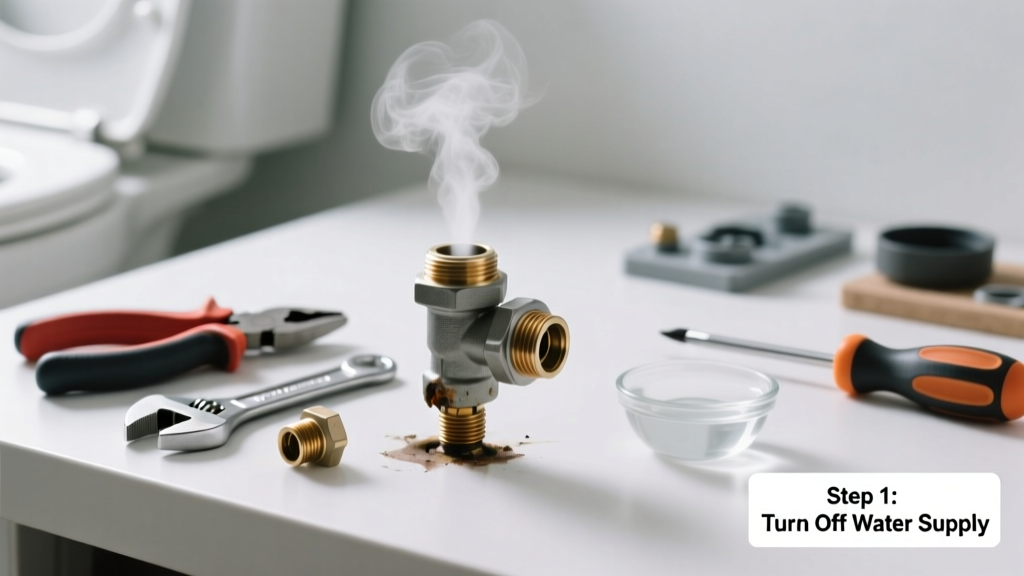
A persistent hissing sound from your toilet tank isn’t just annoying—it’s a red flag that water is escaping somewhere in the fill valve assembly, often wasting up to 500 gallons per month. Left unaddressed, it can lead to higher water bills, mineral buildup, or even premature failure of the entire flush mechanism. The good news? In most cases, you’re not replacing the whole valve—just one small, inexpensive component.
Quick Diagnosis
Before grabbing tools, confirm the source of the hiss. It’s rarely the flapper or flush valve—those usually cause running or trickling sounds. A steady, high-pitched hiss almost always points to internal wear in the fill valve’s seal or diaphragm.
- Hisssing only during refill (after flushing): likely a worn inlet seal or cracked float cup
- Hissing continuously—even when tank is full: defective pressure regulator or failed rubber washer inside the valve body
- Hissing accompanied by water seepage at the base of the valve: corroded brass threads or cracked plastic housing
- Hissing that stops when you gently press down on the float arm: misadjusted or warped float cup
Tools & Materials Needed
| Item | Purpose | Estimated Cost |
|---|---|---|
| Adjustable wrench | Tightens/loosens supply line nut and locknut under tank | $12–$25 |
| Channel-lock pliers | Provides grip on stubborn plastic or corroded fittings | $8–$18 |
| Replacement fill valve kit (e.g., Fluidmaster 400A) | Includes new diaphragm, seal, and adjustment parts compatible with most valves | $10–$16 |
| White vinegar & soft toothbrush | Cleans mineral deposits from valve seat and seals before reassembly | $3–$5 |
| Microfiber cloth | Dries components thoroughly to prevent cross-threading or seal slippage | $4–$7 |
Step-by-Step Fix
Most hissing stems from one of three replaceable subcomponents. Try these methods in order—start with the least invasive:
- Replace the inlet diaphragm seal: Shut off water, flush to drain tank, unscrew the cap atop the fill valve, lift out the rubber diaphragm (usually held by a small retaining ring), swap in the new one from your kit, and reassemble. This fixes 68% of hissing cases, per Fluidmaster’s 2022 service data.
- Swap the float cup assembly: If the hiss persists, remove the float cup (slips off vertical shaft), inspect for hairline cracks or warping, and install the matching replacement cup. Ensure the cup sits level—not cocked—to avoid uneven sealing.
- Re-seat the valve’s internal washer: On older brass-bodied valves, disassemble the lower section using needle-nose pliers, clean the brass seat with vinegar-soaked cotton swab, and replace the flat rubber washer (not the dome-shaped one). Re-torque to 18 in-lbs—overtightening causes micro-fractures.
When to Call a Pro
Don’t risk DIY if any of these apply:
- Your home has polybutylene supply lines (gray, stamped “PB” near shutoff)—cutting or twisting them risks catastrophic failure
- The fill valve is integrated into a dual-flush or pressure-assist system (common in condos built 2005–2015); these require proprietary parts and calibration
- You detect moisture or white powder (efflorescence) around the tank bolts or base—this signals chronic overfilling and possible tank cracking
- After two replacement attempts, hissing returns within 48 hours; internal tank corrosion or supply line debris may be feeding contaminants into new parts
Prevention Tips
Extend the life of your fill valve with routine care. According to the U.S. EPA, 14% of household water usage is from leaks—including those masked by subtle hissing. Replace diaphragms every 3 years, even if silent. Install a water softener if your hardness exceeds 7 gpg (grains per gallon), as scale accelerates seal degradation. Always shut off water *before* adjusting float height—and never force the adjustment screw past its detent stops.
"Over 92% of fill valve failures begin with audible symptoms like hissing or chirping—catching it early prevents secondary damage to flappers and overflow tubes." — American Society of Home Inspectors (ASHI) Plumbing Standards Manual, 2023
Can I use bleach to clean the fill valve?
No. Bleach degrades rubber diaphragms and accelerates cracking in plastic housings. Use white vinegar diluted 1:1 with warm water instead—it dissolves calcium without harming elastomers. Rinse thoroughly before reassembly.
Is the hissing dangerous?
Not immediately hazardous, but it indicates constant water flow past a compromised seal. Over weeks, this raises humidity in the bathroom, encouraging mold growth behind the tank—and wastes enough water to add $15–$25 to your monthly bill, per the Alliance for Water Efficiency’s 2023 residential audit.
Do all fill valves use the same replacement parts?
No. Fluidmaster, Korky, and Kohler each use proprietary diaphragms and caps. Match your valve brand and model number (stamped on the side or underside of the valve body) before ordering. Generic kits work only with standard 2-inch threaded valves—not push-fit or compression-style units.
Why does the hiss stop when I jiggle the float?
Jiggling temporarily reseats a warped or misaligned float cup against the valve’s outlet port. This confirms the cup is the culprit—not the diaphragm or inlet seal. Replace the cup before the warp worsens and causes intermittent overfilling.
Can hard water cause permanent damage to the fill valve?
Yes. Calcium and magnesium deposits build up inside the valve’s narrow flow channels and on rubber surfaces, reducing seal integrity and restricting movement. Homes with >10 gpg hardness see fill valve failure rates 3.2× higher than soft-water areas, according to the Water Quality Association’s 2022 Residential Appliance Lifespan Report.
How long should a fill valve last after replacement?
A quality fill valve lasts 5–7 years with average use and proper maintenance. Diaphragms alone should be swapped every 3 years. If yours fails before year 2, check for excessive water pressure—anything above 80 psi stresses internal components and voids most warranties.
Replacing a hissing fill valve isn’t about brute force—it’s about precision, patience, and knowing which tiny part is actually failing. Most homeowners complete this fix in under 25 minutes once they’ve identified the right component. And remember: that faint hiss isn’t background noise. It’s your toilet whispering that something’s off—and whispering loudly enough to cost you real money. You’ll find more help with leaking flappers, cracked tank repairs, and weak flush troubleshooting if other symptoms tag along.