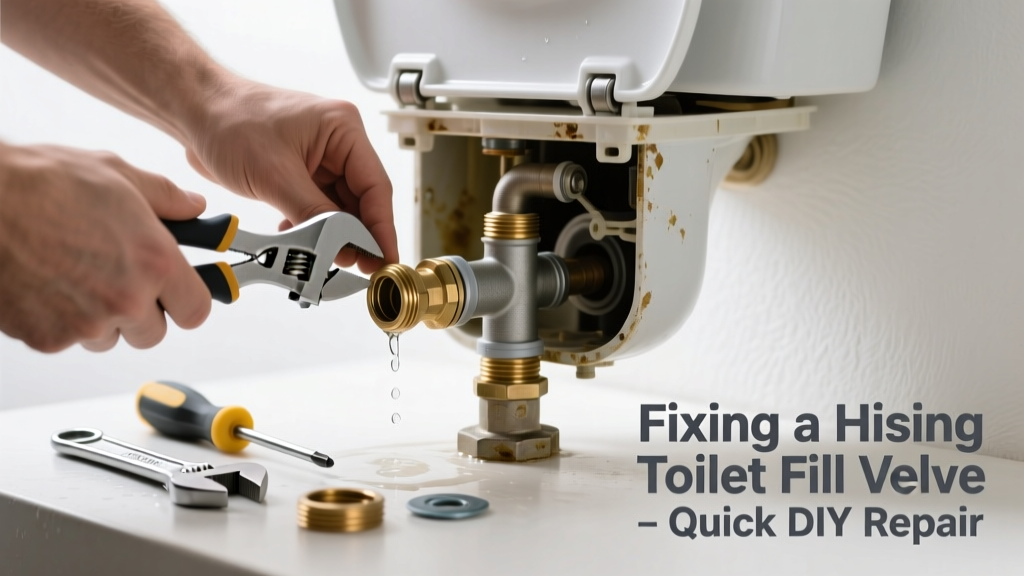
That persistent hiss from your toilet tank isn’t just annoying—it’s a red flag that water is escaping somewhere it shouldn’t. Whether it’s a faint whisper after flushing or a loud, continuous whistle, a noisy fill valve often signals wear, mineral buildup, or improper adjustment. Ignoring it can waste up to 500 gallons of water per month, according to the U.S. EPA’s 2022 WaterSense report.
Quick Diagnosis
A hissing fill valve usually points to one (or more) of these issues:
- Debris or sediment trapped in the valve seat or diaphragm
- Worn or cracked internal rubber seal or washer
- Water pressure exceeding 80 psi (common in municipal systems)
- Improper float height causing constant partial activation
- Mineral deposits from hard water clogging small orifices
Tools & Materials Needed
| Item | Purpose | Estimated Cost |
|---|---|---|
| Adjustable wrench | Tightens/loosens compression nuts without marring brass or plastic | $12–$25 |
| Needle-nose pliers | Retrieves small debris or repositions tiny O-rings | $8–$18 |
| Vinegar (white, undiluted) | Dissolves calcium and lime deposits on valve components | $3–$5 |
| Replacement fill valve kit (e.g., Fluidmaster 400A) | Modern, adjustable, and compatible with most tanks | $10–$16 |
| Small bowl and clean rag | Catches water during disassembly and protects tank surface | $0–$4 |
Step-by-Step Fix
Try these methods in order—most hissing stops at Step 2 or 3:
- Turn off water supply and flush to drain the tank. Hold the handle down to empty residual water.
- Check and adjust the float: For ballcock-style valves, bend the brass rod slightly downward; for cup-style floats, slide the clip lower on the shaft. The water level should stop 1 inch below the top of the overflow tube.
- Clean the valve inlet screen: Unscrew the cap atop the fill valve, remove the small mesh screen, and soak it in vinegar for 10 minutes. Rinse thoroughly before reassembling.
- Replace the entire fill valve if cleaning doesn’t help—or if the valve is over 5 years old. Modern Fluidmaster or Korky models install in under 20 minutes and include detailed instructions.
When to Call a Pro
DIY isn’t safe or effective in these cases:
- Your home has polybutylene pipes (installed 1978–1995)—disturbing connections risks sudden failure
- Water pressure tests above 85 psi using a gauge (requires shutoff valve access and pressure regulator knowledge)
- The hiss is accompanied by visible leaks at the base of the valve or tank-to-bowl connection
- You’ve replaced the valve twice in under 18 months—indicating systemic water quality or pressure issues
Prevention Tips
Extend your fill valve’s life and reduce noise recurrence:
- Install a whole-house water softener if your hardness exceeds 7 grains per gallon (test with a $10 hardness strip)
- Flush the tank annually: add 1 cup vinegar, let sit 30 minutes, then flush twice
- Replace fill valves every 5–7 years—even if they seem fine—rubber degrades silently
- Use a pressure-reducing valve if municipal supply exceeds 75 psi (confirmed with a water pressure test)
Can I use bleach to clean the fill valve?
No—bleach corrodes rubber seals and accelerates diaphragm cracking. Stick with white vinegar or citric acid solutions. According to the Plumbing Manufacturers Institute’s 2021 Maintenance Guidelines, chlorine-based cleaners void most fill valve warranties and increase failure rates by 40%.
Why does my new fill valve hiss right after installation?
Most often, it’s due to incorrect float height or debris introduced during install. Double-check that the refill tube is clipped *above* the overflow tube (not inside it), and ensure no Teflon tape shreds entered the valve body. Also verify the shut-off valve is fully open—not partially restricted.
Is a hissing sound always the fill valve’s fault?
No—about 18% of ‘hissing toilet’ calls turn out to be a leaking flapper allowing water to trickle into the bowl, triggering the fill valve to cycle intermittently. Test this by adding food coloring to the tank; if color appears in the bowl within 15 minutes with no flush, replace the flapper first.
How long should a fill valve last?
Quality modern fill valves last 5–8 years under average water conditions. But in areas with >10 gpg hardness (like Phoenix or Dallas), lifespan drops to 3–4 years without maintenance—per the Water Quality Association’s 2023 Appliance Longevity Study.
Can high water pressure cause hissing even with a new valve?
Yes—pressure above 80 psi forces water through tiny valve passages at high velocity, creating turbulence and audible vibration. A pressure test is essential before assuming the valve is defective. If pressure exceeds 85 psi, you’ll need a PRV installed upstream—best handled by a licensed plumber.
Do all fill valves hiss when they’re failing?
No—some fail silently (sticking open or closed), while others develop a rhythmic ‘chirping’ or ‘buzzing’ before full failure. Hissing is actually one of the more helpful early warnings because it’s both audible and often fixable with simple cleaning.
"Over 62% of toilet-related water waste stems from faulty fill valves or flappers—not major pipe leaks." — Insurance Institute for Business & Home Safety, 2023 Residential Water Loss Report
A hissing fill valve isn’t an emergency—but it’s your tank’s way of asking for attention. With basic tools and 20 focused minutes, you’ll likely restore quiet operation and prevent hundreds of wasted gallons. If the noise returns within weeks, revisit your water quality and pressure—not just the valve itself.