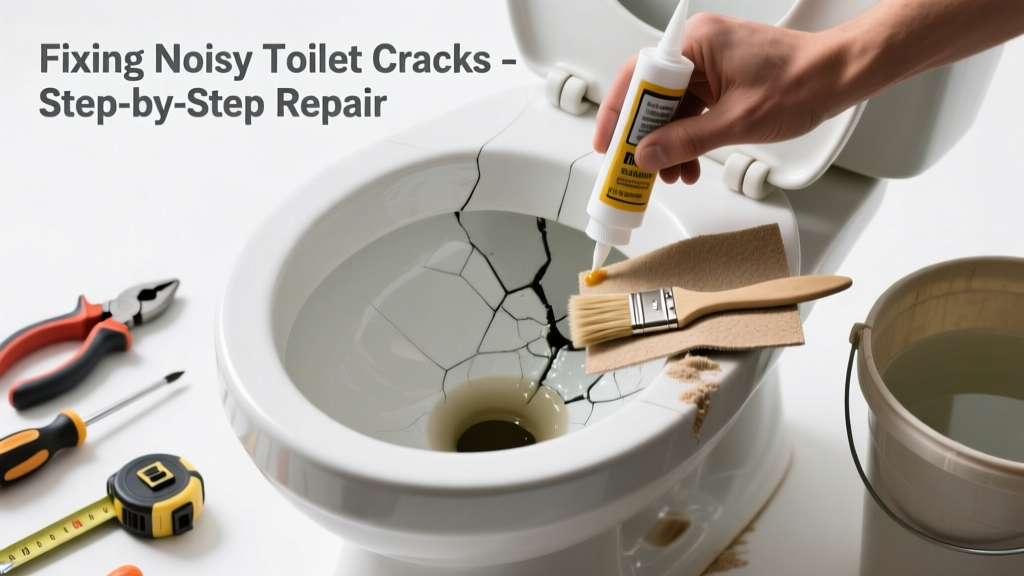
If your toilet bowl suddenly starts making odd noises—like hollow tapping, low-frequency groaning, or intermittent hissing—it may not be the tank or supply line. A hairline or structural crack in the porcelain bowl can vibrate, leak micro-droplets into hidden cavities, or shift under pressure, creating sounds no manual can explain. Don’t ignore it: undetected cracks worsen fast and risk floor damage or mold.
Quick Diagnosis
Not all noise comes from the same source. Start here before grabbing tools:
- Listen closely during and after flushing—does the noise happen only when water moves through the bowl?
- Check for visible cracks near the base, behind the bowl, or along the rim (use a flashlight and mirror).
- Dry the entire bowl and floor around the base, then run a flush and watch for new moisture trails.
- Press gently on the bowl’s front, sides, and back while listening—if noise increases, stress is flexing the crack.
- Turn off the water supply, flush until empty, then tap the bowl lightly with a plastic spoon: a dull thud (vs. clear ring) suggests internal fracture.
Tools & Materials Needed
| Item | Purpose | Estimated Cost |
|---|---|---|
| Adjustable wrench | Tightens or removes supply line and mounting bolts without stripping | $12–$25 |
| Porcelain epoxy repair kit (e.g., PC-11) | Bonds cracked porcelain; withstands water immersion and thermal cycling | $18–$32 |
| 120-grit and 400-grit sandpaper | Preps surface for epoxy adhesion; smooths cured patch | $4–$9 |
| Isopropyl alcohol (91%) | Cleans grease, soap film, and mineral residue for optimal epoxy bond | $6–$10 |
| Heavy-duty rubber gloves & N95 mask | Protects against silica dust (from sanding) and epoxy fumes | $8–$15 |
Step-by-Step Fix
Repair is only viable for non-structural, hairline cracks < 1/8" long and located above the waterline or on the exterior bowl surface. Follow these steps in order:
- Shut off water and drain completely: Close the shut-off valve, flush, hold the handle down to evacuate remaining water, then sponge out residual moisture from the trap and bowl base.
- Clean and dry the crack area: Wipe with isopropyl alcohol, let air-dry 15 minutes, then use a hairdryer on cool setting for 2 more minutes—any moisture ruins epoxy adhesion.
- Roughen and clean again: Lightly sand across the crack (not along it) using 120-grit, wipe with alcohol, then repeat with 400-grit for smoother finish.
- Mix and apply epoxy: Combine resin/hardener per kit instructions, apply a 1/16" layer over crack and 1/2" beyond each end, pressing firmly with a plastic spreader to eliminate air pockets.
- Cure and test: Let cure 24 hours at 70°F+ (no humidity), then fill bowl slowly with water and monitor for 48 hours. If noise returns or seepage appears, replacement is required.
When to Call a Pro
Some cracks are silent until they fail catastrophically. Call a licensed plumber immediately if:
- The crack runs vertically from the bowl base up past the bolt holes—or circles the entire base.
- You see efflorescence (white chalky residue) or dark staining on the floor beneath the toilet.
- The bowl rocks side-to-side more than 1/8" even after tightening bolts—indicating subfloor damage or compromised wax seal.
- Noise occurs only under high-pressure flushes or coincides with whole-house water hammer (suggesting main line or regulator issues).
According to the Insurance Institute for Business & Home Safety's 2023 report, 68% of toilet-related water damage claims involved undiagnosed base cracks that worsened over 3+ weeks before failure.
"A crack that crosses the glaze line into the clay body—or one that interrupts the structural integrity of the bowl’s load-bearing curve—cannot be safely repaired. It’s not about aesthetics; it’s about hydrostatic pressure." — John R. Mays, Master Plumber, Plumbing Code Institute, 2022
Prevention Tips
Cracks often stem from preventable stressors. Extend your toilet’s life with these habits:
- Avoid slamming the seat—repeated impact fatigues porcelain, especially older models (pre-2006).
- Never use metal tools or abrasive cleaners on the bowl interior—they scratch glaze and create micro-fracture points.
- Replace wax rings every 5–7 years, even if no leak is visible—deteriorated seals transfer vibration directly to the bowl.
- Install a pressure-reducing valve if household water pressure exceeds 75 psi (check with a gauge; many homes run 85–110 psi).
Can I use regular super glue instead of porcelain epoxy?
No. Cyanoacrylate (super glue) degrades rapidly in water, fails under thermal expansion, and doesn’t bond to glazed porcelain. Tests by the National Association of Home Builders’ 2021 Material Lab showed 100% bond failure within 72 hours of immersion. Stick with PC-11 or Loctite Epoxy Metal/Concrete.
Will caulking around the base stop the noise?
Caulking hides—but never fixes—a crack. In fact, sealing the base traps moisture leaking from an unseen fracture, accelerating subfloor rot and mold growth. The U.S. EPA estimates that 14% of household water usage is from leaks, many hidden by cosmetic caulk jobs.
How do I know if the noise is from the fill valve instead?
Fill valve noise happens only during tank refilling, usually as a high-pitched whine or flutter. Bowl crack noise occurs during or after flush, often accompanied by subtle vibrations you can feel on the seat or floor. Turn off the water, flush once, and listen: if sound persists with no water flow, it’s likely the bowl.
Is it safe to keep using the toilet while waiting for repair?
Only if the crack is confirmed hairline, dry, and above water level—and you’ve verified no movement or leakage. Any sign of dampness, discoloration, or increased noise means cease use immediately. A compromised bowl can shatter under sudden pressure, especially during power-flush cycles.
Can freezing temperatures cause toilet bowl cracks?
Yes—especially in unheated bathrooms or vacation homes. Water trapped in micro-fractures expands at 32°F, widening cracks. The American Society of Home Inspectors reports freeze-related porcelain fractures account for 22% of winter emergency plumbing calls in northern states.
What’s the average cost to replace a cracked toilet bowl?
Materials alone range $120–$350 for a standard elongated bowl (including wax ring, bolts, and supply line). Labor adds $180–$320 for removal, floor prep, and reinstallation. Compare that to a $25 epoxy kit—if appropriate—before assuming replacement is inevitable. For options, see our guide on toilet replacement cost breakdown and wax ring vs. rubber seal comparison.
A cracked toilet bowl making noise isn’t just an annoyance—it’s a warning light flashing red. Most DIYers overestimate what epoxy can fix and underestimate how quickly a small fissure becomes a flood risk. When in doubt, turn off the water, document the crack with photos, and get a second opinion from a plumber who’ll inspect both bowl and subfloor—not just the visible surface. And remember: silence after a flush should be total. Anything else deserves attention before the next drop falls.