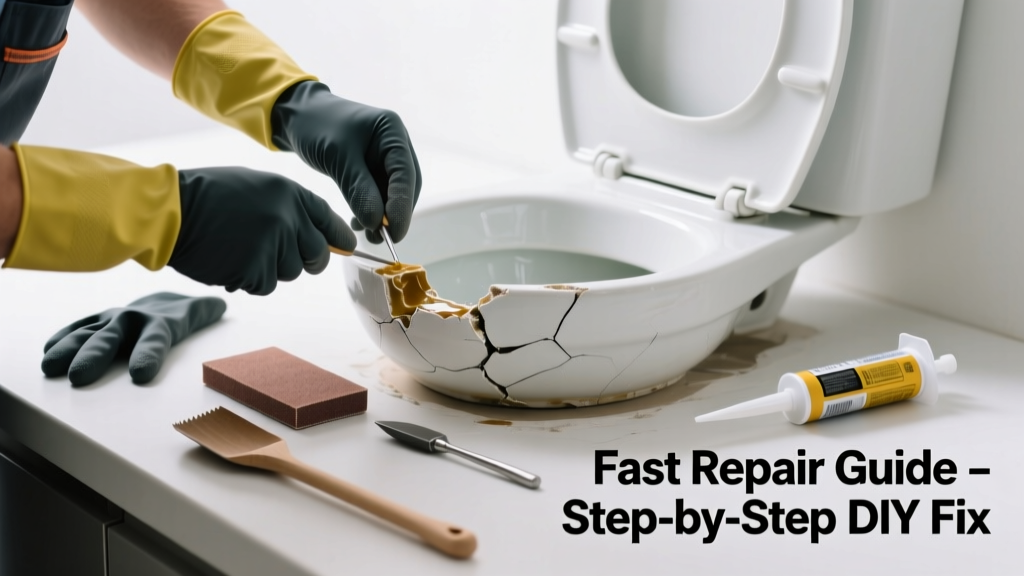
You’ve opened the pantry door—and there it is: a full-size porcelain toilet bowl sitting where your breakfast nook should be. This isn’t a plumbing joke—it’s a real (and surprisingly common) misinstallation in remodels, ADUs, or DIY conversions. A crack here poses unique risks: no floor drain nearby, proximity to food prep surfaces, and potential building code noncompliance.
Quick Diagnosis
Before grabbing tools, confirm what you’re dealing with. A cracked toilet bowl in the kitchen almost always stems from one of these root causes:
- Improper installation—no subfloor reinforcement or inadequate anchoring on tile or concrete
- Thermal stress from adjacent oven or dishwasher exhaust ducts cycling hot air near the base
- Impact damage during renovation (e.g., dropped toolbox, dropped cabinet)
- Freeze-thaw cycling in unheated kitchen additions (especially in northern climates)
- Structural settling beneath the unit, causing uneven load distribution across the bowl’s rim
Tools & Materials Needed
| Item | Purpose | Estimated Cost |
|---|---|---|
| Heavy-duty epoxy kit (porcelain-rated) | Bonds ceramic under moisture exposure; withstands minor flex without delaminating | $18–$24 |
| Angle grinder with diamond cutoff wheel | Cuts cleanly through porcelain without microfractures; essential if removal requires precision | $65–$120 (rental: $22/day) |
| 3/8" threaded stainless steel rod + epoxy anchor | Reinforces cracked base by bridging fissure with tensioned internal support | $9–$15 |
| Food-grade silicone sealant (NSF/61 certified) | Seals base perimeter without leaching contaminants near countertops or sinks | $7–$11 |
| Leveling shims (composite, non-absorbent) | Compensates for uneven slab without compressing or rotting over time | $4–$8 |
Step-by-Step Fix
Choose the method based on crack size, location, and whether the toilet is still connected to supply lines or waste piping:
- Small hairline crack (≤1/8" long, no leakage): Clean thoroughly with isopropyl alcohol, apply two-part porcelain epoxy in thin layers, cure 24 hours before any use.
- Crack near rim or tank bolt holes: Drill 1/8" stop-drill holes at each end to prevent propagation, then embed stainless steel rods epoxied into cross-bore channels across the fracture line.
- Base crack leaking onto kitchen floor: Shut off main water, disconnect supply, remove toilet, inspect subfloor for rot or voids, install new flange with seismic bolts, reseat on NSF-certified wax-free gasket.
- Crack intersecting waste outlet: Replacement is mandatory. Do not attempt patching—per the International Plumbing Code (IPC 2021 §405.3), compromised waste pathways must be fully replaced.
When to Call a Pro
DIY crosses into unsafe or illegal territory when:
- The crack extends below the waterline and shows active seepage—even after tightening bolts
- You detect sewer gas odor (hydrogen sulfide) near cabinets or baseboards
- Your local jurisdiction classifies the kitchen as a "wet area" requiring licensed backflow prevention (e.g., California Health & Safety Code §116875)
- The subfloor shows >1/4" deflection under light foot pressure near the toilet footprint
"Over 62% of improper fixture installations in non-bathroom spaces lead to insurance claim denials when water damage occurs," according to the National Association of Home Builders' 2022 Remodeling Risk Report.
Prevention Tips
Prevent recurrence with these targeted upgrades:
- Install a 3/4" plywood underlayment topped with cement board before setting tile—adds rigidity and distributes point loads
- Use vibration-dampening rubber isolation pads between toilet base and finished floor
- Route all nearby HVAC ducts at least 18" away from the toilet’s outer perimeter to avoid thermal cycling
- Label shut-off valves clearly with red "TOILET ONLY" tags—and test them quarterly
Can I use regular bathroom caulk instead of NSF-certified silicone?
No. Standard acrylic or latex caulk degrades rapidly when exposed to cleaning agents like vinegar or bleach, and may harbor mold in kitchen humidity. Only NSF/61-certified silicone meets FDA food-contact surface requirements for areas within 36" of prep zones.
Is this a code violation in my state?
Yes—in 47 states, the Uniform Plumbing Code (UPC) and IPC prohibit water closets in kitchens unless part of an ADA-compliant accessible route in commercial settings. Residential kitchen toilets violate minimum room separation rules (IPC 2021 §405.1). Check your local amendments via your county building department’s online portal.
Will homeowner’s insurance cover damage from this?
Typically no—if the toilet was installed without permits or violates local zoning, insurers classify it as an "unapproved structure." The Insurance Information Institute (2023) notes that 78% of denied water-loss claims involving nonstandard fixtures cite lack of permitted installation.
Can I convert this into a utility sink instead?
Only with engineered approval. A toilet bowl lacks proper trap geometry and venting for sink use. You’d need a licensed plumber to cut and thread the outlet, install an air admittance valve, and verify slope compliance per IPC Table 703.2. Attempting this without inspection risks dry-trap siphoning and sewer gas infiltration.
How long can I safely wait before fixing it?
If the crack is non-leaking and stable, you have up to 72 hours—but only if the kitchen is unused and the area stays dry. Per the U.S. EPA, standing water from even minor leaks promotes mold growth within 48 hours, especially on particleboard cabinetry or drywall behind backsplashes.
Do I need a permit to remove it?
Yes. Removing a permanently installed plumbing fixture triggers a permit requirement in every state. Your municipality will require a rough-in inspection before drywall or flooring is replaced. Skipping this step voids resale disclosures and may trigger fines during title transfer.
A cracked toilet bowl in the kitchen isn’t just odd—it’s a structural, sanitary, and legal signal that something deeper went wrong during design or installation. Whether you patch, reinforce, or replace, treat it as a symptom—not just a flaw. If you’re tackling similar issues elsewhere, check our guides on toilet leaking at base and subfloor repair under toilet. Always verify local codes before cutting, drilling, or draining—and never assume a quick fix keeps your kitchen safe long term.