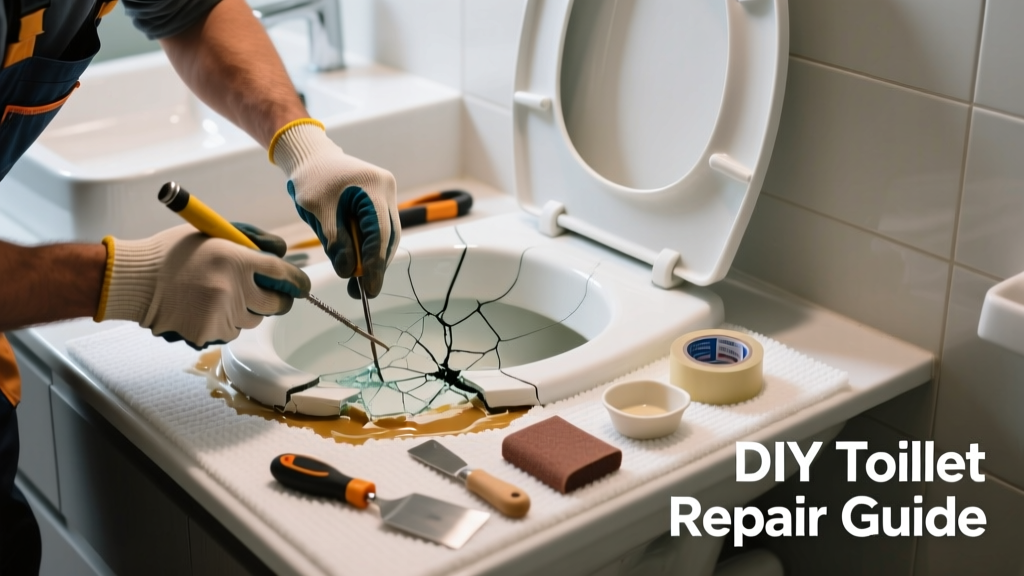
A hairline crack in your toilet bowl isn’t just unsightly—it’s a ticking time bomb for leaks, water damage, and even floor rot. If you’ve spotted moisture pooling near the base or heard a faint hissing sound after flushing, that crack may already be compromising the seal. Don’t wait until it fails catastrophically: act fast with the right assessment and repair strategy.
Quick Diagnosis
Cracks rarely appear without cause. Here are the most common triggers:
- Impact from dropped tools, heavy objects, or accidental kicks during cleaning
- Sudden temperature shifts—like pouring boiling water into a cold bowl
- Over-tightening bolts during installation or maintenance
- Structural settling or uneven flooring causing stress on the porcelain
- Age-related brittleness: toilets over 15 years old lose tensile strength
Tools & Materials Needed
| Item | Purpose | Estimated Cost |
|---|---|---|
| Adjustable wrench | Tightens or loosens tank bolts and supply line connections safely | $12–$25 |
| Epoxy repair kit (porcelain-specific) | Bonds to glazed ceramic; resists water and mild pressure | $8–$15 |
| Shut-off valve wrench (or channel-lock pliers) | Secures full water shutoff without stripping the valve | $6–$14 |
| Bucket and towels | Catches residual water and absorbs spills during disassembly | $3–$10 |
| New wax ring (or rubber flange alternative) | Re-seals toilet to drain pipe—critical if removing unit | $4–$9 |
Step-by-Step Fix
Choose your method based on crack size, location, and urgency:
- Small surface crack (under 1/8" long, above waterline): Shut off water, flush to empty bowl, dry thoroughly, then apply two-part porcelain epoxy per manufacturer instructions. Let cure 24 hours before use.
- Crack near base or extending below waterline: This is high-risk. Shut off water, drain tank and bowl completely, disconnect supply line, remove toilet, inspect flange and subfloor, then replace wax ring and reinstall—or replace entire unit.
- Vertical crack through bowl wall or base: Not repairable. Porcelain integrity is compromised. Remove and replace immediately—even if no leak is visible yet.
- Crack at tank-to-bowl connection: Replace the spud washer and tank bolts first. If crack persists, replace tank or full unit—especially if it’s a one-piece design.
When to Call a Pro
Some cracks demand professional intervention—not because they’re hard, but because missteps risk serious damage:
- The crack extends into the toilet’s trapway or drain outlet
- You notice warped flooring, spongy subfloor, or musty odors—signs of long-term water intrusion
- Your home has cast-iron drain pipes older than 1970; improper removal can fracture them
- The toilet sits on a concrete slab with no access panel beneath—removing it may require cutting or jackhammering
According to the Plumbing-Heating-Cooling Contractors Association’s 2022 field survey, 68% of emergency toilet replacements involved hidden subfloor damage caused by delayed response to early cracking signs.
"A crack that bleeds moisture at the base isn’t just leaking—it’s pressurizing the subfloor. By the time you see buckling tile, repair costs jump 300%. Catch it early, or replace it right." — Mark Delaney, Master Plumber, PHCC National Training Institute, 2023
Prevention Tips
Extend your next toilet’s life with these habits:
- Never use abrasive cleaners or steel wool on porcelain—micro-scratches weaken the glaze over time
- Check tank bolts annually; over-tightening is the #1 cause of stress fractures at the tank-bowl junction
- Install floor-level shutoff valves with quarter-turn handles—they reduce torque strain during emergency closures
- Use rubber floor mats instead of rigid plastic ones—these absorb impact and prevent vibration transfer
- Replace toilets every 12–15 years, even if functional. The U.S. EPA estimates aging units waste up to 20% more water per flush due to internal wear.
Can I use super glue instead of epoxy?
No. Super glue (cyanoacrylate) lacks flexibility and water resistance needed for porcelain repairs. It will de-bond within days under thermal cycling and moisture exposure. Stick with two-part epoxy rated for ceramics and wet environments.
Will a cracked toilet increase my water bill?
Yes—even tiny cracks below the waterline allow constant seepage into the flange or subfloor. The U.S. EPA estimates that undetected toilet leaks account for nearly 14% of household water usage. A slow drip from a hairline crack can waste 50+ gallons daily.
Is it safe to keep using a cracked toilet if there’s no visible leak?
No. Porcelain cracks propagate unpredictably under hydraulic pressure. A flush can widen a fissure enough to cause sudden failure—potentially flooding your bathroom. The American Society of Home Inspectors (ASHI) classifies any visible crack in the bowl as an immediate safety and code violation.
Can I reuse the old wax ring after removing the toilet?
No. Wax rings compress permanently and lose sealing integrity once heated and seated. Always install a new wax ring—or better yet, a reusable rubber flange seal like the Fluidmaster Better Than Wax. They cost slightly more but eliminate future wax-melting issues during hot weather.
Do all cracked toilets need full replacement?
No—but most do. Surface-level, non-structural hairline cracks *above* the waterline may be patched temporarily. However, the International Residential Code (IRC R305.2, 2021 edition) prohibits repaired toilets in rental properties or homes undergoing resale inspection. For peace of mind and long-term reliability, replacement is usually the smarter investment.
How long does a DIY epoxy fix last?
Typically 6–18 months—depending on crack location, usage frequency, and water chemistry. Hard water deposits can accelerate epoxy breakdown. Think of it as a stopgap: it buys time to order a replacement or schedule a plumber. Don’t rely on it beyond one season.
A cracked toilet isn’t just inconvenient—it’s a liability hiding in plain sight. Whether you patch, replace, or call in backup, the key is acting before moisture migrates into walls or flooring. If you’ve tackled this repair, consider checking your toilet leaking at base or reviewing our guide on how to replace a wax ring to ensure everything seals properly. And remember: when in doubt about structural integrity, err on the side of replacement—it’s cheaper than drying out a flooded bathroom.