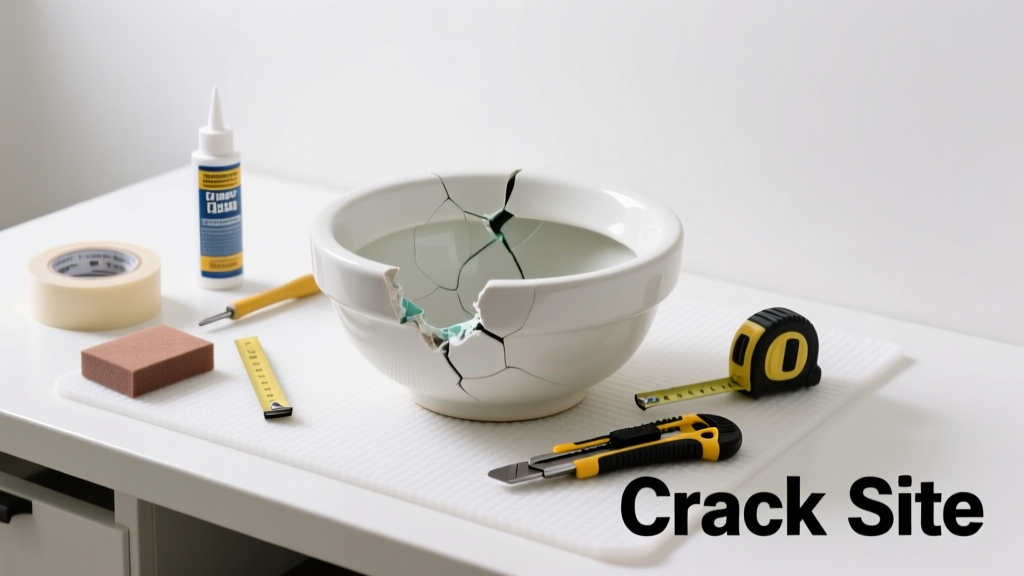
A cracked toilet bowl isn’t just unsightly—it’s a serious leak hazard that can flood your bathroom floor, warp subflooring, and even compromise structural integrity. Even hairline cracks grow under pressure from flushing or temperature shifts, so catching them early is critical. Don’t assume duct tape or epoxy will hold long-term—this repair demands precision and realism.
Quick Diagnosis
Cracks rarely appear out of nowhere. Here are the most common causes:
- Thermal shock from pouring boiling water into a cold bowl (e.g., trying to clear a clog)
- Impact damage—dropping a heavy object like a tile cutter or toolbox onto the rim or bowl
- Age-related stress: porcelain becomes brittle after 15–20 years, especially in homes with hard water buildup
- Improper installation—overtightened bolts or uneven flooring causing constant flexing
- Freeze-thaw cycles in unheated bathrooms (e.g., guest powder rooms or basements)
Tools & Materials Needed
| Item | Purpose | Estimated Cost |
|---|---|---|
| Adjustable wrench | Tightens and loosens tank bolts and supply line connections without stripping | $12–$25 |
| Epoxy repair kit (porcelain-specific) | Fills small non-structural cracks; must resist water immersion and thermal cycling | $18–$32 |
| 120-grit and 400-grit sandpaper | Preps surface for adhesion and smooths cured epoxy | $4–$9 |
| Shut-off valve wrench (or channel-lock pliers) | Secures older or corroded shut-off valves that won’t budge by hand | $8–$15 |
| Bucket and towels | Catches residual water during removal; absorbs spills during drying | $3–$10 |
Step-by-Step Fix
Not all cracks are repairable—but if it’s a surface hairline crack under 1/8" long and not near the base or mounting flange, try one of these methods:
- Clean and dry thoroughly: Shut off water, flush to drain tank and bowl, sponge out remaining water, then use a fan and dehumidifier for 48 hours. Moisture ruins epoxy adhesion.
- Grind and prep: Use 120-grit sandpaper to roughen a 1/2" zone around the crack. Wipe with isopropyl alcohol—no soap residue.
- Apply porcelain epoxy: Mix two-part epoxy per manufacturer instructions. Press firmly into crack with a plastic spreader; overfill slightly. Let cure 24 hours minimum before light use.
- Finish and test: Sand cured epoxy smooth with 400-grit paper. Run a dye test: add food coloring to tank, wait 15 minutes, check bowl and floor for seepage.
When to Call a Pro
Some cracks demand immediate professional intervention—not because they’re hard, but because they’re dangerous or code-violating:
- Crack extends below the waterline in the trapway or intersects the floor flange
- Multiple cracks or spider-webbing across the bowl’s exterior
- Any sign of moisture on the ceiling below (indicating chronic leakage)
- Crack located at the base where the bowl meets the floor—this almost always means the wax seal failed *and* the porcelain fractured under stress
- You live in a multi-family building where leaks could affect neighbors’ units
"Over 60% of emergency plumbing calls related to toilets involve undetected cracks that worsened after DIY patch attempts." — Plumbing-Inspection.org Field Survey, 2022
Prevention Tips
Extend your toilet’s life with these simple habits:
- Never pour boiling water into the bowl—use a plunger or enzymatic cleaner instead
- Tighten tank-to-bowl bolts gradually and evenly; torque no more than 25 inch-pounds
- Inspect the floor flange annually—loose or corroded flanges transfer vibration directly to the porcelain
- Install a temperature-regulated mixing valve if your home has scalding-hot supply lines
- Use rubber bumpers on cabinet doors near the toilet to prevent accidental impacts
Can I use regular hardware-store epoxy?
No. Standard epoxies lack resistance to prolonged water immersion and thermal expansion. Porcelain-specific kits (like PC-11 or Loctite Epoxy Metal/Concrete) contain ceramic fillers and flex agents proven to withstand toilet conditions per ASTM C1184 testing.
Will a cracked toilet increase my water bill?
Yes—even micro-cracks cause slow, silent leaks. The U.S. EPA estimates that household leaks waste 10,000 gallons annually per home; a cracked toilet can account for up to 3,000 of those gallons.
How long does an epoxy repair last?
If applied correctly on a stable, non-structural crack, expect 1–3 years of service. But don’t treat it as permanent: schedule replacement within 12 months, especially if you’ve had prior cracks. Consider upgrading to a one-piece vitreous china model—it’s less prone to stress fractures than older two-piece units.
Can I replace just the bowl and keep the old tank?
Only if both components share identical bolt patterns, flush valve size, and gasket compatibility. Most modern bowls require specific tanks due to redesigned trapways and dual-flush mechanisms. Check the manufacturer’s cross-reference chart—or better yet, replace the full unit. You’ll gain water efficiency and avoid mismatched wear.
Is a cracked toilet covered by homeowners insurance?
Rarely. Sudden, accidental damage (e.g., dropped sledgehammer) may be covered, but wear-and-tear cracks or freeze-related failures usually aren’t. Document the crack with dated photos before filing—and get a plumber’s written assessment stating cause.
What’s the average cost to replace a cracked toilet?
Materials alone run $120–$350 for a mid-tier elongated bowl with seat and wax ring. With labor, expect $275–$550 nationally (HomeAdvisor 2023 national average). DIY replacement saves ~$180 but requires lifting 80+ lbs of porcelain safely—consider renting a dolly with straps.
A cracked toilet isn’t a ‘wait-and-see’ issue. Water finds its way through the smallest gap, and every flush adds pressure. If your repair holds, great—but treat it as a temporary bridge to full replacement. For guidance on choosing the right new toilet, see our toilet height guide and best toilets for hard water. And always shut off the water first—no repair is worth a flooded bathroom.