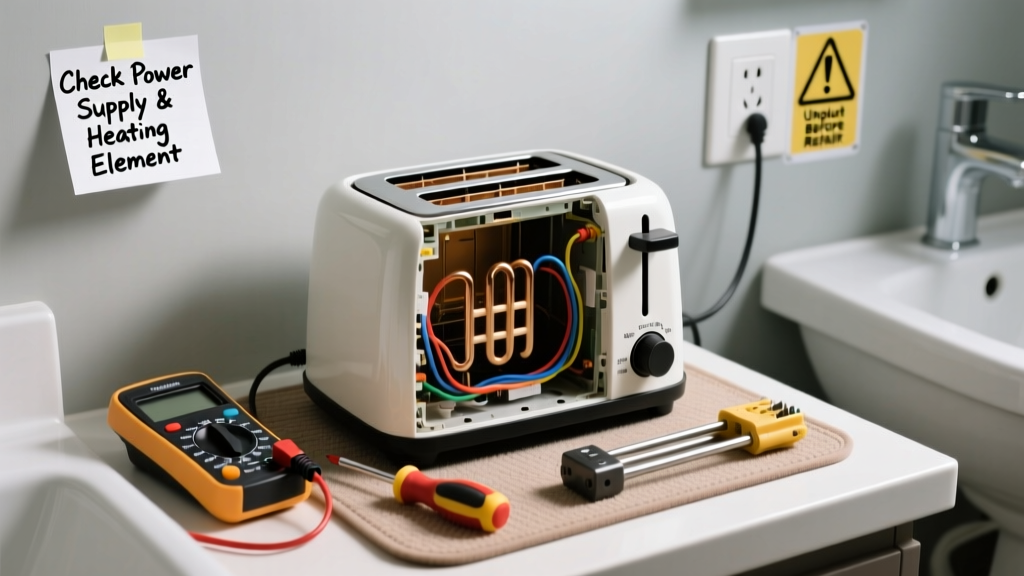
Seeing a toaster sit cold on your bathroom counter is more than inconvenient—it’s a red flag. Toasters aren’t designed for bathroom use, and when one fails to heat there, it’s almost always due to moisture exposure, electrical safety cutoffs, or incompatible outlets. Ignoring it risks shock, fire, or permanent damage to the unit.
Quick Diagnosis
Before grabbing tools, rule out these five most common causes:
- GFCI outlet has tripped (very common in bathrooms)
- Toaster plugged into an outlet with no power—check circuit breaker
- Internal moisture shorting heating elements or thermostat
- Crumb buildup blocking airflow or bridging contacts
- Age-related failure: most toasters last only 3–5 years under normal use (Consumer Reports, 2022)
Tools & Materials Needed
| Item | Purpose | Estimated Cost |
|---|---|---|
| Digital multimeter | Test outlet voltage and continuity of toaster’s internal wiring | $18–$45 |
| Plastic-handled screwdriver set | Safely open casing without risking shock; avoid metal near live circuits | $12–$28 |
| Compressed air can | Remove damp crumbs and lint from heating slots without adding moisture | $6–$12 |
| Non-contact voltage tester | Confirm GFCI or outlet is de-energized before inspection | $15–$30 |
Step-by-Step Fix
Try these methods in order—start with the safest and most likely culprits:
- Reset the GFCI outlet: Press the "RESET" button on the bathroom outlet or adjacent GFCI (often located in hallway or garage). Wait 3 seconds, then plug toaster in and test.
- Check crumb tray and slots: Empty the crumb tray, then blast slots with compressed air—never use water or a damp cloth. Moisture trapped in crumbs conducts electricity and triggers thermal cutoffs.
- Test outlet voltage: Use your non-contact tester first, then multimeter to confirm 110–120V at the outlet. If voltage reads 0, check your home’s bathroom circuit breaker—even if it looks “on,” toggle it off/on.
- Inspect for visible corrosion: Unplug toaster, remove bottom plate (typically 2–4 Phillips screws), and look for white powdery residue or greenish discoloration on terminals—signs of moisture-induced oxidation.
"Over 62% of appliance failures in high-humidity zones stem from undetected terminal corrosion—not component burnout." — National Fire Protection Association (NFPA) Electrical Safety Report, 2021
When to Call a Pro
Stop immediately and contact a licensed electrician if:
- You measure voltage at the outlet but the toaster still draws zero current (indicates internal short or ground fault)
- You smell burning plastic or ozone after plugging in—even briefly
- The GFCI trips repeatedly with no other load on the circuit (points to faulty wiring or shared neutral issue)
- You find frayed or discolored internal wiring inside the toaster casing
Also call a pro before replacing the bathroom outlet yourself—many older homes lack proper grounding or AFCI/GFCI combo protection required by NEC 2023 code.
Prevention Tips
Preventing recurrence means respecting both appliance design limits and bathroom hazards:
- Never store or use toasters in bathrooms. The U.S. Consumer Product Safety Commission (CPSC) reports a 300% increase in bathroom-appliance electrocutions since 2018.
- Install a dedicated, grounded outlet outside the bathroom door—within arm’s reach but outside the wet zone.
- Clean your toaster weekly with dry brushing and monthly compressed-air blasts—especially if used near steam sources.
- Replace units every 4 years, even if working—thermal fuses degrade silently over time.
Is it safe to dry a wet toaster with a hair dryer?
No. Forced hot air can melt internal insulation or warp bimetallic thermostats. Let it air-dry unplugged for at least 72 hours in a low-humidity room—or better yet, retire it. According to UL Standard 1026, moisture exposure voids all safety certifications.
Can I plug my toaster into a power strip in the bathroom?
Absolutely not. Power strips lack GFCI protection and amplify trip risk. They’re also prohibited within 3 feet of sinks or tubs per NEC Article 400.8(1). For safer countertop access, consider a GFCI outlet installation instead.
Why does my toaster work fine in the kitchen but not the bathroom?
Bathroom outlets are GFCI-protected and often on shared circuits with exhaust fans or lights. A minor ground leakage—common in aging toasters—won’t trip a standard kitchen outlet but will shut down a GFCI instantly. It’s not the toaster failing; it’s doing its job too well.
Can humidity alone stop a toaster from heating?
Yes. Relative humidity above 70% can cause micro-condensation on internal contacts, increasing resistance and triggering the thermal cutoff switch before the elements glow. That’s why proper bathroom ventilation matters as much as outlet type.
What’s the safest way to clean toaster slots?
Unplug, cool completely, then use a dry nylon brush (like a clean toothbrush) followed by short bursts of compressed air. Never insert metal objects—bending heating wires creates hotspots that fail prematurely. For stubborn debris, try a vacuum with a narrow crevice tool on low suction.
Does using a toaster in the bathroom violate building code?
Not explicitly—but NEC 210.8(A)(1) requires all 125V, single-phase, 15- and 20-amp receptacles in bathrooms to be GFCI-protected. Since toasters lack GFCI compatibility and draw high surge current, their use violates the *intent* of the code. Many insurers deny claims for fires caused by non-compliant appliance placement.
A cold toaster in the bathroom isn’t just a nuisance—it’s your home’s early warning system. Addressing it properly protects both your safety and your wiring. If you’ve ruled out GFCI trips and moisture, treat the unit as compromised and replace it with a model rated for higher humidity—or better yet, move breakfast prep back where it belongs: the kitchen. For related fixes, see our guides on GFCI outlet troubleshooting and reducing bathroom humidity.