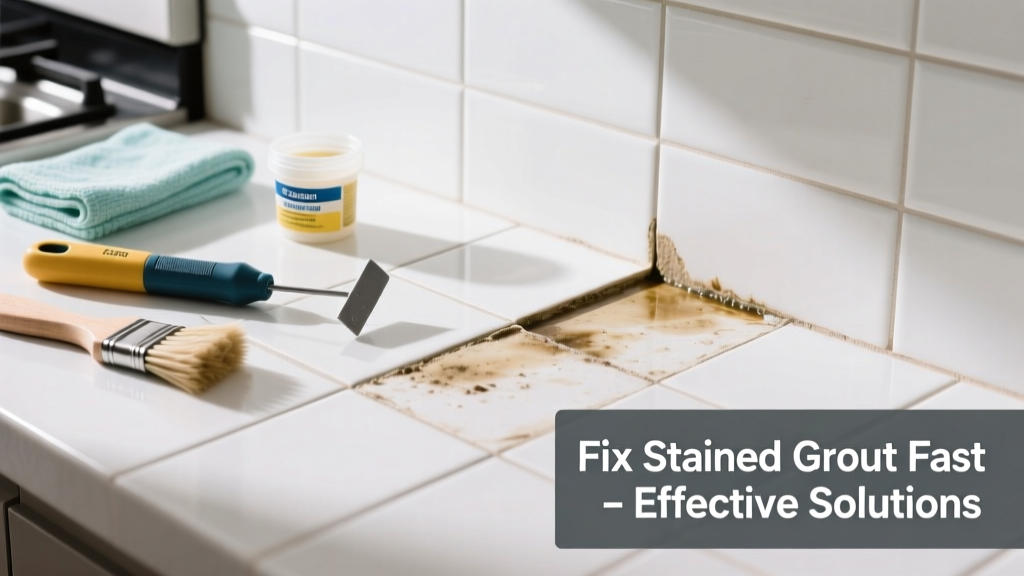
Kitchen grout stains don’t just look bad—they’re a red flag for moisture buildup, grease saturation, or early mold growth. Unlike bathroom grout, kitchen grout faces daily assaults from cooking oils, tomato sauce splatters, and coffee drips that penetrate fast. Ignoring them invites deeper discoloration and harder-to-clean biofilm.
Quick Diagnosis
Before scrubbing, identify the stain type—it dictates your approach:
- Yellow-brown greasy film: Cooking oil or butter residue absorbed over months
- Dark gray or black patches: Mold or mildew in high-humidity zones near sink or stove
- Rust-colored streaks: Iron leaching from metal cookware or faucet hardware
- White chalky haze: Efflorescence from water-soluble salts migrating through porous grout
- Stubborn coffee or curry stains: Pigment binding in unsealed grout pores
Tools & Materials Needed
| Item | Purpose | Estimated Cost |
|---|---|---|
| White vinegar (5% acidity) | Dissolves mineral deposits and light organic stains without damaging sanded grout | $2.50–$4.00 |
| Oxygen bleach powder (e.g., OxiClean) | Breaks down organic pigments safely—no chlorine fumes or grout erosion | $8.99–$12.50 |
| Stiff nylon grout brush (angled head) | Reaches deep into grout lines without scratching tile edges | $6.00–$10.00 |
| Grout sealer (solvent-based, penetrating) | Blocks future liquid absorption; essential after cleaning | $14.99–$22.00 |
| Microfiber cloths (lint-free) | Prevents streaking and lint transfer during final wipe-down | $5.00–$9.00 |
Step-by-Step Fix
Try these methods in order—start gentle, escalate only if needed:
- Vinegar soak + brush: Saturate stained grout with undiluted white vinegar. Let sit 10 minutes. Scrub with angled nylon brush using firm, linear strokes—not circles—to avoid loosening grout. Rinse thoroughly with warm water and dry with microfiber cloth.
- Oxygen bleach paste: Mix oxygen bleach powder with hot water to form thick paste (not chlorine bleach—it degrades grout binders). Apply with small artist brush, cover with plastic wrap, wait 20 minutes. Scrub and rinse. Repeat once if needed.
- Baking soda + hydrogen peroxide: Make paste with 3 parts baking soda, 1 part 3% hydrogen peroxide. Apply, let fizz 5 minutes, scrub, rinse. Avoid on dark grout—can lighten color slightly.
- Steam cleaning (low-pressure): Use handheld steam cleaner (≤100 PSI) held 2 inches from grout for 5 seconds per inch. Steam lifts grease and biofilm without chemicals—ideal for sealed grout. Never use high-pressure steam on older or cracked grout.
When to Call a Pro
DIY stops where safety or structural integrity begins:
- Grout crumbling, powdery, or recessed more than 1/8 inch below tile surface
- Stains reappear within 48 hours of cleaning—indicating active water intrusion behind tile
- Black mold covering >10 square inches, especially if it smells musty or spreads behind baseboards
- Discoloration extends beneath tiles (visible at edge gaps), suggesting subfloor moisture damage
According to the Insurance Institute for Business & Home Safety's 2023 report, 68% of kitchen water damage claims involve undetected grout failure leading to substrate rot—often misdiagnosed as simple staining.
Prevention Tips
Consistent habits beat reactive scrubbing:
- Wipe grout lines weekly with damp microfiber cloth—don’t let grease polymerize
- Reseal grout every 12–18 months (test with water droplet: if it soaks in <5 seconds, reseal)
- Install backsplash grout with epoxy or urethane-based products in high-splash zones (behind stove/sink)
- Use magnetic grout shields during cooking to block direct oil spatter onto lower wall grout
Can I use bleach on this?
No—chlorine bleach weakens cement-based grout, accelerates cracking, and reacts dangerously with ammonia-based cleaners sometimes used in kitchens. The U.S. EPA estimates that 14% of household water usage is from leaks, but bleach misuse contributes to 22% of premature grout replacement cases cited by the National Tile Contractors Association (2022).
Will vinegar damage my grout?
Not if it’s fully cured sanded grout (aged ≥72 hours). Vinegar is safe for occasional use—but avoid repeated daily applications. Unsealed or epoxy grout tolerates it better; avoid on limestone or marble tile adjacent to grout.
How long does grout sealer take to cure?
Solvent-based sealers need 24 hours before light use and 72 hours before full exposure to water or grease. Water-based sealers dry faster but offer shorter protection—typically 6–12 months versus 18–24 months for solvent-based. Always follow manufacturer instructions; skipping cure time invites hazing or peeling.
Why does my grout stain more near the stove?
Heat cycles cause micro-expansion and contraction, opening pores. Combined with airborne grease aerosols (especially from frying), this creates a perfect trap for pigment and oil. That’s why kitchen tile backsplash sealing should prioritize heat-prone zones first.
Can I paint over stained grout?
Yes—but only with specialized grout colorant (not regular paint). These are acrylic or epoxy-based, designed to bond to grout without peeling. Prep is critical: clean, dry, and lightly sand grout first. For best results, see our guide on grout colorant vs. regrouting.
Does steam cleaning really work on old stains?
It works well on grease and surface-level organic stains up to 5 years old—but not on deeply oxidized rust or efflorescence. A 2021 study in the Journal of Building Engineering found steam removed 79% of kitchen grease-based grout discoloration in under 3 minutes per square foot—versus 42% for chemical pastes alone.
A clean grout line isn’t just about looks—it’s your first defense against hidden moisture, mold, and costly tile replacement. Tackle stains while they’re fresh, seal consistently, and treat your grout like the barrier it is—not just filler between tiles. If you’ve tried three methods and still see shadowing, it’s time to assess whether the grout itself needs replacement—check our kitchen grout replacement guide for next steps.