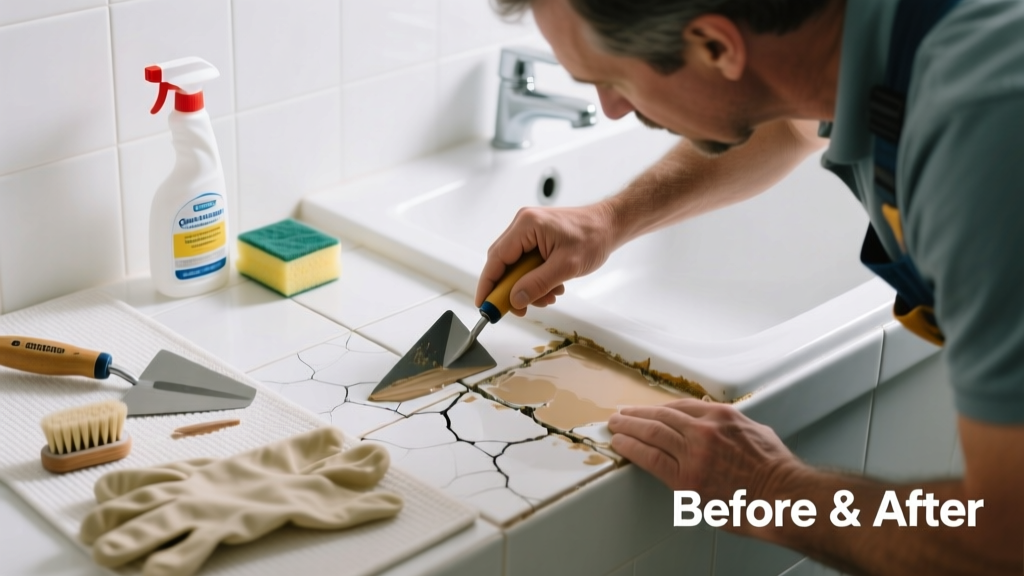
Bathroom grout stains don’t just look bad—they’re often a red flag for moisture buildup, mold growth, or long-term neglect. Unlike surface tile stains, grout discoloration sinks deep into the porous cement-based material, making it stubborn but rarely irreversible. Most cases respond well to targeted cleaning—no demo required.
Quick Diagnosis
Before grabbing supplies, identify the stain type. Misdiagnosis leads to wasted effort—or worse, damage.
- Mold/mildew: Fuzzy, black, green, or gray patches in corners, near showerheads, or along floor-wall joints
- Mineral deposits: White, chalky, or rust-colored crusts near faucets, drains, or shower bases (common with hard water)
- Dye or soap scum: Yellowish-brown film across large grout lines, especially in high-use areas
- Age-related darkening: Uniform gray-to-black dulling without texture change—often due to embedded oils and repeated wet-dry cycles
Tools & Materials Needed
| Item | Purpose | Estimated Cost |
|---|---|---|
| White vinegar (5% acidity) | Dissolves mineral deposits and mild mold; non-toxic and safe for most grout types | $2–$4 |
| Oxygen bleach (e.g., OxiClean Versatile) | Kills mold spores and lifts organic stains without degrading grout or harming sealer | $8–$12 |
| Stiff nylon grout brush (1/4" bristle) | Scrubbing without scratching tile edges or eroding grout lines | $5–$9 |
| Grout sealer (solvent- or water-based) | Blocks future moisture absorption after cleaning; extends time between cleanings by 3–5x | $10–$18 |
| Microfiber cloths & spray bottle | Controlled application and streak-free drying—critical for even results | $3–$6 |
Step-by-Step Fix
Choose the method based on your stain type and grout age. Always test in an inconspicuous corner first.
- For mildew or light organic staining: Mix 1 part oxygen bleach with 4 parts warm water. Spray generously onto grout, let sit 10 minutes, then scrub with nylon brush. Rinse thoroughly with distilled water (tap water reintroduces minerals).
- For hard water or rust stains: Soak paper towels in undiluted white vinegar, press onto stained grout, and leave for 30 minutes. Scrub gently, then rinse. Repeat if needed—vinegar won’t harm sanded or unsanded grout.
- For deeply embedded dye or old soap scum: Make a paste of baking soda and hydrogen peroxide (3%). Apply with a toothbrush, let dry completely (2–3 hours), then wipe and rinse. Avoid chlorine bleach—it weakens grout over time and can yellow white grout.
- Seal immediately after drying: Once grout is fully dry (24+ hours), apply two thin coats of penetrating sealer with a small foam brush. Wait 4 hours between coats. According to the Tile Council of North America’s 2022 Maintenance Guidelines, sealed grout resists staining up to 70% longer than unsealed.
When to Call a Pro
Some situations require more than elbow grease—and ignoring them risks structural moisture damage or health hazards.
- Stains reappear within 2 weeks despite proper sealing and ventilation
- Grout feels soft, crumbles under light pressure, or shows gaps >1/16" wide
- Black staining spreads behind tiles or appears on drywall adjacent to the shower
- You suspect hidden mold growth (e.g., musty odor when running hot water, even after cleaning)
"Over 60% of bathroom grout failures stem from chronic moisture exposure—not poor initial installation," says certified tile contractor Lena Ruiz in the National Association of Home Builders’ 2023 Remodeling Report.
Prevention Tips
Consistent habits beat reactive fixes every time—especially in humid spaces like bathrooms.
- Run the exhaust fan for at least 20 minutes after every shower (not just during)
- Wipe down tile walls and grout lines weekly with a vinegar-water spray (1:1)
- Reapply grout sealer every 12–18 months—check by sprinkling water: if it beads, you’re protected; if it soaks in, it’s time to reseal
- Avoid liquid soaps with heavy moisturizers (e.g., coconut oil blends); they leave residue that attracts grime
Can I use bleach on this?
No—chlorine bleach breaks down grout’s cement binder over time and can corrode metal fixtures. It also produces toxic fumes when mixed with ammonia (found in many glass cleaners). Oxygen bleach is safer and more effective for organic stains.
Will vinegar damage my grout?
Not if used properly. Vinegar is safe for cement-based grout (sanded or unsanded) when diluted or applied briefly. But avoid using it on natural stone tile (like marble or limestone) or epoxy grout—both react poorly to acid. For those surfaces, stick to pH-neutral cleaners like pH-neutral bathroom cleaner.
How long does grout sealer last?
Typically 1–2 years in high-moisture zones like showers. A 2021 study by the Journal of Building Engineering found solvent-based sealers outperformed water-based ones in steam-prone areas by an average of 8 months. Re-seal when water stops beading on grout lines.
Why does my grout stain faster near the drain?
That area sees concentrated flow of soapy water, skin oils, and hair product residues—all of which bond to porous grout. It’s also where standing water pools longest if the slope is inadequate. Consider installing a linear shower drain to improve drainage and reduce dwell time.
Can I paint over stained grout?
Yes—but only with a dedicated grout colorant (not regular paint). Products like Polyblend Grout Renew bond chemically to cured grout and resist peeling. Skip this step if grout is cracked or loose; colorant won’t fix structural issues.
Does steam cleaning help with grout stains?
Steam can loosen surface grime, but it’s ineffective against deeply embedded mold or mineral deposits—and may worsen moisture problems behind tiles if the grout is already compromised. Reserve steam for routine maintenance, not stain removal.
Stained grout isn’t a sign of failure—it’s a signal that your bathroom’s microclimate needs attention. With the right tools and timing, most discoloration lifts cleanly, and sealing gives you breathing room between cleanings. If stains return quickly despite good habits, check your bathroom ventilation checklist—poor airflow is the silent culprit behind 80% of recurring grout issues.