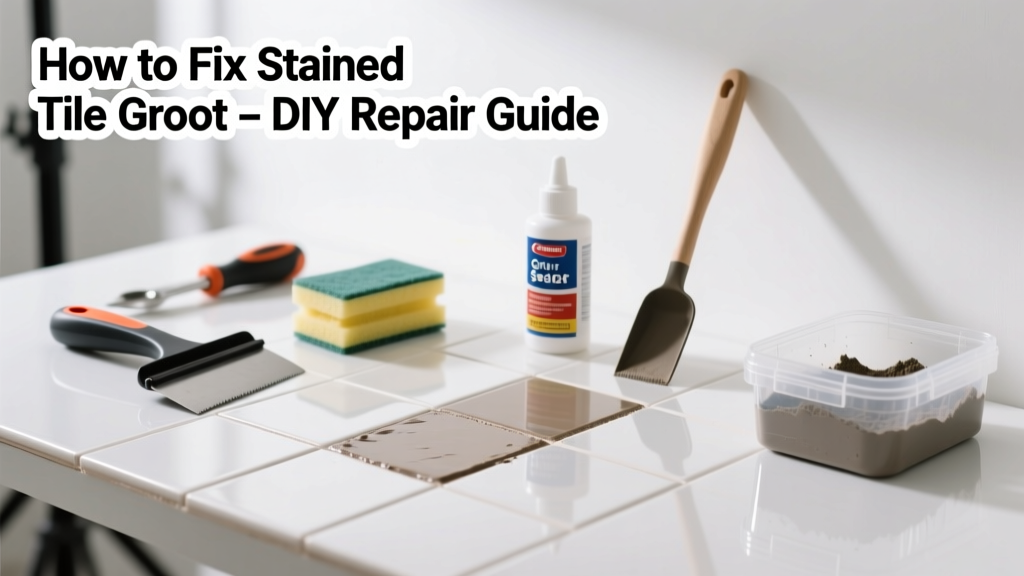
That once-pristine grout between your kitchen backsplash tiles is now a dingy gray or yellowish brown — and it’s not just dirt. Stained grout is one of the most common yet misleading home maintenance issues: it often looks like a cleaning problem but can signal deeper moisture or material failure.
Quick Diagnosis
Before grabbing supplies, identify the stain type — this determines whether cleaning, resealing, or replacement is required. Common causes include:
- Mold or mildew growth in damp areas (bathrooms, showers)
- Iron oxide deposits from well water or rusty fixtures
- Tannin stains from tea, coffee, or red wine spills left uncleaned
- Hard water mineral buildup (especially calcium and magnesium)
- Grout dye migration from colored tiles or improper mixing during installation
Tools & Materials Needed
| Item | Purpose | Estimated Cost |
|---|---|---|
| White vinegar or oxygen bleach powder | Breaks down organic stains without damaging grout | $3–$12 |
| Stiff nylon brush (grout-specific) | Scrubbing without scratching tile edges | $5–$10 |
| Grout sealer (solvent- or water-based) | Blocks future staining; essential after cleaning | $8–$22 |
| Grout removal tool or oscillating multi-tool | Cuts out severely discolored or crumbling grout | $15–$60 (rental available) |
| New sanded grout (color-matched) | Replacement for sections beyond cleaning repair | $10–$18 per bag |
Step-by-Step Fix
Start with the least invasive method and escalate only if needed:
- Surface stain removal: Mix 1 part oxygen bleach (e.g., OxiClean) with 4 parts warm water. Apply with a sponge, let sit 10 minutes, then scrub with a stiff nylon brush. Rinse thoroughly with clean water and dry with microfiber cloth.
- Mineral deposit treatment: For hard water stains, soak grout lines with undiluted white vinegar for 15 minutes using folded paper towels. Scrub gently — avoid on natural stone tiles.
- Deep mold/mildew remediation: Use a 3% hydrogen peroxide solution (not chlorine bleach) applied with a spray bottle. Let dwell 10 minutes, scrub, then rinse. Chlorine bleach degrades grout over time and fails against embedded mold roots.
- Grout color restoration: If cleaning reveals faded but intact grout, apply a grout colorant like Aqua Mix Grout Colorant. It bonds to existing grout and masks discoloration without removal.
When to Call a Pro
DIY has limits — especially when safety or structural integrity is involved. Call a licensed tile contractor if you notice:
- Grout that crumbles under light pressure or feels powdery — indicates failed bonding or moisture damage beneath
- Stains spreading *under* tiles (warping, lifting, or hollow-sounding tiles), suggesting subfloor rot or chronic leaks
- Black, fuzzy mold growing *behind* grout lines or at tile edges — requires containment and EPA-certified remediation
- More than 30% of grout lines are stained or deteriorated across a surface larger than 20 sq ft
According to the Insurance Institute for Business & Home Safety's 2023 report, improperly sealed grout contributes to 68% of bathroom water damage claims involving tile assemblies — many of which began as seemingly minor stains.
Prevention Tips
Preventing recurrence is cheaper and faster than repeated fixes. Implement these habits immediately after cleaning or regrouting:
- Reseal grout every 12–18 months in high-moisture zones (showers, kitchens); use a penetrating sealer like Stonetech BulletProof
- Wipe shower walls and floors dry after each use — reduces mineral deposition by up to 90% (U.S. EPA WaterSense, 2022)
- Avoid abrasive cleaners (powdered scouring agents, steel wool) that erode grout’s surface seal
- Install a water softener if iron or manganese levels exceed 0.3 ppm (test via local utility or certified lab)
Can I use bleach on stained grout?
No — chlorine bleach breaks down grout’s cement matrix over time and doesn’t kill mold roots embedded in porous grout. It may lighten surface discoloration temporarily but accelerates deterioration. Stick with oxygen bleach or hydrogen peroxide for organic stains.
Why does my grout stain so easily in the shower?
Shower grout absorbs water and contaminants daily. Without proper sealing, it acts like a sponge for soap scum, body oils, and minerals. Unsealed sanded grout typically absorbs 12–18% of its weight in water — enough to carry deep-set stains within 72 hours of exposure.
Will grout colorant hide all stains permanently?
Colorant works best on structurally sound, cleaned grout with uniform porosity. It won’t mask efflorescence (white salt deposits) or active mold growth — those must be resolved first. Once applied and cured, it lasts 3–5 years before touch-ups are needed.
How long should I wait to seal grout after cleaning?
Wait until grout is completely dry — at least 48 hours in low-humidity environments, and up to 72 hours in bathrooms with poor ventilation. Sealing damp grout traps moisture, leading to hazing, cloudiness, or premature failure.
Is vinegar safe on all tile types?
Vinegar is safe for ceramic, porcelain, and glazed tiles but not for natural stone (marble, limestone, travertine) or unglazed quarry tile — its acidity etches calcite-based surfaces. For those, use pH-neutral cleaners like stone-safe tile cleaner.
Can I regrout over stained grout without removing it?
No — new grout won’t bond reliably to old, dirty, or sealed grout. At minimum, you must remove the top 1/8" of existing grout with a grout saw or rotary tool to expose fresh, porous material. Skipping this step leads to delamination and cracking within months. See our guide on how to regrout tile correctly for full details.
Stained grout isn’t just cosmetic — it’s often the first visible clue that moisture management, cleaning habits, or material quality need attention. Tackle it early with the right method, and you’ll extend your tile’s life by years while keeping your space looking intentional, not neglected. A well-maintained grout line is quieter, drier, and far less likely to host mold than one left to fade and flake.