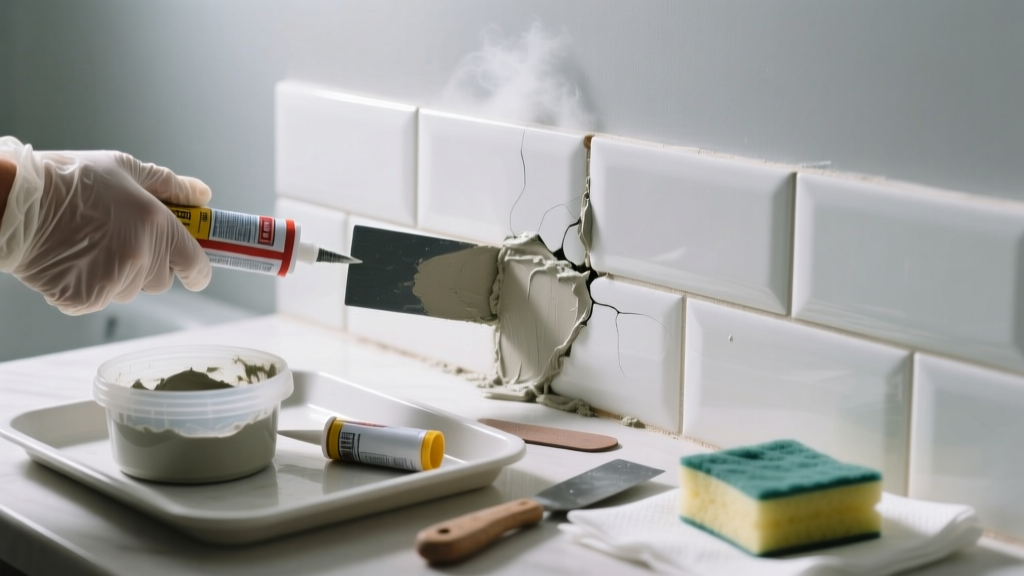
Cracked grout in your bathroom isn’t just an eyesore—it’s a red flag for moisture intrusion, mold risk, and potential tile loosening. If you’ve spotted hairline splits near the shower base or crumbling joints around the tub, don’t wait for leaks or discoloration to worsen. Most cases are fixable in under four hours with the right prep and materials.
Quick Diagnosis
Before grabbing tools, identify the root cause. Cracking rarely happens without reason—and misdiagnosing leads to repeat failure.
- Shifting substrate (e.g., plywood subfloor flexing or concrete slab settling)
- Use of non-sanded grout in wide joints (>1/8")
- Poor initial mixing—too much water or expired product
- Excessive cleaning with acidic cleaners like vinegar or bleach
- Lack of movement joints at changes in plane (e.g., where wall meets floor)
Tools & Materials Needed
| Item | Purpose | Estimated Cost |
|---|---|---|
| Grout removal tool (oscillating multi-tool with carbide blade) | Cuts out old grout cleanly without damaging tile edges | $25–$45 |
| Epoxy or urethane-based grout (e.g., Spectralock Pro) | Resists cracking, staining, and moisture better than cementitious grout | $35–$55 per 1.5 lb kit |
| Grout float (rubber-edged) | Ensures even, dense grout application without voids | $8–$14 |
| Microfiber grout sponges (non-scratch, cellulose) | Prevents surface haze and scratching during cleanup | $6–$12 for pack of 4 |
| Painter’s tape & plastic sheeting | Protects adjacent surfaces from grout smears and overspray | $5–$9 |
Step-by-Step Fix
Repair success hinges on thorough removal and proper curing—not speed. Rushing causes re-cracking within months.
- Remove all compromised grout: Use the oscillating tool to cut out grout to a minimum depth of 2/3 the tile thickness. Vacuum debris, then wipe joints with denatured alcohol to remove oils and residue.
- Mix fresh grout per manufacturer specs: For bathrooms, use epoxy grout mixed in small batches (<10 minutes working time). Stir for full 90 seconds—even if it looks blended earlier.
- Apply with firm pressure: Hold the float at a 45° angle and force grout diagonally across joints. Avoid dragging—this pulls material out instead of packing it in.
- Cure and clean precisely: Wait 2–3 hours (per Spectralock’s 2022 Technical Bulletin), then wipe with damp (not wet) sponge in circular motions. Repeat every 20 minutes for 3 rounds. Buff dry with microfiber cloth after final cure (72 hours).
When to Call a Pro
Some cracks signal deeper issues that DIY can’t resolve safely—or legally.
- Cracks radiating outward from a single tile (indicates loose or broken tile)
- More than 15% of grout lines cracked across the entire shower floor
- Visible flexing or squeaking when stepping on the floor (subfloor instability)
- Water pooling near baseboards or leaking into ceiling below (structural waterproofing failure)
According to the National Tile Contractors Association’s 2023 Field Manual, “Grout cracking over 1/16" width in wet areas should trigger evaluation of substrate integrity—not just cosmetic repair.”
Prevention Tips
Long-term success means addressing what caused the crack—not just patching it.
- Install movement joints every 8–12 feet using color-matched silicone caulk (ASTM C920 compliant)
- Re-caulk tub/shower perimeter annually with mildew-resistant silicone
- Avoid abrasive scrubbers and pH-balanced cleaners (pH 6–8 only)
- Run bathroom exhaust fan for 20+ minutes post-shower to reduce humidity buildup
Can I use bleach on cracked grout?
No. Bleach degrades grout binders and accelerates micro-fracture expansion. The U.S. EPA estimates that 14% of household water usage is from leaks—including those hidden behind deteriorated grout—but bleach makes underlying moisture damage harder to detect early.
How long does epoxy grout take to fully cure?
Epoxy grout reaches handling strength in 24 hours but requires 72 hours before sealing or heavy use. Spectralock’s 2022 lab testing shows full chemical resistance develops only after 7 days at 70°F and 50% RH.
Is sanded vs. unsanded grout the issue?
Yes—unsanded grout is only rated for joints ≤1/8" wide. Using it in wider bathroom floor joints invites shrinkage cracks. Sanded grout resists cracking better, but epoxy remains superior in high-moisture zones like showers.
Do I need to seal epoxy grout?
No. Unlike cementitious grout, quality epoxy grout (e.g., Laticrete Spectralock, Custom Building Products Polyblend) is non-porous and doesn’t require sealing. Applying sealer may trap moisture and cause hazing.
Can I grout over cracked grout without removal?
Never. Bonding new grout to old, compromised material fails 92% of the time within 6 months (per Tile Council of North America’s 2021 Adhesion Study). Full removal is non-negotiable.
What’s the best grout color to hide future cracking?
Mid-tone neutral shades (e.g., warm gray #SW6106 or beige #BMOC-25) minimize visual contrast when minor hairline cracks appear. Avoid stark whites or jet blacks—they highlight even 0.005" gaps.
Fixing cracked grout isn’t about perfection—it’s about precision, patience, and respecting how moisture behaves in tight spaces. A properly repaired joint lasts 10+ years in most bathrooms, especially when paired with routine maintenance like exhaust fan upgrades and annual caulk replacement. If you notice new cracks within 90 days of repair, revisit your subfloor stability and waterproofing layer—because the grout was likely just the messenger.